Katalyst Space Technologies' three-armed Link spacecraft reentered Earth's atmosphere on September 25, 2026, ending a $30 million NASA-sponsored mission to boost the orbit of the aging Neil Gehrels Swift Observatory. The robotic spacecraft operated for 85 days in orbit but never captured the 22-year-old telescope, which is now expected to reenter in early November. The mission was designed to extend Swift's life by raising its altitude, but a series of technical failures prevented the capture.
Link launched on July 3, 2026, aboard a Northrop Grumman Pegasus XL rocket from Kwajalein Atoll in the South Pacific. The spacecraft was billed as America's first commercial space robot. Its objective was to rendezvous with Swift, capture it with its three robotic arms, and boost it to a higher, longer-lasting orbit. Each arm is about 3 feet (1 meter) long and ends in a handlike gripper. The plan was ambitious: Swift was never designed to be serviced, and Link had to approach and attempt to manipulate a satellite substantially larger than itself without a standardized docking interface.
Almost immediately after launch, Link ran into electronic problems that took out two of its three reaction wheels, which are needed to turn the spacecraft. A bad valve then sent the satellite into a fast spin that disrupted communication. Engineers regained control, but Link did not have enough fuel left, and the rescue was called off in August. Katalyst used the remaining weeks to practice moving Link's robot arms and guided it to within 7 to 9 miles (12 to 15 kilometers) of Swift, collecting imagery of the observatory's condition.
Swift, launched in November 2004, is a collaboration between NASA and Penn State University. The $364 million observatory has studied gamma-ray bursts, exploding stars and other fast cosmic action for 22 years, serving as a lookout for other telescopes. Without the boost, Swift's orbit is steadily sinking. It is now about 200 miles (325 kilometers) above Earth, and NASA expects its science operations to end in early to mid October, with reentry in November.
Key Facts
The Associated Press reported on September 25 that Link reentered the atmosphere overnight, bringing the $30 million, NASA-sponsored salvage effort of the Swift Observatory to a close. The AP noted that Swift is expected to follow in early November as its orbit steadily sinks. NASA's Shawn Domagal-Goldman said, 'While we'll be sad to see Swift's mission come to a close, we knew this boost effort would be worthwhile either way.'
The Guardian reported on September 25 that Link, described as America's first commercial space robot, got as close as 7 to 9 miles (12 to 15 kilometers) to Swift and took a series of images detailing its condition. But in-flight problems that hampered motion control and communications meant Link was unable to capture the observatory and release it at a higher altitude. Katalyst Space Technologies, based in Flagstaff, Arizona, announced on Friday morning that its three-armed spacecraft had reentered Earth's atmosphere after 85 days in orbit.
Katalyst Space Technologies announced on September 25 that the contract was awarded in September 2025 and that the company designed, built, tested and launched Link in nine months as part of the $30 million mission. During commissioning, Link experienced an anomaly affecting attitude control and entered a multi-axis spin. Two of three reaction wheels became unavailable due to an electrical power system fault. The team reduced the body rate from 9 degrees per second to 1.47 degrees per second using hall effect thrusters, but relying on RCS thrusters for attitude control rapidly increased propellant consumption. Katalyst and NASA determined there was insufficient fuel for capture.
NASA said on September 25 that Swift's Burst Alert Telescope was calibrated and detecting gamma rays on September 18, and that automated pointing resumed on September 21. The return to science has caused Swift to resume its rapid sinking. The observatory is now around 200 miles (325 kilometers) above Earth. Below 185 miles (300 kilometers), spacecraft operations become more difficult and science observations will likely cease. The team estimates Swift will reach this threshold sometime in early to mid October.
India Today reported on September 26 that Swift launched on November 20, 2004, and that NASA suspended most science operations on February 11, 2026, to reduce drag. The Burst Alert Telescope was switched off in April to save power, allowing Swift's solar panels to be best positioned to reduce drag. The X-ray and ultraviolet/optical telescopes restarted on August 26. The rescue attempt began on July 3 when Katalyst Space's robotic Link spacecraft launched from the Marshall Islands. By July 28, NASA said two of three reaction wheels were unavailable and there were cold-gas thruster problems. On August 19, NASA and Katalyst announced Link would no longer capture or boost Swift, scaling the mission back to demonstrate rendezvous and proximity operations.
Analysis
The failure of Link does not mean that robotic satellite servicing is doomed. The mission demonstrated a new model for rapidly fielding and operating complex robotic spacecraft on orbit. From contract award to flight, Katalyst designed, built, tested and launched Link in nine months. The spacecraft operated for 85 days. The team reduced Link's spin from 9 degrees per second to 1.47 degrees per second, showing real capability in an emergency. CEO Ghonhee Lee said, 'In less than a year we went from mission concept to launching and operating the first commercial space robot. This is a foundation we can build on.'
The bigger picture here is that NASA's willingness to attempt high-risk missions with commercial partners is shifting. NASA Administrator Jared Isaacman said, 'NASA should be willing to move quickly and take smart risks when the potential return is worth it. This is not the outcome we were working toward, but it does not change why this mission was worth attempting.' Isaacman also said the team moved with extraordinary speed to give Swift a chance to carry out more science while advancing capabilities America will need for satellite servicing in the future.
What this really means is that aging observatories like Swift, which was never designed to be serviced, present a hard problem. Swift lacked a standardized docking interface, and Link had to attempt to manipulate a satellite substantially larger than itself. The technical challenges were immense. The $30 million spent on Link is modest compared to Swift's $364 million cost, and the lessons learned could inform future servicing missions.
The mission was worth attempting despite the failure. The data collected and the proximity operations demonstrated valuable lessons. But the loss of Swift leaves a gap in gamma-ray burst detection. NASA is scrambling to fill that gap. The agency will need to rely on other telescopes and new missions to continue the science that Swift has enabled for 22 years.
Why It Matters
Swift has been a workhorse for 22 years, studying gamma-ray bursts and other cosmic events. Its loss leaves a gap that NASA is scrambling to fill. Other telescopes will need to take over its role as a lookout for other observatories. The mission also shows the risks of relying on commercial partners for high-stakes rescue operations.
The $30 million spent on Link is small compared to Swift's $364 million cost, but the failure highlights the difficulty of servicing satellites that were not built for it. The mission demonstrated that rapid, low-cost robotic missions are possible, but also that technical failures can derail even well-planned efforts. The reentry of Link and the upcoming reentry of Swift also highlight the growing problem of space debris and the need for sustainable space operations.
NASA's decision to attempt the boost reflects a broader shift toward commercial partnerships for space operations. The agency is willing to take smart risks when the potential return is worth it. Even in failure, the mission advanced capabilities that America will need for satellite servicing in the future.
Next Up
Swift is expected to reenter the atmosphere in November. Its science observations will end in early to mid October. NASA will continue to monitor its decay. The observatory is currently around 200 miles (325 kilometers) above Earth, and below 185 miles (300 kilometers) operations become more difficult.
Katalyst plans to build on the lessons learned from Link. The company said the mission demonstrated a new model for rapidly fielding and operating complex robotic spacecraft on orbit. Future missions could include satellite servicing and other robotic operations. CEO Ghonhee Lee said, 'This is a foundation we can build on.'
Related Articles
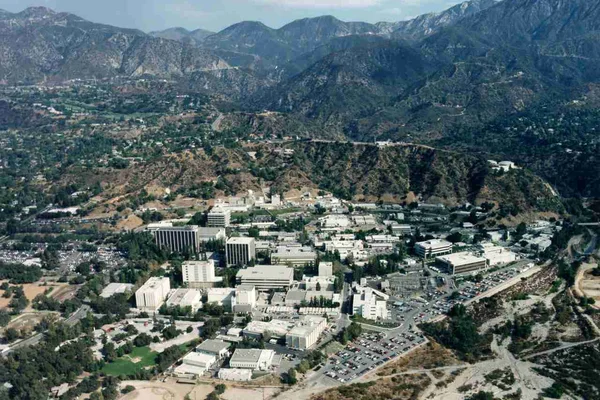
NASA selects PRIMA far-infrared telescope as first Probe Explorers mission
The $1.2 billion far-infrared observatory, managed by JPL with Caltech's IPAC as science centre, will survey cold dust and early galaxies from Lagrange point L2 starting in 2033.
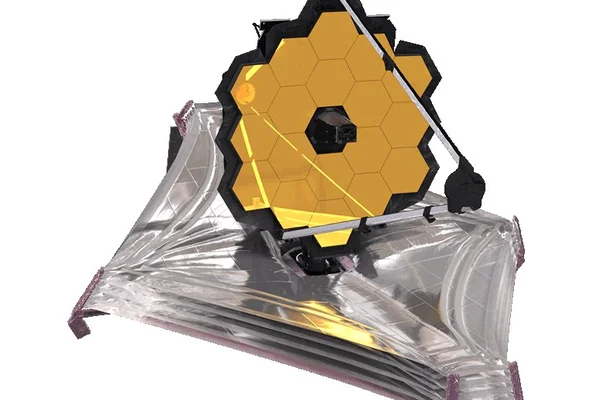
NASA selects PRIMA far infrared telescope as first Probe Explorers mission for 2033 launch
NASA has approved the PRIMA far-infrared observatory for preliminary design, a $1.2 billion mission to study planet formation and cosmic history with a 2033 launch target.

NASA and SpaceX Set October 1 for Crew 13 Astronaut Launch to ISS After Valve Fix
After replacing a faulty oxidizer valve on the Dragon spacecraft, NASA and SpaceX have rescheduled the Crew 13 mission to the International Space Station for October 1, 2026, with a four-person crew.
Comments (0)
Log in or sign up to leave a comment.
No comments yet. Be the first to share your thoughts.