SpaceX has spent years developing Starship, a fully reusable super-heavy launch vehicle designed to carry crew and cargo to Earth orbit, the Moon, and eventually Mars. The rocket consists of the Super Heavy booster and the Starship upper stage, and it is the biggest and most powerful ever built. Founder Elon Musk has described it as central to making humanity a multi-planetary species. Before September 2026, all 13 integrated test flights had remained suborbital, often ending in explosions or brief skims of space.
The program began full-scale flight testing in 2023 from SpaceX's Starbase facility in South Texas. Early flights pushed the vehicle's limits, and several ended with the loss of hardware. Over time, SpaceX improved reliability, recovered debris, and modified designs. By July 2026, the company had salvaged the last Starship from the Indian Ocean and used hands-on inspections to modify the heat shield of the next ship. NASA watched closely, because Starship is one of two competing lunar landers for the Artemis program, alongside Blue Origin's Blue Moon. Artemis III, planned as soon as next summer, would involve a triple launch and docking exercise in Earth orbit.
Reaching orbit is a fundamental threshold for any rocket, but it is especially important for Starship because the vehicle is intended to deploy large batches of next-generation Starlink satellites and to serve as a lunar lander that requires orbital refueling. Until Flight 14, Starship had never demonstrated a full orbital insertion and commercial payload deployment. That changed on September 28, 2026, when the vehicle reached Earth orbit and released 26 Starlink V3 satellites, a major milestone for SpaceX.
Key Facts
SpaceX launched Starship on its 14th integrated test flight on September 28, 2026, from Starbase, Texas. The 124-meter (407-foot) vehicle, consisting of Booster 21 and Ship 41, lifted off at 7:46 a.m. Central Time (1246 GMT). The Associated Press reported on September 28, 2026, that the launch aimed for six full laps around Earth to prove readiness for NASA's Artemis moon program. The rocket carried 26 of the latest Starlink satellites, joining the 11,000 older models already in service. This was Starship's 14th full-scale launch from Texas in three years, and the first to target orbit.
The upper stage separated from the Super Heavy booster and reached orbit about 26 minutes into flight, according to AFP, which reported on September 28, 2026, that the vehicle stood more than 120 meters tall. A single Raptor engine performed the orbital insertion burn after the launch team confirmed sufficient redundancy for the later deorbit burn. Starship entered an orbit at approximately 275 kilometers (171 miles) above Earth, traveling at roughly 28,000 kilometers per hour. Ship 41 then deployed 26 Starlink V3 satellites over roughly 30 minutes. SpaceX announced on X: "Payload deploy complete. All 26 Starlink V3 satellites are in orbit." The Starlink team later made contact with all 26 satellites.
Each Starlink V3 satellite adds one terabit per second (Tbps) of capacity, so the batch of 26 added about 26 Tbps. Interesting Engineering reported on September 28, 2026, that this is roughly 10 times as much as a single Falcon 9 launch carrying V2 Mini Starlink satellites. Three satellites carried cameras to image Starship's heat shield. The flight also marked the first reuse of heat shield tiles: two tiles from Ship 40 were installed on Ship 41. The Super Heavy booster splashed down in the Gulf of Mexico about seven minutes after launch, and SpaceX did not attempt a tower catch. One of the upper stage's six Raptor engines shut down during ascent, prompting controllers to initially place the vehicle on a passively safe suborbital trajectory before giving the go for orbit.
The mission was originally expected to last nearly 10 hours and complete about six orbits, ending with a splashdown in the Pacific Ocean west of Chile. However, Drive Tesla Canada reported on September 28, 2026, that SpaceX later decided to deorbit the spacecraft after about three hours. The flight also addressed issues from Flight 13, when ice clogged three center engines during boostback and only eight of 13 planned landing-burn engines reignited, causing a hard splashdown. For Flight 14, SpaceX made hardware changes for engine filtering and software changes for relight reliability. Aerospace Global News reported on September 28, 2026, that the booster incorporated these changes and splashed down offshore rather than returning to the launch tower.
Analysis
What this really means is that SpaceX has finally demonstrated the core capability that justifies Starship's existence. Reaching orbit is the prerequisite for deploying Starlink V3 satellites at scale, for conducting in-orbit refueling tests, and for landing astronauts on the Moon. Ship 41 performed an orbital insertion burn with a single Raptor engine, deployed 26 satellites, and maintained contact with all of them. Kathleen Curlee, a senior analyst at Georgetown University's Center for Security and Emerging Technology, explained to AFP that to reach the needed altitude and speed for a circular orbit, "the rocket has to do different things when it's experiencing different levels of gravity." That complexity is now behind SpaceX for this profile.
The bigger picture here is that Starship's orbital success reshapes the economics of satellite internet and heavy-lift launch. Each Starlink V3 satellite adds 1 Tbps, and the batch of 26 added roughly 26 Tbps, about 10 times the capacity added by a Falcon 9 launch carrying V2 Mini satellites. SpaceX has said a fully loaded Starship could eventually carry 60 V3 satellites, providing roughly 20 times the network capacity of a Falcon 9 V2 Mini mission. That increase could accelerate Starlink's expansion and pressure competitors such as Amazon's Project Kuiper. It also strengthens SpaceX's position as the dominant launch provider.
For NASA, the flight is a crucial data point. The agency relies on Starship as one of two competing lunar landers for Artemis. Artemis III is planned as soon as next summer and would be a triple-launch docking exercise in Earth orbit between an Orion capsule and a lunar lander, either Blue Moon or Starship. Artemis IV, no sooner than 2028, would land astronauts on the Moon. Starship still needs to demonstrate in-orbit refueling, essential for a lunar landing and return. Flight 14 did not test refueling, but it proved that Starship can reach orbit reliably enough to begin those tests. The early deorbit after about three hours, instead of the planned 10 hours, suggests SpaceX is prioritizing safety and data collection.
Nevertheless, the engine shutdown during ascent and the shortened flight are reminders that Starship is not yet fully operational. One of six Raptor engines failed, and the deorbit burn must be executed flawlessly on future missions. The decision to deorbit early indicates that the vehicle may have had limited redundancy for a longer stay. These are solvable engineering problems, but they show that routine orbital operations still require additional test flights. The milestone is real, but it is a beginning, not an end.
Why It Matters
The first orbital flight of Starship matters because it validates the concept of a fully reusable super-heavy launch vehicle. At 124 meters (407 feet) tall, Starship is the biggest and most powerful rocket ever built, designed from the start to be fully reusable. Previous flights had demonstrated suborbital hops, booster landings, and heat shield performance, but none had achieved a stable orbit. Flight 14 proved that the upper stage can perform a controlled orbital insertion, deploy a commercial payload, and maintain communication with ground teams, bringing SpaceX closer to rapid, low-cost access to space.
The deployment of 26 Starlink V3 satellites is equally significant. These are the latest and most advanced Starlink satellites, each adding 1 Tbps of capacity. The batch added about 26 Tbps, roughly 10 times the capacity of a Falcon 9 launch with V2 Mini satellites. With 11,000 older Starlink models already providing internet service, the V3 satellites represent a major upgrade that could improve speeds, reduce latency, and expand coverage. Three satellites carried cameras to inspect Starship's heat shield, showing how SpaceX integrates its satellite and launch businesses.
Finally, the flight matters for NASA and for international space exploration. The Artemis program depends on Starship to land astronauts on the Moon, and Artemis III is scheduled as soon as next summer. While that mission will not land on the Moon, it will test docking between Orion and a lunar lander in Earth orbit. Starship's orbital success is a necessary step toward that goal, and it demonstrates that the commercial space industry can deliver on ambitious promises, with implications for government contracting and the future of human spaceflight beyond low Earth orbit.
Next Up
SpaceX hopes that Flight 14 ushers in an "exciting new phase" for Starship, including tests of in-orbit refueling. That capability is essential for sending Starship to the Moon and Mars, because the vehicle needs to be refueled in orbit to have enough propellant for a lunar landing and return. The company is also expected to continue refining the booster's landing reliability after the Flight 13 anomaly, and to attempt tower catches again in future flights. The early deorbit on Flight 14 may provide data that SpaceX will use to extend orbital stays on later missions.
In the near term, all eyes will be on NASA's Artemis III timeline. The mission is planned as soon as next summer, with a triple launch and docking exercise in Earth orbit between an Orion capsule and either Blue Moon or Starship. Artemis IV, no sooner than 2028, would land astronauts on the Moon. For SpaceX, the next steps include more orbital flights, payload deployments, and eventually the first in-orbit propellant transfer. If those tests succeed, Starship could become the workhorse that carries humans back to the Moon and, eventually, to Mars.
Related Articles
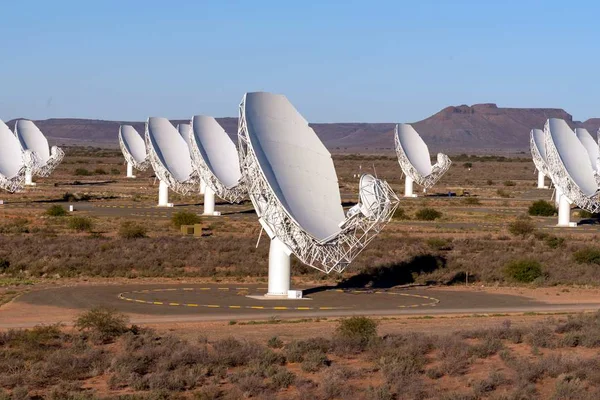
Astronomers Detect First Direct Radio Signal from Exoplanet Beta Pictoris b
A Harvard-led team using South Africa's MeerKAT array has detected auroral radio bursts from Beta Pictoris b, marking the first direct measurement of an exoplanet's magnetic field at 1,250 gauss.
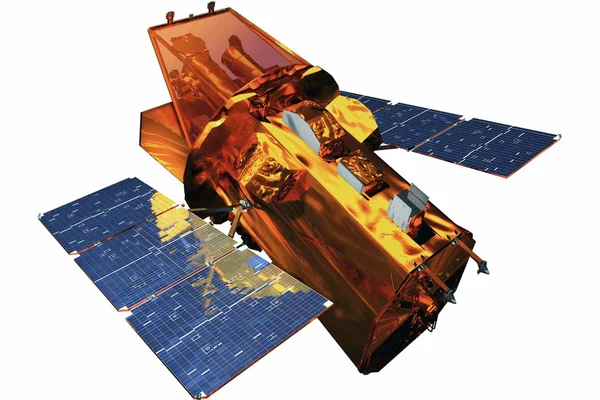
Katalyst Link Spacecraft Reenters Earth After Failed Swift Observatory Rescue Mission
The $30 million robotic mission to boost NASA's aging Neil Gehrels Swift Observatory ended with the Link spacecraft burning up in Earth's atmosphere after 85 days, leaving the telescope to reenter in November.

NASA selects PRIMA far-infrared telescope as first Probe Explorers mission
The $1.2 billion far-infrared observatory, managed by JPL with Caltech's IPAC as science centre, will survey cold dust and early galaxies from Lagrange point L2 starting in 2033.
Comments (0)
Log in or sign up to leave a comment.
No comments yet. Be the first to share your thoughts.