NASA has extended its reliance on SpaceX for human spaceflight, awarding the company a $946 million contract modification for three additional crewed missions to the International Space Station. The agency announced the change on Friday, September 18, 2026, saying it covers the Crew-15, Crew-16 and Crew-17 flights and keeps regular crew transportation running through the rest of the decade. The three missions are expected to be ready for launch in 2027 and 2028.
The modification lifts SpaceX's total mission count under the Commercial Crew Transportation Capability contract, widely known as CCtCap, to 17 operational flights. It also raises the total value of that agreement to $5.92 billion, a figure that now dwarfs the original award the company received in 2014, when NASA selected it as one of two commercial crew providers. NASA has said the new missions help it maintain access to the space station with two unique commercial crew industry partners, a goal the agency has pursued since it established the program as a public-private partnership.
Like the earlier orders under the same contract, the new work is a firm fixed-price, indefinite-delivery/indefinite-quantity modification. That means SpaceX is responsible for the full chain of mission services rather than a single launch: ground processing, launch operations, in-orbit activity, and return and recovery. The scope also includes cargo transportation on each flight and a lifeboat capability while the Dragon spacecraft is docked to the station, a role that lets the capsule serve as an emergency escape vehicle for the crew aboard the orbiting laboratory. Dragon and its Falcon 9 rocket can carry up to four astronauts at a time.
The agreement runs through 2030, with mission readiness dates set for 2027 and 2028. NASA said the award follows a notice of intent it issued in May 2026 to purchase the additional missions, and it stressed that the sole-source modification does not preclude the agency from seeking further contract changes for additional transportation services later. The agency first awarded the CCtCap contracts to Boeing and SpaceX in 2014, and SpaceX was certified for crew transportation in November 2020.
Key Facts
NASA announced on September 18, 2026 that SpaceX will fly Crew-15, Crew-16 and Crew-17 under the modified agreement. The modification is worth $946 million for all three missions and their related mission services, and it brings SpaceX's CCtCap total to 17 missions and $5.92 billion in cumulative contract value. Crew-17 will mark the 17th crew mission SpaceX launches for NASA under the contract.
CNBC reported on September 18 that SpaceX will net up to $946 million upon completion of the additional flights. The award, the outlet noted, helps NASA maintain access to the station with two unique commercial crew industry partners, and it also pointed to the company's broader reliance on government work: SpaceX counts on NASA and Department of Defense contracts to bolster its core launch business.
The hardware has not changed. SpaceX's Dragon spacecraft and Falcon 9 rocket transport up to four astronauts at a time, along with critical cargo, to the station. The company was certified for crew transportation in November 2020, and the Crew-12 mission is currently in orbit docked to the space station.
Quartz reported on September 18, 2026 that the period of performance runs through 2030 and that Boeing is also under contract to provide crewed ISS flights via Starliner, with crewed missions expected to begin in the third quarter of 2027. Before those, Starliner is slated to complete an uncrewed flight in the near term. The modification followed a notice of intent NASA issued in May to purchase the additional missions.
Current operations are already busy. Crew-12 launched in February 2026 with NASA astronauts Jessica Meir and Jack Hathaway, the European Space Agency's Sophie Adenot and Roscosmos cosmonaut Andrey Fedyaev, and it remains docked to the station. Crew-13 is expected to launch in early October 2026, and Crew-14 is targeting a flight next spring. Starlust reported on September 18 that the Crew-15, Crew-16 and Crew-17 missions are expected to be ready to launch in 2027 and 2028.
Analysis
The bigger picture here is that NASA has effectively locked in SpaceX as its primary crew taxi at the very moment its second provider is still rebuilding confidence. Boeing's Starliner is not scheduled to carry people again until the third quarter of 2027, and it must first fly an uncrewed test. Every mission NASA adds to the SpaceX contract is a mission Boeing does not fly, and the mission count tells the story plainly: 17 flights for SpaceX versus a Starliner program still waiting for its next crewed launch.
The price of that dependence is visible in the numbers. SpaceX was first awarded CCtCap in 2014 with an initial order worth $2.6 billion, while Boeing received $4.2 billion, yet SpaceX was the first to be certified for crew flights. The original split gave Boeing the larger share of the money, but it is SpaceX that has delivered the flights, and more than a decade later the cumulative value of SpaceX's side of the deal has reached $5.92 billion. The new modification is being granted on a sole-source basis, a signal that NASA sees few near-term alternatives for routine crew rotation.
Starlust reported on September 18 that the modification does not preclude NASA from seeking future contract modifications for additional transportation services, a clause that keeps the door open if the station's schedule shifts or if Boeing's return slips again. Starlust also noted that SpaceX may retire the Dragon spacecraft by the time the contract expires to concentrate on its Starship mega rocket, and that NASA in June 2024 handed SpaceX a separate contract worth $843 million to build a deorbit vehicle to pull the ISS from low Earth orbit and crash it into the Pacific Ocean.
SpaceX's finances give it room to absorb the demands of the schedule. Quartz reported on September 18, 2026 that SpaceX raised $85.7 billion in its June 2026 IPO, the largest in history, and posted $7.8 billion in revenue for the second quarter, with its space segment generating $962 million, up 29 percent year over year. NASA and Department of Defense contracts remain central to that business, which is why a $946 million modification is significant for both sides of the deal.
Why It Matters
For NASA, the award is about keeping the station staffed without interruption. The agency has said repeatedly that it wants two independent commercial crew providers so that a technical problem or an accident on one vehicle does not strand the orbiting laboratory. Until Starliner flies crews again, that redundancy exists mostly on paper, and SpaceX carries the operational load alone. A single provider also means a single set of risks: a Dragon stand-down for any reason would leave NASA without an American crew vehicle until Starliner is ready.
For SpaceX, the modification is steady, high-visibility revenue on top of a launch business that already dominates the commercial market. Crew Dragon has been flying humans for only about six years, beginning with the Demo-2 mission in 2020 that carried astronauts Bob Behnken and Douglas Hurley, the first Americans to fly on an American rocket to space since the Space Shuttle program ended in 2011. The years since have produced a steady cadence of crew missions, and the new modification extends that run well beyond the current schedule.
For the wider program, the timing is awkward in a useful way. By 2030, NASA and its international partners may begin deorbiting the aging station, and the missions purchased under this modification are scheduled to be ready in 2027 and 2028. The contract and the station's expected end of life are now on roughly the same clock. When the station is deorbited, the crew transportation business that NASA built in 2014 will wind down with it, which is one reason SpaceX is reportedly shifting its long-term focus to Starship.
Next Up
The near-term calendar is set. Crew-13 is expected to launch in early October 2026, and Crew-14 is targeting a flight in spring 2027, which would carry SpaceX well into the newly purchased missions. Boeing's Starliner is expected to fly without people on board in a few months, then begin crewed missions in the third quarter of 2027. Boeing's path back to crewed flight will determine how soon the redundancy NASA wants becomes real.
Further out, the open questions are whether NASA exercises the option it preserved for additional transportation services, and whether Dragon or Starship flies the final contracted missions. For now, 17 flights and $5.92 billion define the relationship.
Related Articles

Black Holes of All Sizes Launch Jets at Same 2 Percent Feeding Threshold, Study Finds
A Nature Astronomy study finds supermassive black holes fire delayed radio jets when accretion falls to about 2 percent of the Eddington limit, matching stellar mass black holes.

Astronomers Confirm Elias 2-24 b as the Youngest Known Exoplanet Ever Detected
A Jupiter-mass world still embedded in its natal disk has been confirmed at under one million years old, settling a decade of debate over a gap seen by ALMA.
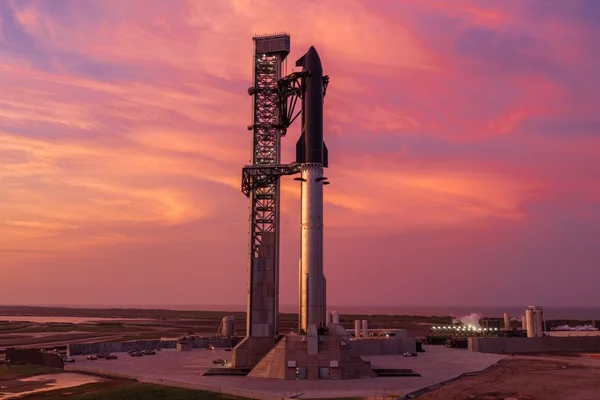
SpaceX Sets September 28 for Starship Flight 14 and First Orbital Trip With Starlink V3s
SpaceX moved Starship Flight 14 to September 28, 2026, setting up the megarocket's first orbital insertion and the debut deployment of 26 larger Starlink V3 satellites.
Comments (0)
Log in or sign up to leave a comment.
No comments yet. Be the first to share your thoughts.