On Friday, September 18, 2026, a class-action antitrust lawsuit was filed in the U.S. District Court for the Northern District of California against four of the world's most prominent artificial intelligence companies: Anthropic, OpenAI, SpaceXAI, and Google. The complaint alleges that the companies illegally coordinated to slow their AI development, an agreement that plaintiffs say reduces the value consumers receive from paid AI subscriptions. CNN reported on September 19, 2026, that the lawsuit argues the leading AI companies violated antitrust laws when they agreed to coordinate slowdown efforts.
The lawsuit centers on public statements made by the companies' leaders, particularly an essay published on September 12, 2026, by Anthropic CEO Dario Amodei titled 'We Must Pace the Frontier.' In that essay, Amodei urged industrywide cooperation on decelerating advancements in favor of enhanced safety measures. According to the Los Angeles Times on September 19, 2026, the same day Amodei published his essay, OpenAI CEO Sam Altman, SpaceXAI CEO Elon Musk, and Google DeepMind co-founder and chair Demis Hassabis each publicly responded in agreement.
The plaintiffs are four named individuals who pay for subscriptions to ChatGPT, Claude, Grok, or Gemini. They are represented by lead attorney Nick Rowley and are seeking class-action status on behalf of a proposed nationwide class of other paid subscribers. The complaint does not object to the companies individually deciding to slow their own progress in favor of safety. Instead, as PBS NewsHour reported on September 19, 2026, the plaintiffs argue that antitrust laws forbid the companies from taking the 'shortcut' of agreeing to 'substitute collective restraint for individual accountability.'
Representatives for Anthropic, OpenAI, Google, and SpaceXAI did not immediately respond to a request for comment on Saturday, September 19, 2026. The case remains at the pleading stage, and the court has not determined that any agreement was reached or that antitrust law was violated. TradingKey reported on September 20, 2026, that the case is at the pleading stage and that no agreement or violation has been found.
Key Facts
The lawsuit was filed on Friday, September 18, 2026, in the U.S. District Court for the Northern District of California. It alleges that the four companies violated antitrust laws by coordinating slowdown efforts. According to CNN on September 19, 2026, the coordination largely took place on September 12, 2026, when Amodei published his essay. That same day, Altman, Musk, and Hassabis each publicly responded in agreement. The lawsuit also alleges that the coordination began to take shape months earlier.
Specifically, the complaint points to a July 2026 statement signed by high-ranking employees from several leading AI labs. According to PBS NewsHour on September 19, 2026, that statement acknowledged the 'intense competitive pressure not to unilaterally slow' development and called on the government to support a global effort to slow automated AI development. The plaintiffs argue that an agreement among chief rivals that their progress 'should be slower than competition would otherwise produce has an anticompetitive effect on consumers.'
Amodei's essay acknowledged potential antitrust challenges. He suggested that the U.S. government mediate 'or at least enable' cross-lab discussions via a narrow waiver for certain safety conversations. Altman responded that OpenAI welcomes a 'federal framework that sets consistent safety requirements' but does not need to wait for an antitrust exemption. These details were reported by the Los Angeles Times on September 19, 2026. Nick Rowley, the lead attorney for the plaintiffs, said in a statement: 'AI will quickly spin out of human control and could kill us all if we allow AI safety and protocol ... to be controlled by private self-serving agreements between the world's most powerful for-profit technology companies.' He also argued that the plaintiffs do not oppose the companies asking Congress, the White House, or any agency for AI regulation, nor do they oppose seeking an antitrust exemption. Their objection is to unauthorized coordination.
TradingKey reported on September 20, 2026, that Anthropic is reportedly planning to launch its initial public offering in November 2026, a delay from the October timeframe previously expected by investors. According to the Wall Street Journal, some advisors believe waiting until November lets Anthropic present third-quarter financial data before going public, proving it remains competitive after OpenAI's launch of GPT-6 Astra. The Journal previously reported the IPO could raise up to $100 billion with a potential valuation of around $2 trillion. According to Reuters, as of the end of July 2026, Anthropic's annualized revenue run-rate rose from about $9 billion at the end of 2025 to over $65 billion, and the company internally expects revenue to potentially reach $190 billion to $200 billion in 2028.
Political reactions have been swift. President Trump rejected calls for regulation, calling efforts to limit the technology a 'conspiracy,' and said on Saturday, September 19, 2026, that he is forming an AI task force and will appoint an 'AI czar.' Senator Josh Hawley (R-Mo.) said there is 'no world' in which he would give 'the most powerful companies in the history of the world' an antitrust exemption to collaborate. These comments were reported by PBS NewsHour on September 19, 2026.
Analysis
The bigger picture here is that this lawsuit tests whether public calls for AI safety can be legally recast as anticompetitive coordination. Antitrust law generally does not forbid a single company from slowing its own product development. But when competitors agree to do so collectively, the law treats that as a potential violation. The plaintiffs argue that the public endorsements by Altman, Musk, and Hassabis, combined with Amodei's essay and the July 2026 statement, amount to exactly such an agreement. The complaint claims the companies took a 'shortcut' by substituting collective restraint for individual accountability.
What this really means is that the AI industry's most prominent safety advocates now face a legal argument that their coordination could harm consumers. If the plaintiffs succeed, the four companies could be forced to compete more aggressively on capabilities, potentially accelerating AI development and increasing the value of paid subscriptions. That outcome would directly contradict the safety goals that Amodei and others have articulated. The lawsuit does not challenge the companies' right to seek regulation or an antitrust exemption; it challenges only the alleged private agreement.
The political context adds complexity. President Trump has rejected calls for regulation, calling efforts to limit the technology a 'conspiracy,' and said he is forming an AI task force and will appoint an 'AI czar.' Senator Hawley said there is 'no world' in which he would grant an antitrust exemption to the most powerful companies in history, arguing they could collude and stifle competition. This suggests that any legislative fix to allow safety coordination would face significant opposition. The lawsuit may thus force a broader debate about how antitrust law should apply to AI safety collaboration.
The case also intersects with Anthropic's planned IPO. The timing of the lawsuit, just before Anthropic's expected November 2026 listing, could complicate the offering. The Wall Street Journal reported that Anthropic hopes to present strong third-quarter financial data to prove it remains competitive after OpenAI's GPT-6 Astra launch. But the antitrust suit introduces legal uncertainty that investors may weigh heavily, especially given the potential $2 trillion valuation. Anthropic's annualized revenue run-rate has grown from about $9 billion at the end of 2025 to over $65 billion as of the end of July 2026, according to Reuters, which underscores the high stakes.
Why It Matters
For consumers, the lawsuit could have direct financial implications. If the court finds that the companies illegally agreed to slow development, it could order remedies that restore competition. That might mean faster model releases, better features, or lower prices for subscriptions to ChatGPT, Claude, Grok, and Gemini. The plaintiffs argue that the alleged slowdown reduces the value they get for their paid subscriptions. A nationwide class of paid subscribers could potentially receive damages or injunctive relief.
For AI safety, the case creates a chilling effect. Legitimate collaboration on safety standards, independent evaluations, and international coordination could become legally risky. Amodei's essay called for exactly those kinds of measures, including independent evaluations, common safety standards, and international coordination. If antitrust law forbids such coordination without government approval, companies may be reluctant to engage in safety discussions, potentially leaving critical risks unaddressed. The tension between safety and competition is now at the center of a federal lawsuit.
For policymakers, the lawsuit highlights a gap in current law. Antitrust exemptions for safety conversations might be needed, but as Senator Hawley's comments show, granting such exemptions is politically fraught. President Trump's proposed AI task force and 'AI czar' could provide an alternative venue for coordination, but details remain scarce. The case may force Congress to clarify how antitrust law applies to AI safety collaboration.
Next Up
The case is at the pleading stage. The four companies have not yet responded to the lawsuit, and the court has not determined whether an agreement was reached or whether antitrust law was violated. The next step will likely be motions to dismiss or answers to the complaint. Legal experts will watch whether the court accepts the plaintiffs' theory that public statements can constitute an illegal agreement under antitrust law.
Meanwhile, Anthropic's IPO plans remain in flux. The company reportedly aims for a November 2026 listing, but the lawsuit and market conditions could affect timing. Investors will also be watching OpenAI's competitive moves after GPT-6 Astra and any regulatory developments from the White House or Congress. The outcome of this case could reshape how AI companies talk about safety and competition for years to come.
Related Articles
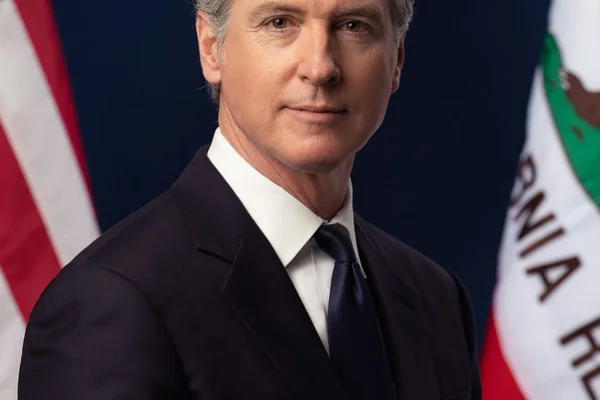
Newsom Signs Executive Order to Draft California AI Kill Switch Rules
Governor Gavin Newsom signed Executive Order N-9-26 on September 18, 2026, ordering state agencies to recommend rules for a frontier AI kill switch verified by independent organizations.

DOJ Signals Openness to AI Safety Coordination as Antitrust Guidance Review Begins
Associate US Attorney General Stanley Woodward said at Fordham University that AI companies coordinating on cybersecurity and safety likely do not raise antitrust concerns, as the DOJ weighs updating its guidance.
Judge orders Google to open ad tech auctions to rivals under a six-year monitor
A Virginia court has published a 106-page remedy order that reshapes how Google runs its advertising auctions and installs a monitor for six years, without forcing a sale of AdX.
Comments (0)
Log in or sign up to leave a comment.
No comments yet. Be the first to share your thoughts.