Barbados recorded its first AIDS cases in 1984, at a time when an HIV diagnosis in pregnancy was widely treated as a sentence rather than a manageable clinical problem. The turning point came when international research showed that zidovudine, an antiretroviral drug known as AZT, could significantly reduce transmission, and Barbados was one of the first Caribbean countries to introduce it for pregnant women.
The island's prevention programme began in 1995. According to the country's own account of its history, the AZT intervention cut transmission rates from 27% to 5.5%, and further reductions followed after a second drug was added as prophylaxis. Testing among pregnant women climbed from 40% in 1993 to 89% in 2004 and reached 98% in 2025, a trajectory that tracks three decades of quiet, incremental public health work rather than one dramatic breakthrough.
What Barbados has now achieved is a formal status, not a slogan. The World Health Organization certifies countries and territories for eliminating mother-to-child transmission of HIV as a public health problem only after an independent assessment confirms that they have met global targets. Those targets include a transmission rate below 2%, perinatal HIV incidence below 0.5 per 1,000 live births, and coverage thresholds above 95% for antenatal care, testing and treatment.
Countries across the Americas committed in 2010, under the Pan American Health Organization's Plan of Action for the Prevention and Control of HIV and Sexually Transmitted Infections, to eliminating mother-to-child transmission of HIV and syphilis. Barbados is the fifteenth country or territory in the Americas to be recognized, and it joins a worldwide group of 26 that WHO has certified for eliminating mother-to-child transmission of HIV, syphilis or hepatitis B, or recognized as being on track to do so.
Key Facts
The World Health Organization announced on October 30, 2026 that Barbados had eliminated mother-to-child transmission of HIV as a public health problem, issuing the news from Geneva, Washington D.C. and Bridgetown. Director-General Dr Tedros Adhanom Ghebreyesus said he congratulated Barbados on protecting a generation of children from HIV, and described the country as showing what universal health coverage looks like in practice, with free services for every pregnant woman regardless of nationality and care that respects her rights and privacy.
From 2022 to 2024, no new HIV infections resulting from mother-to-child transmission were reported among infants born in Barbados. Over the same three-year period, the assessment found that 98% of pregnant women received antenatal care, 98% were tested for HIV, and 98% of pregnant women living with HIV received antiretroviral treatment. Barbados Today reported on October 30, 2026 that 6,352 live births were recorded on the island between 2022 and 2024 with no new infections from mother-to-child transmission.
The formal recognition came at a ceremony at the Sandals Royal Ballroom in Maxwell, Christ Church, hosted by PAHO/WHO and the Ministry of Health and Wellness. Dr Dale Babb, Senior Medical Officer of Health and HIV/STI Programme Manager and deputy chair of the National Validation Committee, said Barbados had met all global validation targets, including a transmission rate of less than 2%, perinatal HIV incidence below 0.5 per 1,000 live births, and more than 95% coverage of antenatal care, HIV testing and treatment for pregnant women living with HIV. PAHO/WHO said in a joint release dated October 30, 2026 that the result followed a long-standing collaboration between the Government of Barbados, PAHO/WHO and other partners to strengthen HIV services, surveillance and quality of care.
Regional and international officials framed the outcome as proof of a model rather than an isolated success. PAHO Director and WHO Regional Director for the Americas Dr Jarbas Barbosa said the achievement shows elimination is possible when women and children have access to quality health services without barriers. Robert Benes, Regional Director of UNICEF for Latin America and the Caribbean, said the elimination of vertical transmission means that in Barbados a diagnosis of HIV during pregnancy no longer has to mean transmission to a child. UNAIDS reported on October 30, 2026 that with Barbados included, the region now accounts for 15 of the 23 countries and territories worldwide that have achieved certification for HIV, compared with 8 in other regions, or approximately 65% of all certifications globally.
Analysis
The bigger picture here is that certification is a measurement milestone, not an endpoint, and the most instructive part of the Barbados story is how the country reached the starting line in the first place. Barbados was one of the first Caribbean countries to introduce AZT for pregnant women living with HIV. Dr Babb credited Prof Anne St John for championing treatment and adherence, Prof Timothy Roach for his involvement since 1984, and Dr Anton Best, who led the National HIV/STI Programme from 2007 to 2021.
The design of the service matters as much as the clinical protocol. Barbados provides universal health care through public clinics and hospitals, with Queen Elizabeth Hospital accounting for about 93% of births, and HIV testing and treatment are free for all pregnant women regardless of nationality. HIV-exposed babies receive early testing and follow-up care, and testing is voluntary and confidential. WHO said its assessment found no evidence of coercive reproductive health practices, a finding that distinguishes elimination achieved through rights-based care from elimination achieved through pressure.
Prime Minister Mia Mottley situated the result in a longer political argument. She said the achievement showed what Barbados could do when it put people ahead of market considerations, and she recalled a ministerial statement by Elizabeth Thompson committing the government to eliminating mother-to-child transmission, with the then prime minister and finance minister agreeing to fund treatment for pregnant women. Mottley noted that even countries such as South Africa, on the front line of the epidemic, had not reached that level of policy commitment at the time. Health and Wellness Minister Lisa Cummins called the certification incredible for Barbados because it allows the country to see its children living their full, best lives, and she was explicit that the work must continue beyond the certificate.
Dr Eva Jane Llopis, the PAHO/WHO representative for Barbados and the Eastern Caribbean, said the certification resulted from years of sustained commitment, stretching back to the early days when fear and stigma were almost as great a challenge as the virus. A programme can be clinically sound and still fail if women avoid testing because they fear disclosure, judgment or loss of privacy, which is why the confidentiality guarantee is not decoration but infrastructure. Elimination statistics are produced by people who choose to walk into a clinic.
Why It Matters
For a small island state, the certification carries weight beyond its own borders. Barbados follows recent recognitions in the Bahamas and Turks and Caicos in 2026, Brazil in 2025, and Jamaica and Saint Vincent and the Grenadines in 2024, a sequence that shows the Americas consolidating its lead. UNAIDS Regional Director for Latin America and the Caribbean Luisa Cabal said the organization was overjoyed that Barbados has now been certified, calling it a record that reflects political commitment, technical and community leadership and investment in integrated health services grounded in human rights and gender equality.
The achievement also reframes what a diagnosis means. Benes captured the shift precisely: in Barbados, HIV during pregnancy no longer has to mean transmission to a child, because testing, treatment and care have reached the women and families who need them. That is a statement about health system reach, not about a single drug or a single clinic. The 98% figures for antenatal care, testing and treatment are the operational explanation for the zero.
There is a cautionary dimension too. The certification recognises a historical record between 2022 and 2024, and the conditions that produced it can erode. PAHO and WHO both stressed that maintaining the status requires continued investment, updated guidelines, stronger health information systems, expanded HIV and syphilis testing, and better follow-up for women and children. UNAIDS urged Barbados to sustain investment in maternal and child health services, reliable access to medicines and diagnostic tests, action on stigma and discrimination, and community-led responses.
Next Up
The immediate work is maintenance rather than celebration. Barbados will need surveillance systems sharp enough to detect a single transmission, free and confidential testing that women trust, and an extension of the programme toward syphilis and hepatitis B, where the same validation architecture applies. The regional commitment made in 2010 covered both HIV and syphilis, and the territories still outside the certified group are the next test of whether the Americas can convert a strong record into a complete one.
Globally, the picture remains uneven. Of the 26 countries and territories recognized by WHO for eliminating mother-to-child transmission of HIV, syphilis or hepatitis B, or for being on track, 15 are in the Americas, while other regions account for 8 of the 23 HIV certifications that UNAIDS counted. Barbados now sits in the first group, holding a certificate, a validated three-year record and a public expectation that the next three years look the same.
Related Articles

HHS Lets Licensed Pharmacies Compound Six Unapproved Peptides, Overruling FDA Scientists
The department will not enforce the compounding rule against licensed pharmacies and physicians for six unapproved peptides, a stopgap that sidelines FDA scientists and could open a $2 billion to $3 billion market.
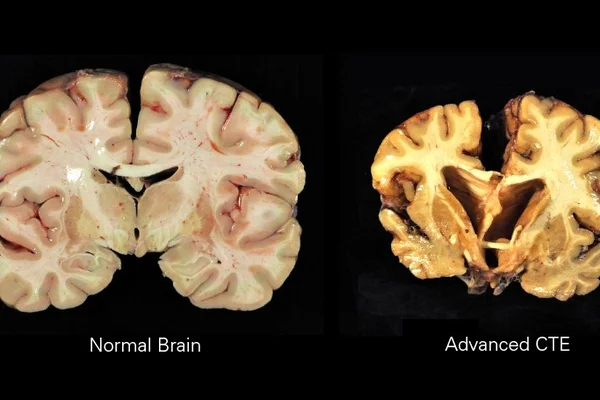
Study Estimates Nearly 75 Percent of Deceased Former NFL Players Had CTE
A Boston University study published in JAMA Network Open estimates that about three in four former NFL players who died between 2008 and 2023 had CTE, after correcting for brain donation bias.

Lilly retatrutide more than doubles Ozempic weight loss in Phase 3 diabetes trial
Topline TRANSCEND-T2D-2 data show the investigational triple agonist cut A1C by 2.2 points and drove roughly 20 percent weight loss, while Lilly prepares a 2027 FDA filing.
Comments (0)
Log in or sign up to leave a comment.
No comments yet. Be the first to share your thoughts.