The Federal Communications Commission approved Amazon Leo's $11.5 billion acquisition of Globalstar on October 27, 2026, closing a review that hands Amazon roughly 25 megahertz of internationally harmonized mobile-satellite service spectrum and a direct route into the direct-to-device market. The agency's Space Bureau granted the transfer, and the FCC said the combined assets should let Amazon offer both fixed and mobile satellite services to residential, business and government customers. The decision ends months of regulatory scrutiny that began after the deal was announced in April.
Amazon Leo is the retail giant's low Earth orbit communications arm, rebranded from Project Kuiper. It has launched nearly 400 satellites since April 2025 and says it has built more than 1,000 satellites for its initial constellation. Amazon is preparing to roll out commercial satellite service by the end of 2026, aims to deploy thousands of satellites by 2029, and in July asked the FCC for permission to operate up to 5,105 satellites. The company has committed to investing more than $10 billion in the business.
Globalstar brings the other half of the equation. The operator runs roughly two dozen satellites and currently powers Emergency SOS and Find My for Apple's iPhone and Apple Watch. Apple invested about $1.5 billion in Globalstar in 2024 and took a 20% equity stake, and Apple accounted for about 63% of Globalstar's revenue last year. Amazon plans to acquire Apple's stake as part of the transaction, according to the FCC. Globalstar has said a new, Apple-backed network would expand its footprint to 54 satellites from the two dozen it operates today.
The approval lands in the middle of a capital race. Direct-to-device technology lets ordinary smartphones connect straight to satellites, bypassing terrestrial towers, and technology companies are pouring billions into satellite connectivity as they try to counter SpaceX's Starlink, which operates more than 11,000 satellites. SpaceX is also building a direct-to-device business called Starlink Mobile after buying EchoStar spectrum licenses for $17 billion. Spectrum, not launch capacity, has become the binding constraint in that contest.
Key Facts
Reuters reported on October 27 that the FCC approved the $11.5 billion deal, which adds Globalstar's two dozen satellites and its mobile-satellite spectrum to Amazon's network. The transaction was announced in April at about $11.57 billion, or $90 a share, with Globalstar stockholders able to choose cash or 0.3210 of an Amazon share for each share they own. CNBC reported on April 14 that the deal was expected to close in 2027 and that Amazon had also agreed with Apple to provide satellite connectivity for current and future iPhone and Apple Watch features.
The FCC's Space Bureau approved the transfer of approximately 25 megahertz of Globalstar's internationally harmonized mobile-satellite service spectrum, and the agency said the approval concludes its review of the purchase. The underlying order, DA-26-1160, grants applications filed by Globalstar and Amazon for consent to assign and transfer control under sections 214(a) and 310(d) of the Communications Act of 1934.
In its public interest analysis, the FCC found the transaction is likely to benefit the public by enhancing data coverage in unserved or underserved areas, strengthening emergency communications capabilities, fostering growth in industrial and enterprise data services, and promoting more intensive use of mobile-satellite service spectrum. The agency also found that no material public-interest harms were likely to result.
FCC Chair Brendan Carr framed the approval as a competitive lever. "The FCC has empowered Amazon Leo to deliver fast, next-gen satellite broadband services, increase competition, and help communities stay connected all across the country," Carr said. Amazon said the approval "brings us a step closer to bringing new connectivity capabilities to customers."
Silicon Republic reported on October 28 that Amazon has built more than 1,000 satellites for its initial constellation and aims to eventually have more than 3,000 in space, while Starlink has more than 10,000 active satellites according to recent tracking reports. The same report noted that the FCC will vote on Thursday to advance a new auction of wireless spectrum intended to boost direct-to-device services.
Analysis
The headline number, $11.5 billion, is less interesting than what it buys. Amazon is not primarily purchasing two dozen aging satellites; it is purchasing a globally harmonized block of mobile-satellite spectrum and the regulatory standing that comes with it. Mobile-satellite spectrum is scarce, internationally coordinated and slow to reallocate, which makes it the kind of asset that cannot be replicated by launching more hardware. Amazon's own constellation, at nearly 400 satellites launched since April 2025, is a fraction of Starlink's more than 11,000, but spectrum access is the input that determines whether a constellation can serve phones directly or only sell fixed broadband dishes.
The Apple dimension is the part that will draw the most attention. Globalstar's consumer business is effectively an Apple business: Emergency SOS and Find My on iPhone and Apple Watch, a $1.5 billion investment, a 20% stake and about 63% of revenue last year. Amazon intends to buy that stake, which means Apple's satellite partner becomes a company controlled by one of its most important competitors in cloud, devices and now connectivity. Reuters reported on October 27 that Amazon plans to acquire Apple's stake, a detail that turns a spectrum deal into a triangular negotiation among three of the largest technology companies in the world.
What this really means is that the satellite broadband fight has moved from counting satellites to controlling access to spectrum and to the handset ecosystem. Launch cadence can be scaled with capital; a harmonized mobile-satellite band, an installed base of iPhones and a regulatory green light cannot. Amazon's $10 billion commitment and its plan to deploy its own direct-to-device satellite systems by 2028 are bets that the integration of cloud, retail logistics, devices and space network will produce a service that fixed broadband rivals cannot match on reach or bundle.
The competitive gap remains real. Amazon has launched nearly 400 satellites; Starlink has more than 11,000 and a direct-to-device arm backed by $17 billion of EchoStar spectrum. But the FCC's finding that the deal produces no material public-interest harms, and its emphasis on unserved areas and emergency communications, gives Amazon a regulatory narrative that is difficult to attack. The agency's simultaneous push toward a new spectrum auction signals that Washington intends to keep allocating more capacity, which helps Amazon's argument that competition, not consolidation, is the goal.
Why It Matters
For consumers, the practical question is coverage. The FCC found the deal likely to enhance data coverage in unserved or underserved areas and to strengthen emergency communications, the same functions Globalstar performs for Apple today. If Amazon integrates Globalstar's spectrum and infrastructure into Leo, a single subscription could eventually cover a home broadband terminal, a business link and a phone that works beyond terrestrial towers. That is a different product category from a dish on a roof.
For the market, the approval confirms that regulators are willing to let a hyperscaler buy a satellite operator with an incumbent consumer contract attached. That matters because the alternative paths to direct-to-device service are expensive: building spectrum from scratch, as SpaceX did with its $17 billion EchoStar purchase, or partnering with mobile carriers. Silicon Republic reported on October 28 that Deutsche Telekom, Orange, Telefonica and Vodafone said in a 19 October statement that they were exploring a joint bid for satellite mobile services in Europe, citing responsible European governance of key space infrastructure. Spectrum ownership is becoming a geopolitical question, not just a technical one.
For Apple, the deal introduces a dependency it did not choose. Apple's $1.5 billion investment and 20% stake bought influence over Globalstar's constellation and ground infrastructure; selling that stake to Amazon converts influence into cash and a commercial agreement covering current and future iPhone and Apple Watch features. Whether that agreement survives Amazon's ownership intact is the open question, and it is the one most likely to shape what iPhone satellite features look like after 2027.
Next Up
The deal is expected to close in 2027, and Amazon has said it will begin deploying its own direct-to-device satellite systems in 2028. Before then, Amazon must convert regulatory approval into operating performance: commercial service by the end of 2026, a constellation scaled toward thousands of satellites by 2029, and integration of Globalstar's two dozen spacecraft and its ground infrastructure without disrupting the Apple services that generate most of Globalstar's revenue.
Washington has its own calendar. The FCC will vote on Thursday to advance a new auction of wireless spectrum to boost direct-to-device services, a decision that will set the price of the next tranche of capacity and test how far the agency will go in reshaping the market it just approved. Reuters reported on October 27 that the auction vote is scheduled for Thursday. With European carriers exploring a joint bid and Starlink Mobile already funded, the next twelve months will determine whether the Globalstar approval looks like the start of genuine competition or the consolidation of a two-player race.
Related Articles
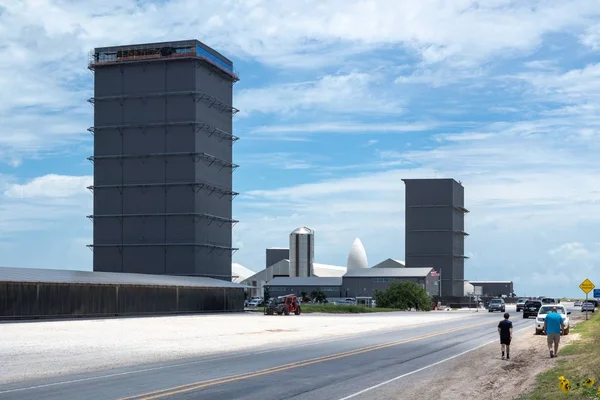
Verizon CEO Estimates SpaceX Needs Up to $500 Billion for US Wireless Network
Dan Schulman told analysts that matching Verizon would require tens of thousands of towers and hundreds of billions of dollars, while Elon Musk disputed the timeline on X.
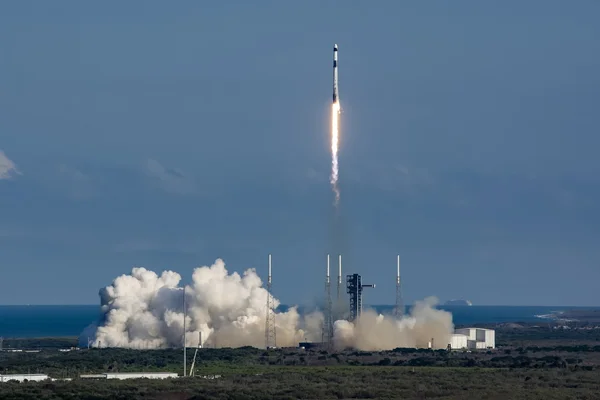
Space Force races to pick a third heavy-lift spaceport site by 2030
The US Space Force has formed a planning team to study a third domestic heavy-lift launch site by 2030, but no location, land deal or decision schedule has been set.
NASA Ends Swift Observatory Science Mission as Atmospheric Drag Forces Reentry
NASA has ended science operations for the Neil Gehrels Swift Observatory after nearly 22 years, and the spacecraft is expected to reenter Earth's atmosphere within weeks.
Comments (0)
Log in or sign up to leave a comment.
No comments yet. Be the first to share your thoughts.