Micron Technology has marked its 2GB (16Gb) GDDR7 memory chips as end of life, ending production and sales of the 28 Gbps and 32 Gbps variants and leaving 3GB (24Gb) modules as its only remaining GDDR7 product. Tom's Hardware reported on September 24, 2026 that the chipmaker is pulling the plug on those 2GB chips, which some Nvidia GeForce RTX 50 series graphics cards used. The report confirmed that the product pages for the module norms now return a message of no results found.
The move was first surfaced by UNIKO's Hardware on 22 September 2026, according to Tom's Hardware. TrendForce reported on September 24, 2026 that Micron's product catalogue now lists its 28 Gbps D8FHL chip, part number MT68A512M32DF-28, as end of life, with the 32 Gbps version carrying the same designation. That leaves 3GB modules as Micron's only remaining GDDR7 offering.
GDDR7 is the memory technology inside Nvidia's GeForce RTX 50 series, a product line that launched on 30 January 2025. Micron was not the primary supplier for that lineup. Samsung was reportedly the sole GDDR7 supplier when the RTX 50 series launched, and SK Hynix joined the supply chain in April 2025. Micron only began supplying GDDR7 to Nvidia in meaningful volumes earlier this year, so its 2GB modules shipped on only a few models, including retail variants of the GeForce RTX 5060.
The decision arrives during a global memory shortage driven by surging artificial intelligence data center demand. Memory suppliers are reallocating capacity toward higher margin products, and Micron has already exited its Crucial consumer memory and solid state drive business, explicitly saying that AI data center demand prompted it to prioritise larger strategic customers in faster growing segments. The end of life designation for 2GB GDDR7 fits that pattern.
Key Facts
The discontinued parts include the 28 Gbps D8FHL module, model number MT68A512M32DF-28, and the 32 Gbps version. Both were 2GB (16Gb) chips. The FPS Review reported on September 23, 2026 that the 2GB GDDR7 D8FHL module had been widely used with many of Nvidia's more budget friendly desktop GPUs, from the GeForce RTX 5060 up to the flagship GeForce RTX 5090. According to those reports, the part is no longer found on Micron's storefront and is said to be end of life, leaving only 3GB GDDR7 options.
Micron's GDDR7 was first spotted on a GALAX GeForce RTX 5060 board in February 2026, using four 2GB chips for 8GB of total memory. That detail underscores how recently Micron entered the consumer GDDR7 market. Samsung and SK Hynix still provide the bulk of supply for the RTX 50 series, so an immediate shortage appears unlikely. However, losing another source amid an already tight memory market could squeeze supply further.
Pricing explains why 3GB GDDR7 has not seen broad consumer adoption. VideoCardz puts 3GB GDDR7 chips at around $60 to $70 each, roughly triple the $20 price of standard 2GB modules, despite offering just 50 percent more capacity. That cost premium has kept 3GB GDDR7 largely confined to the RTX 5090 Laptop GPU and Nvidia's RTX PRO Blackwell GPUs, which are aimed at generative and agentic AI workloads.
eTeknix reported on September 23, 2026 that Micron officially marked the 28 Gbps and 32 Gbps 2GB GDDR7 modules as end of life, stopping production. The report noted that the only alternative in Micron's catalogue of this DRAM type is now the 3GB capacity per module. It added that manufacturers plan to launch 4GB and 6GB GDDR7 memory between 2027 and 2028, preparing for the next generation of Rubin GPUs. Meanwhile, market chatter suggests the GR20x family expected to underpin the Rubin based RTX 60 series may have slipped from the second half of 2027 into 2028.
According to Gazlog, when Nvidia's GeForce RTX 5000 series launched on 30 January 2025, Samsung was reportedly its sole GDDR7 supplier. SK Hynix joined in April 2025, followed by Micron. The 2GB D8FHL modules were used in several RTX 50 series cards, but Micron was never the primary supplier. The FPS Review noted that it is unknown how many 2GB D8FHL modules Nvidia may have stockpiled, but if Micron has ceased production, the whole current product stack would eventually have to transition to 3GB modules if RTX 50 series manufacturing continues.
Analysis
The bigger picture here is that Micron's exit from 2GB GDDR7 is not primarily a gaming story. It is a memory allocation story. Micron has looked at its fabrication capacity and concluded that 2GB GDDR7 for consumer graphics cards is not where the highest returns lie. The company is reportedly shifting focus toward higher density 3GB (24Gb) GDDR7 chips, which yield higher profit margins and are used in Nvidia's high end RTX PRO Blackwell GPUs for generative and agentic AI workloads. Tom's Hardware noted that the decision follows a trend of memory suppliers prioritising AI facing technologies over consumer and retail counterparts.
What this really means is that the consumer graphics card market now competes for memory capacity against AI accelerators, and it is losing. The 2GB GDDR7 chips were relatively cheap at around $20, but their profit margin was thin compared with 3GB modules that sell for $60 to $70. Micron's uncompetitive position in the 2GB segment made a fast exit logical to free up fabrication capacity. The company was not the main supplier for the RTX 50 series, so it could leave without causing an immediate crisis, but its departure removes a source of supply during a period when every source counts.
The judgement here is that the RTX 50 series will not suddenly disappear from shelves, but its future configurations and pricing are now more constrained. Nvidia could still launch its SUPER lineup, potentially introducing 3GB GDDR7 to a 12GB RTX 5070 SUPER, or bumping the RTX 5070 Ti SUPER or RTX 5080 SUPER to 24GB of VRAM. However, 3GB GDDR7 modules fetch a much higher price and could directly impact SUPER pricing. eTeknix noted that the RTX 50 Super series has been put on hold because using 3GB modules makes costs too high, and the modules do not fit efficiently with the memory buses of current GPUs.
AMD could also be affected. The FPS Review observed that AMD has been rumoured to shift to GDDR7 for its upcoming RDNA5 graphics cards, and anything that rocks the boat during the current memory and storage shortage is likely to mean higher costs for consumers. If AMD enters the GDDR7 market just as Micron narrows its catalogue, the competition for modules will intensify. Samsung and SK Hynix remain the primary suppliers, but they too are balancing AI demand against consumer demand. The result is a market where 2GB GDDR7 is being retired before it ever became mainstream, and 3GB GDDR7 is too expensive to replace it broadly.
Why It Matters
For consumers, the immediate effect is limited but the longer term direction is clear. Because Micron was a minor supplier for the RTX 50 series, owners of existing cards are unlikely to face repair or replacement issues in the near term. The bigger risk is for future purchases. If Nvidia has to rely on 3GB GDDR7 for any refreshed or expanded RTX 50 models, those cards will carry higher memory costs. The 50 percent capacity gain does not justify a tripling of price on its own, but the memory shortage gives suppliers unusual pricing power.
The discontinuation also highlights how AI demand is reshaping the hardware industry. Micron's decision to end 2GB GDDR7 production and prioritise 3GB modules for AI GPUs is a small but telling example. The same dynamic led Micron to exit its Crucial consumer memory and SSD business. Gamers and PC builders are now competing for manufacturing capacity with data centers that can pay more and commit to long term contracts. TrendForce noted that major chipmakers are prioritising long term contracts and higher end products as memory supply tightens.
If the RTX 50 Super refresh remains on hold and the Rubin based RTX 60 series slips to 2028, the current generation of graphics cards may have to serve the market for longer than expected. That makes the supply of 2GB and 3GB GDDR7 modules a critical variable. A shortage of suitable memory could delay new product launches, raise prices, or force Nvidia and AMD to adopt memory configurations that are less attractive to buyers. None of those outcomes is good for the consumer GPU market.
Next Up
The next signals to watch are Nvidia's plans for its RTX 50 SUPER lineup and any official comment on GDDR7 sourcing. If Nvidia announces SUPER cards with 3GB modules, it will confirm that the industry is moving to higher density memory despite the cost. If the SUPER lineup remains delayed or cancelled, it will suggest that the price of 3GB GDDR7 is still too high for mainstream gaming. AMD's RDNA5 launch and its GDDR7 supplier choices will also matter, because AMD could absorb some of the demand or add to the pressure.
Further out, manufacturers plan to launch 4GB and 6GB GDDR7 memory between 2027 and 2028, preparing for the next generation of Rubin GPUs. Those parts could eventually restore a more natural capacity progression for consumer cards, but they arrive after the current shortage and after the RTX 60 series window. Until then, the GDDR7 market will remain tight, and Micron's exit from 2GB modules will stand as an early sign that AI priorities now shape what memory is available for gaming.
Related Articles
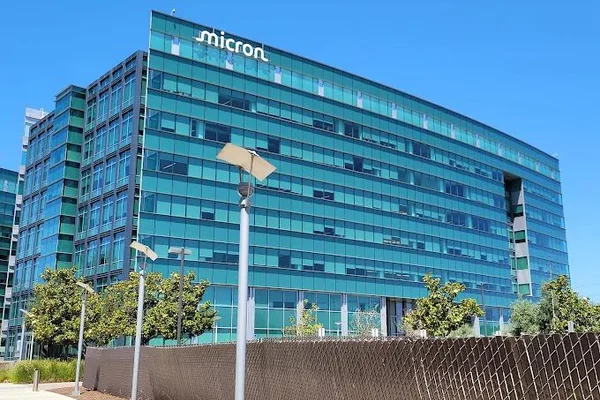
Micron Ends 2GB GDDR7 Production Leaving Nvidia RTX 50 Series With Two Memory Suppliers
Micron has designated both of its 2GB GDDR7 parts as End of Life, trimming Nvidia's RTX 50 memory supply base to Samsung and SK hynix while its 3GB modules remain in production.

Qualcomm unveils Snapdragon 8 Elite Gen 6 and Extreme Gen 6, first 2nm 5GHz mobile chips
Qualcomm's two new flagship platforms use a 2nm TSMC process and a 5GHz Oryon CPU to run on-device AI agents, with the Extreme tier adding 8K60 video and 18MB of GPU memory.

Alibaba unveils Zhenwu V900 AI chip, claims China's most powerful, targets 20GW by 2032
Eddie Wu used the Apsara conference to launch the T-Head Zhenwu V900, tout three times the performance of the M890, promise a 20GW cloud buildout and confirm Qwen models up to 10 trillion parameters.
Comments (0)
Log in or sign up to leave a comment.
No comments yet. Be the first to share your thoughts.