Alibaba Group used its annual Apsara conference in Hangzhou on September 22, 2026, to unveil the Zhenwu V900, an AI accelerator built by its T-Head semiconductor unit that the company describes as China's most powerful AI chip. Chief executive Eddie Wu said the processor delivers three times the performance of its predecessor, the Zhenwu M890, which Alibaba launched in May 2026, and that mass production and commercial release are targeted for the first quarter of 2027.
The announcement landed alongside a broader escalation of Alibaba's artificial intelligence ambitions. The company said its Qwen team intends to train a model with five trillion to ten trillion parameters, well beyond the 2.4 trillion parameters of its current flagship, Qwen 3.8 Max. It also set a target for Alibaba Cloud to operate more than 20 gigawatts of data centre capacity worldwide by 2032. Shares in Hong Kong rose 5.1 percent on the day, their highest level in a month.
The chip is aimed squarely at a market dominated by Nvidia, whose accelerators remain the reference point for frontier AI training. US export controls restrict Chinese firms' access to the most advanced chips and the tools used to make them, a constraint that gives Alibaba's in-house silicon programme both strategic and commercial weight. Alibaba did not say who will manufacture the V900 or on which process node, leaving open how it will navigate those restrictions at volume.
Wu framed the moment in expansive terms, telling the conference that machines would eventually produce more than 1,000 times the thinking of all humanity, up from less than 3 percent today. He said demand for AI was exceptionally robust and that Alibaba was pursuing artificial superintelligence, a goal that now shapes the company's hardware roadmap as much as its model research.
Key Facts
The Zhenwu V900 carries 216GB of memory and 1,200GB/s of chip-to-chip interconnect bandwidth, and natively supports FP8 and FP4, the low-precision number formats that let a chip run AI inference faster and at lower cost. Alibaba said it can be linked in clusters of up to 500,000 chips, enough computing capacity, in its account, to train and run frontier models in the five trillion to ten trillion parameter range, which is precisely the scale its Qwen team now targets.
Reuters reported on September 22 that Alibaba unveiled the chip and said its Qwen team will train the larger model, sending shares up 5 percent. Wu said the company expects significant growth in annual AI chip shipments. Alibaba launched the M890, the V900's predecessor, in May 2026.
Tech Wire Asia reported on September 22 that Alibaba did not publish the benchmarks behind the threefold performance claim and did not name the foundry or process node for the V900. The same report noted that Alibaba said its Zhenwu chips serve more than 650 customers in automotive, finance, energy and manufacturing, and described an experiment in which Qwen3.8-Max ran chip design software autonomously for more than 60 hours, producing chip bus modules with 42 percent less area and no performance loss.
Bloomberg reported on September 22 that Alibaba has committed more than US$53 billion over three years to expand its AI capabilities and raised about US$10.2 billion from a follow-on share offering in Hong Kong in August 2026. Bloomberg also reported that Alibaba plans to list the T-Head chip design unit to tap investor interest in the AI accelerator market.
TrendForce reported on September 22 that T-Head also mapped out a next-generation Zhenwu J900 for the third quarter of 2027, new Panjiu supernode servers powered by the V900 and an in-house ICN Switch in the first quarter of 2027, and Yitian 720 and Yitian 730 server CPUs, both scheduled for the third quarter of 2027. The Yitian 730 introduces T-Head's first fully in-house CPU microarchitecture, while the Yitian 750 will support its proprietary ICN interconnect protocol. T-Head's portfolio now spans Zhenwu GPUs, Yitian CPUs, Panmai smart NICs and ICN interconnect chips.
Analysis
Alibaba's pitch rests on scale rather than disclosure. The V900's headline number, three times the performance of the M890, comes without published benchmarks, and the absence of a named foundry or process node is not a small omission. For a chip meant to train models with trillions of parameters under export controls, manufacturing is the hard part, and Alibaba has chosen to talk about cluster size and memory bandwidth instead. What this really means is that Alibaba is selling an ecosystem argument as much as a silicon argument: the V900 matters less as a standalone part than as the anchor of a stack that includes the ICN Switch, supernode servers and the Qwen models that run on top.
That stack is where the strategy gets interesting. A cluster of up to 500,000 accelerators is a statement about interconnect and systems design, and Alibaba's decision to keep networking, CPUs and smart NICs in house suggests it wants to control the bottlenecks that usually limit large training runs. The 60-hour autonomous chip design experiment, in which Qwen3.8-Max produced bus modules with 42 percent less area and no performance loss, is presented as proof that the models can feed back into the hardware roadmap. It is a modest result by the standards of frontier chip design, but it is a concrete one, and it points at a flywheel in which models help design the chips that train the next models.
The bigger picture here is that China's largest cloud provider is building a vertically integrated alternative to the Nvidia-dominated status quo, and it is doing so at a moment when supply, not demand, is the binding constraint. Wu said the industry's mid-to-long-term demand far outpaces Alibaba's supply capabilities, a candid admission that the 20 gigawatt target for 2032 is as much a procurement and construction problem as a technology problem. The US$53 billion commitment and the US$10.2 billion Hong Kong raise give Alibaba the balance sheet, but data centres require land, power, cooling and chips, and the chip supply chain is exactly where export controls bite.
A planned listing of T-Head would sharpen the financial logic. Separating the chip unit would let investors price the accelerator business on its own terms, and it would give Alibaba a currency for talent and capital in a market where AI silicon valuations have run hot. It would also expose T-Head to quarterly scrutiny on yields and customers, which is a different discipline from shipping internally. The Zhenwu line's 650 customers across automotive, finance, energy and manufacturing suggest the unit is not solely dependent on Alibaba Cloud, though the marquee workloads will remain internal.
Why It Matters
The timing is political as well as commercial. Alibaba's conference came on the eve of a summit between US president Donald Trump and Chinese counterpart Xi Jinping, with AI matters set to figure prominently and Nvidia chief executive Jensen Huang and Microsoft chief executive Satya Nadella attending a White House state dinner. A Chinese company using a domestic stage to claim the country's most powerful AI chip, days before that meeting, is a signal about how central semiconductor self-sufficiency has become to the bilateral agenda.
For buyers of cloud AI capacity, the V900's specifications, 216GB of memory, 1,200GB/s of interconnect and native FP8 and FP4 support, are aimed at inference economics as much as training bragging rights. Low-precision formats cut the cost of serving models, and Alibaba Cloud said it would begin bringing AI supernodes online at commercial scale this quarter, with the M890-based Lingjun Zhenwu GP9A supernode already available and described as the first supernode platform in China to run a model with more than two trillion parameters. If the V900 ships on schedule in the first quarter of 2027, Chinese enterprises will have a domestic option for frontier-scale training at a time when access to imported accelerators is uncertain.
The cautionary note is that performance claims without benchmarks are hard to verify, and Alibaba's own admission that supply constraints limit expansion tempers the ambition. The 20 gigawatt target is a decade-long construction programme, and the gap between demand and supply that Wu described is unlikely to close quickly.
Next Up
The immediate milestones are the first quarter of 2027, when the Zhenwu V900 is due for mass production and commercial release alongside the Panjiu supernode server, and the third quarter of 2027, when T-Head expects to launch the Zhenwu J900 accelerator and the Yitian 720 and Yitian 730 server CPUs. Alibaba Cloud's rollout of AI supernodes at commercial scale, starting this quarter, will be the first real test of whether the systems story holds up outside a conference stage.
Investors will also watch for detail Alibaba has so far withheld: the V900's manufacturing partner and process node, third-party benchmarks for the threefold performance claim, and any progress toward listing T-Head. Qwen 4 is already in training, with Qwen 4.5 and Qwen 5 projected to scale toward five trillion to ten trillion parameters, so the model roadmap and the chip roadmap now have to arrive together.
Related Articles
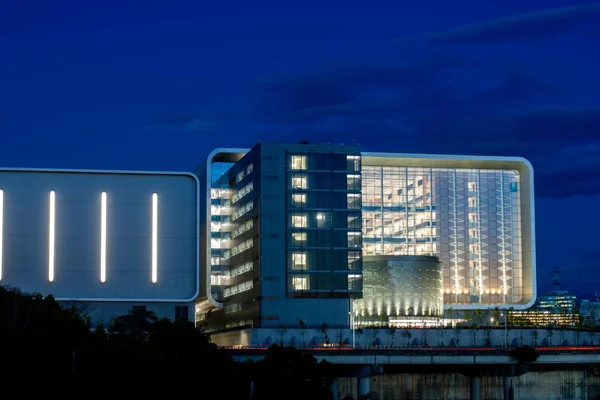
Taiwan breaks ground on TSMC-anchored Baipu advanced packaging park in Kaohsiung
Taiwan has begun building the 88.73 hectare Baipu Industrial Park in Kaohsiung, where TSMC will open advanced packaging validation and training facilities in late 2029.
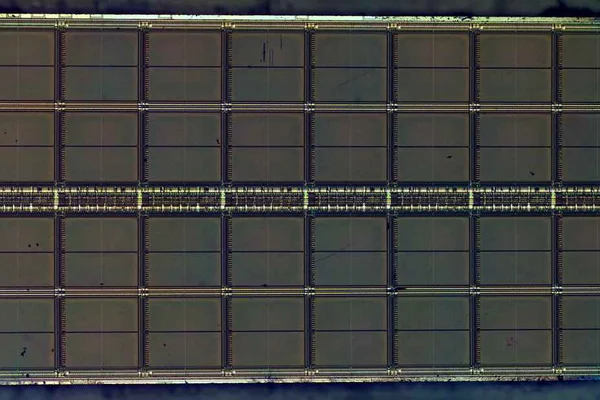
CXMT puts fifth-generation DRAM platform into mass production without EUV tools
ChangXin Memory Technologies says its G5 DRAM platform reaches an 11.95 nanometre active-area half-pitch using quadruple patterning, claiming a process leap achieved without EUV lithography.
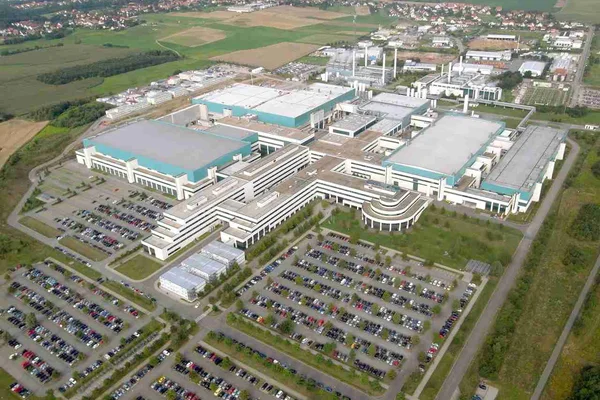
Japan and US discuss ¥3 trillion GlobalFoundries logic chip fab under $550 billion pledge
Japan and the United States are negotiating a ¥2 trillion to ¥3 trillion logic chip factory on American soil that GlobalFoundries would operate under a $550 billion investment pledge, Nikkei reported.
Comments (0)
Log in or sign up to leave a comment.
No comments yet. Be the first to share your thoughts.