NASA has selected a new far-infrared observatory to lead the next generation of its astrophysics fleet. NASA announced on September 23, 2026, that the PRobe far-Infrared Mission for Astrophysics, known as PRIMA, will advance to Phase B development as the first mission in a newly created class of astrophysics missions called Probe Explorers. The decision, issued as NASA release 26-076 and editorially updated the following day, moves a cryogenically cooled telescope from detailed concept study into preliminary design and technology development. If it clears a confirmation review, the mission is targeted to launch in 2033 on a planned five-year survey of the cold and dusty universe.
Far-infrared light sits between the infrared wavelengths that the James Webb Space Telescope observes and the longer radio waves captured by ground-based arrays. That gap matters because a large share of the thermal emission from warm dust and cool gas across the cosmos emerges in far-infrared bands. Much of that light is absorbed by Earth's atmosphere, so the survey work must be done from space. PRIMA is intended to bridge the two regimes, providing deep, sensitive maps that neither existing infrared observatories nor radio telescopes can produce alone.
The mission brings together a broad coalition. NASA's Jet Propulsion Laboratory in Southern California will manage PRIMA, with contributions from NASA's Goddard Space Flight Center in Maryland and Marshall Space Flight Center in Alabama. The California Institute of Technology's Infrared Processing and Analysis Center, or IPAC, will serve as the mission science centre, receiving, processing and archiving raw data and scheduling astronomers' observing time. International partners include CNES of France, ASI of Italy, DLR of Germany, the Canadian Space Agency, South Korea's KASI, Japan's JAXA and the UK Space Agency.
The Probe Explorers class emerged from the National Academies' 2020 Decadal Survey, which recommended a new tier of astrophysics missions sized between the agency's smaller Explorer spacecraft and its flagship observatories. NASA initially selected PRIMA in 2024 alongside the Advanced X-ray Imaging Satellite, or AXIS, for detailed concept studies. After reviewing both concepts, the agency chose PRIMA to proceed as the first mission in the new class. The Explorers Program has supported more than 100 missions since Explorer 1 launched in 1958.
Key Facts
PRIMA will carry a 5.9-foot (1.8-metre) telescope and three primary instruments: the cryogenically cooled telescope itself, an imaging polarimeter called PRIMAger and a high-resolution spectrometer called FIRESS. The observatory will survey far-infrared wavelengths from 24 micrometres, roughly one-third the thickness of a human hair, to 235 micrometres, about the thickness of two stacked sheets of paper. SatellitePro ME reported on September 25, 2026, that the mission is part of NASA's long-running Explorers Programme and is designed to investigate the history and evolution of the universe by surveying the cosmos in far-infrared wavelengths. The target launch is 2033, followed by an initial five-year mission.
Cost and management details are specific. NASA said the project cost is capped at $1.2 billion if the mission is confirmed, and that figure excludes launch and other non-project costs. Spaceflight Now reported on September 24, 2026, that the agency would select a launch provider at a later time. Caltech's IPAC announced on September 23, 2026, that the Jet Propulsion Laboratory, which Caltech manages for NASA, will develop and operate the $1 billion observatory.
TU Delft reported on September 24, 2026, that PRIMA will be the first space telescope with an actively cooled mirror, held at 4.5 degrees Kelvin. That cooling reduces thermal noise so sharply that the observatory will be one thousand to one hundred thousand times more sensitive than its predecessors, according to the Dutch university. The detectors, housings and insulation for PRIMAger are planned to come from SRON, TU Delft and the University of Groningen. PRIMA is scheduled to travel to Lagrange point L2.
Caltech and JPL scientists pioneered the superconducting microwave kinetic inductance detectors, or MKIDs and KIDs, that enable PRIMA's ultrasensitive cameras and spectrometers. The technology was invented by Caltech's Jonas Zmuidzinas and JPL engineer Rick LeDuc in 1999, and the detectors stem from three decades of research at the two institutions. The Dutch team's Kinetic Inductance Detectors are described as sensitive enough to measure the cosmic background radiation. SRON and the University of Groningen also plan to supply a novel Linear Variable Filter that replaces a prism or grating while occupying less volume and weight.
NASA's leadership framed the selection in expansive terms. Nicky Fox, associate administrator of NASA's Science Mission Directorate, described PRIMA as 'humanity's next window into the deep universe' and said it will unveil the obscure across cosmic time, helping researchers understand the formation of planets, stars and black holes and even how water on Earth came to be. Shawn Domagal-Goldman, director of NASA's Astrophysics Division, said the mission would kick off the next decade.
Analysis
The scientific case rests on a gap in the electromagnetic spectrum that has resisted systematic study. Far-infrared observations are difficult from the ground because the atmosphere blocks much of the signal and because an uncooled mirror radiates strongly in exactly the wavelengths the telescope is trying to detect, effectively blinding its own camera. Combining an actively cooled mirror with sensitive detectors opens access to sources thousands of times fainter than those currently observable.
What this really means is that PRIMA is less a replacement for existing observatories than a bridge between them. Webb excels at near- and mid-infrared work, while radio arrays capture much longer wavelengths. PRIMA's 24 to 235 micrometre range fills the space in between, where dust-shrouded early galaxies, the chemistry of interstellar clouds and the growth of supermassive black holes leave their signatures. Because that band contains the peak thermal radiation of many warm objects both near and far, the mission can address questions that have been difficult to frame, let alone answer.
The programmatic judgement matters as much as the science. Selecting PRIMA as the first Probe Explorers mission tests a cost tier that NASA has not previously used for astrophysics. A $1.2 billion project cap, excluding launch and other non-project costs, is far below flagship budgets but well above typical Explorer missions. The confirmation review, which weighs technical, programmatic and cost performance, will decide whether the design is mature enough to enter Phase C. That checkpoint gives the agency a documented way to stop or reshape the mission before large sums are committed.
The international structure also spreads risk. France, Italy, Germany, Canada, South Korea, Japan and the United Kingdom are contributing through their space agencies, while JPL manages the effort and Goddard and Marshall provide institutional support. Dutch institutes are positioned to supply critical detector hardware. The arrangement mirrors a broader pattern in which NASA astrophysics missions rely on partner contributions to extend capability while keeping the agency's own project cost within a defined ceiling.
Why It Matters
PRIMA targets questions that touch on human origins as much as astrophysics. The mission will study the origins of exoplanets, how galaxies and their black holes grew and evolved, and how dust and heavy elements built up over cosmic time. Water on Earth is part of that story; tracing how dust and ices are processed in interstellar clouds and planet-forming disks informs the inventory of ingredients available to young worlds.
The mission also matters for the health of the field. Far-infrared astronomy has been a niche because of the technical difficulty of cooling instruments and the limited number of facilities. A dedicated observatory with orders-of-magnitude more sensitivity would create a new user base. Astronomers would gain a tool for the first galaxies, which are often surrounded by dust that infrared light can uniquely illuminate, and because the universe is expanding, that light arrives today as far-infrared radiation.
There is a competitive dimension too. NASA's Nancy Grace Roman Space Telescope has just launched, and PRIMA would follow in the 2030s as part of a diversified portfolio spanning X-ray, infrared and far-infrared wavelengths. By filling a long-standing blind spot, the mission reduces reliance on any single observatory and keeps a broad set of cosmic questions within reach.
Next Up
The immediate next step is the confirmation review. NASA will assess PRIMA's technical, programmatic and cost performance to determine whether the mission is ready to begin implementation in Phase C. A decision to proceed would unlock full-scale development and a launch provider selection, which NASA has said will come at a later time. The targeted launch remains 2033, with a planned five-year primary mission.
If confirmed, PRIMA would become the first Probe Explorers mission and a template for the class. Its performance will shape how NASA weighs future proposals for the tier, including missions that address other wavelengths and science goals. For now, the observatory moves into a phase of design refinement and technology maturation, with JPL managing the effort and a multinational team preparing instruments to study the cold, dusty universe.
Related Articles
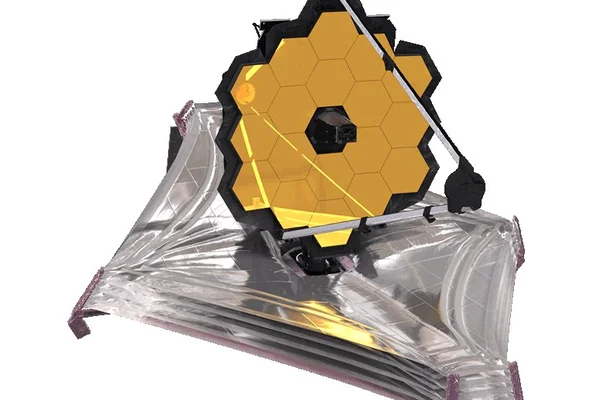
NASA selects PRIMA far infrared telescope as first Probe Explorers mission for 2033 launch
NASA has approved the PRIMA far-infrared observatory for preliminary design, a $1.2 billion mission to study planet formation and cosmic history with a 2033 launch target.

NASA and SpaceX Set October 1 for Crew 13 Astronaut Launch to ISS After Valve Fix
After replacing a faulty oxidizer valve on the Dragon spacecraft, NASA and SpaceX have rescheduled the Crew 13 mission to the International Space Station for October 1, 2026, with a four-person crew.
Albania Becomes 73rd Artemis Accords Signatory as NASA Led Framework Expands
The Balkan nation signs at a Washington ceremony, extending a 2020 lunar cooperation framework to 73 countries weeks before a gathering of signatories in Turkiye.
Comments (0)
Log in or sign up to leave a comment.
No comments yet. Be the first to share your thoughts.