Qualcomm unveiled two flagship mobile platforms at its Snapdragon Summit 2026 in Lahaina, Maui on September 22, 2026: the Snapdragon 8 Elite Gen 6 and the Snapdragon 8 Elite Extreme Gen 6. Both are built on TSMC's 2nm (N2) process and use an eight-core Oryon CPU whose two Prime cores reach 5.0GHz, which Qualcomm calls the first mobile CPU to break the 5GHz threshold. TechTimes reported on September 23 that Qualcomm broke two records at once: the first mass-market mobile chips on TSMC 2nm and the first smartphone CPU past 5GHz.
Android Authority reported on September 22 that after several years of rising clocks, these are the first smartphone processors with a 5GHz CPU. The Snapdragon 8 Elite Gen 5 for Galaxy runs at 4.74GHz by comparison. Both chips use a 2+6 Oryon layout, two Prime cores at 5GHz and six Performance cores at 4GHz, with 16MB of Oryon FlexCache. Qualcomm described the CPU as new and custom-built, a successor to the 8 Elite Gen 5 with SME support only, not SME2.
Notebookcheck reported on September 22 that the Extreme model posts a 13% uplift in raw CPU performance while cutting CPU power consumption by 37% versus the 8 Elite Gen 5. The standard chip is 10% faster in CPU tasks, Android Authority reported. They are the third chipset family on TSMC 2nm after Apple's A20 Pro and Samsung's Exynos 2600. TechTimes reported on September 23 that TSMC moved from FinFET to Gate-All-Around FET nanosheet transistors, giving up to 15% higher performance or 30% lower power versus the prior 3nm N3E process.
Qualcomm positioned the chips at the centre of what it calls the agentic AI era. India Today reported on September 23 that the platforms combine Qualcomm's custom Oryon CPU, Adreno GPU and Hexagon NPU to enable everyday AI agents that deliver faster, more personalised and adaptive experiences based on users' needs throughout the day. TechRadar reported on September 23 that Lekha Motiwala, Senior Director of Product Management at Qualcomm, said some OEMs reach for the pinnacle of technology while others target broader audiences, so Qualcomm wants to give choice and flexibility. Ellie Fortin, Senior PR spokesperson, said both are on 2nm TSMC.
Key Facts
The Oryon CPU in both chips has two Prime cores up to 5.0GHz and six Performance cores up to 4.0GHz, backed by 16MB Oryon Flex Cache. Notebookcheck reported on September 22 that Qualcomm calls this the world's first mobile CPU to reach 5GHz. The new L2 architecture gives all eight cores access to one shared pool for faster core handoff. Qualcomm claims the CPU is 37% more efficient than the 8 Elite Gen 5, and the Extreme is 13% faster in CPU tasks while the standard chip is 10% faster, Android Authority reported on September 22.
Both chips get an upgraded sliced Adreno GPU with three slices at 1.45GHz versus 1.2GHz previously, and Qualcomm claims 40% better power efficiency than Gen 5. The standard GPU is up to 35% faster while the Extreme is up to 44% faster, Android Authority reported on September 22. The Extreme adds Adreno Matrix Cores for AI super-resolution and frame generation under the name Adreno Neural Fusion, delivering 40% power savings versus the prior solution, and supports titles such as Honkai Star Rail, Diablo Immortal and War Thunder Mobile. Only the Extreme carries 18MB of dedicated Adreno High-Bandwidth Memory.
Both chips get a Hexagon Element Accelerator enabling a context window up to 32,000 tokens and a new sensing hub with dual micro-NPUs that Qualcomm says delivers 85% more performance and 20% better efficiency, Android Authority reported on September 22. Notebookcheck reported on September 22 that the reengineered Hexagon NPU delivers 35% more performance and 33% better power efficiency, with 50% more shared memory. The Extreme supports Mixture-of-Experts models up to 30 billion parameters on-device.
Video and imaging show the widest split. Android Authority reported on September 22 that the Extreme supports 4K/240fps slow-motion and 8K/60fps capture and the APV codec, while the standard chip does not, and the VVC codec gives up to 55% power savings. Notebookcheck reported on September 22 that the Extreme expands capture to 8K60 and 4K240 slow-motion with native APV codec support and hardware VVC/H.266 decoding, while the standard Gen 6 handles 8K30 and 4K120 with an NPU improvement of 14%. An upgraded NPU-ISP link lets each pixel carry 16 bits of AI data, which Qualcomm describes as 256 times more AI data than before.
Both chips use the Qualcomm X105 modem, the first Release 19-capable modem, with 5G-over-satellite support, up to 14.8Gbps downlink and 4.2Gbps uplink, Android Authority and Notebookcheck reported on September 22. FastConnect 8800 reaches up to 11.6Gbps and is the first mobile connectivity system with 4x4 Wi-Fi and Wi-Fi 8 (802.11bn) readiness. The SoCs support LPDDR5X/6-5300 memory up to 24GB and UFS 5.0 storage. TechTimes reported on September 23 that the Extreme adds LPDDR6 support while the standard chip uses LPDDR5X.
Analysis
Qualcomm's decision to split its flagship into two tiers is not just about giving consumers a choice. TechTimes reported on September 23 that the dual-flagship strategy is a direct response to DRAM supply constraints, with the mainstream Gen 6 (SM8950) giving OEMs a cheaper 2nm path and the Extreme (SM8975) carrying the full feature set. The bigger picture here is that Qualcomm is not simply chasing clock speed; it is redesigning the memory hierarchy of the smartphone to keep AI agent workloads on-device as memory budgets tighten. The shared FlexCache pool, the larger Hexagon shared memory block and the 18MB of on-chip GPU memory in the Extreme all aim to cut the memory-traffic penalty that agentic AI imposes.
The 5GHz milestone itself deserves scrutiny. TechRadar reported on September 23 that Qualcomm is clearly working to bring AI processing closer to the chipset to offset industry memory constraints, so upcoming flagships with lower RAM should still process AI tasks well or better. That framing suggests the 5GHz Prime core is less a raw-speed trophy and more a way to finish latency-sensitive tasks quickly and return to a low-power state. The 37% CPU efficiency gain and the 40% GPU efficiency gain are therefore the more consequential numbers than the peak clock, because they determine whether an agent that runs continuously through the day is practical.
The tiering also creates a new segmentation risk for Android OEMs. TechRadar reported on September 23 that the Motorola Signature 27 and Xiaomi 18 Pro Max are the first phones announced with the Snapdragon 8 Elite Extreme Gen 6, while the Xiaomi 18 Pro will use the regular Snapdragon 8 Elite Gen 6. That means two phones in the same family can ship with materially different video capture, GPU memory and AI model capacity, even though both carry a Snapdragon 8 Elite Gen 6 badge. Those exclusive features will anchor premium marketing.
Why It Matters
The launch reshapes the premium Android landscape. India Today reported on September 23 that Qualcomm says the chips will debut in flagship smartphones from HONOR, iQOO, Motorola, OnePlus, OPPO, REDMI, RedMagic, vivo and Xiaomi. Android Authority reported on September 22 that Xiaomi confirmed the Xiaomi 18 family would launch in China on September 23, and that Samsung was not on the list, though Galaxy S27 models are expected to use the chips early next year. For a generation, Android's biggest volume flagship will not be first to the 2nm 5GHz platform, which gives the Chinese OEMs a rare lead window.
The feature gap between the standard and Extreme chips matters for the broader market. Notebookcheck reported on September 22 that the reengineered Hexagon NPU delivers 35% more performance and 33% better power efficiency, with a new Element Accelerator, micro-tile inferencing and 50% more shared memory. Those gains apply to both chips, but the Extreme can run MoE models over 30 billion parameters on-device with up to 32K context and supports INT2, INT4, INT8, INT16, FP8 and FP16. That is the difference between a phone that summarizes a message and a phone that runs a local agent over a user's entire working context. The tiering effectively creates two classes of agentic AI phone.
There is also a supply-side message. TechTimes reported on September 23 that Samsung, Xiaomi, Motorola and other manufacturers will ship phones powered by these chips through 2027, and that the broader 2027 flagship wave including the Samsung Galaxy S27 is expected in Q1 2027. Qualcomm is betting that on-device agents, not raw benchmarks, will drive the next upgrade cycle. The 14.8Gbps downlink X105 modem and Wi-Fi 8-ready FastConnect 8800 are supporting acts, but they keep the platform credible against Apple's A20 Pro and Samsung's Exynos 2600, both of which are already on 2nm.
Next Up
The immediate next step is the Xiaomi 18 Pro series, which TechTimes reported on September 23 will launch in Beijing on September 23, with the 18 Pro carrying the standard Gen 6 and the 18 Pro Max carrying the Extreme Gen 6. Motorola's Signature 27, also Extreme Gen 6, brings a seven-year OS upgrade commitment, TechTimes reported. Android Authority reported on September 22 that HONOR, iQOO, Motorola, OnePlus, OPPO, REDMAGIC, Redmi and vivo also confirmed devices.
Qualcomm also used the Summit to announce the acquisition of Modular, the company behind the Mojo programming language and MAX inference engine, both to be open-sourced, and previewed a High Bandwidth Compute co-processor for a future MWC announcement, TechTimes reported on September 23. The Samsung Galaxy S27 wave is expected in Q1 2027, so the question of whether Samsung adopts the Extreme tier or the standard tier will shape the first half of next year's Android flagship market.
Related Articles

Alibaba unveils Zhenwu V900 AI chip, claims China's most powerful, targets 20GW by 2032
Eddie Wu used the Apsara conference to launch the T-Head Zhenwu V900, tout three times the performance of the M890, promise a 20GW cloud buildout and confirm Qwen models up to 10 trillion parameters.

Taiwan breaks ground on TSMC-anchored Baipu advanced packaging park in Kaohsiung
Taiwan has begun building the 88.73 hectare Baipu Industrial Park in Kaohsiung, where TSMC will open advanced packaging validation and training facilities in late 2029.
CXMT puts fifth-generation DRAM platform into mass production without EUV tools
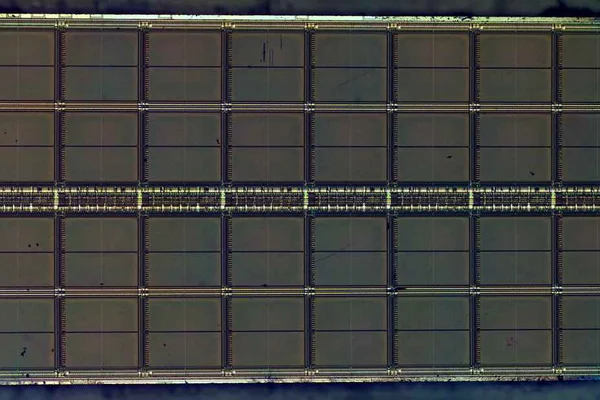
ChangXin Memory Technologies says its G5 DRAM platform reaches an 11.95 nanometre active-area half-pitch using quadruple patterning, claiming a process leap achieved without EUV lithography.
Comments (0)
Log in or sign up to leave a comment.
No comments yet. Be the first to share your thoughts.