JAXA launched Michibiki-7 on the H3 rocket No. 9 on Tuesday, with the satellite separating as planned and beginning its on-orbit verification phase — moving Japan's Quasi-Zenith Satellite System (QZSS) one step closer to its planned seven-satellite constellation and marking the H3 vehicle's recovery after a December failure on H3 No. 8.
Better Positioning for Everyday Devices
QZSS boosts positioning signals for smartphones, car navigation and critical infrastructure across Japan, augmenting GPS in urban canyons and mountainous terrain where satellite signals are blocked. A full seven-satellite constellation would reduce Japan's reliance on foreign global navigation satellite systems and improve domestic positioning redundancy, delivering more reliable location services for everyday users and critical systems. Engineers will now confirm precise orbit insertion and carry out extended in-orbit testing and commissioning before Michibiki-7 is declared operational.
The mission is the ninth flight of the H3, the two-stage liquid-fuel rocket developed by JAXA and Mitsubishi Heavy Industries. Tuesday's success follows the December failure of H3 No. 8, which had delayed earlier Michibiki launches; the rocket returned to flight with a successful mission earlier this year. The H3 program, which has struggled with cost and reliability questions since its troubled debut in 2023, has now logged consecutive successes as JAXA works through a crowded manifest of government and commercial payloads.
Related Articles
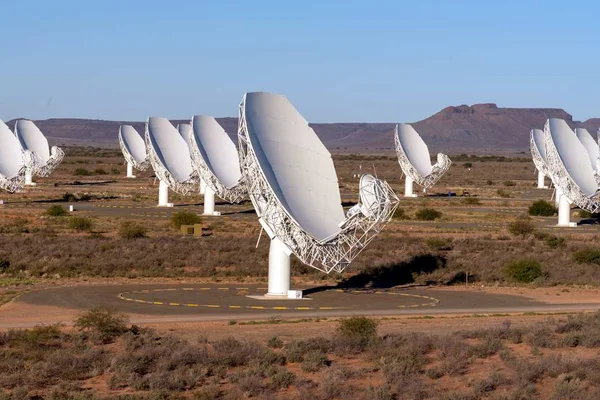
Astronomers trace first exoplanet radio emission to Beta Pictoris b with MeerKAT
MeerKAT's 64 dishes in South Africa recorded circularly polarized bursts from Beta Pictoris b, implying a magnetic field at least 200 times stronger than Jupiter's.

Google Puts Four TPUs in Orbit on SpaceX Mission to Test Project Suncatcher
Google confirmed its first Project Suncatcher prototype satellite, built with Planet and carrying four TPUs, reached orbit on SpaceX's Transporter-18 and is operating as expected.
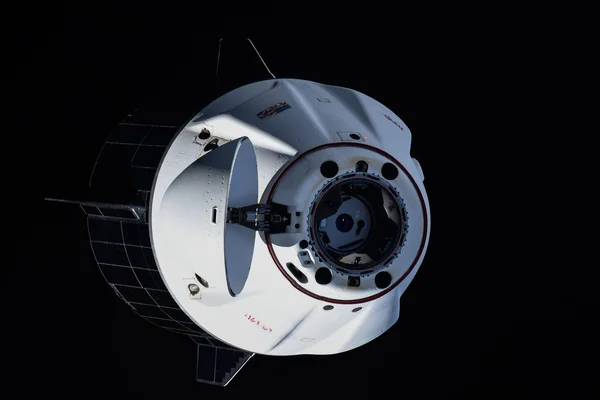
NASA and SpaceX Send Four Astronauts to Space Station in Record 7 Hour 50 Minute Trip
The Crew 13 mission lifted off from Cape Canaveral on October 1, 2026, carrying four astronauts to the International Space Station on a planned 7 hour 50 minute transit that NASA says is the fastest by a U.S. spacecraft.
Comments (0)
Log in or sign up to leave a comment.
No comments yet. Be the first to share your thoughts.