Fast radio bursts are among the most mysterious phenomena in astronomy. Each one is a powerful flash of radio waves that lasts only milliseconds, yet in that brief moment it releases enormous amounts of energy. Researchers have theories about what objects produce them, but they do not have conclusive proof. The bursts arrive from deep space without warning, and most of them flare just once and never repeat, which makes them extremely difficult to study.
Working out where a burst comes from is the hardest part of the problem. A radio telescope can fix a burst's position on the sky, but the galaxy that produced it is often far too faint for ground based observatories to see. For years the record for the most distant localized burst stood at a comparatively modest distance. In 2023, astronomers at the University of Sydney were involved in discovering what was then the most distant fast radio burst, a record that has now been surpassed.
The new record holder was first spotted on March 4, 2024. The MeerTRAP project, a team that hunts for fast radio bursts using South Africa's MeerKAT radio telescope, detected a single burst and designated it FRB 20240304B. MeerKAT, an array of 64 dishes each 13.5 metres in diameter that operates between 0.6 and 3.5 gigahertz, localized the burst with great precision. That precision told astronomers the burst was extremely distant, but it also created a puzzle. When they pointed the world's largest ground based telescopes at the spot, they found nothing at all.
Answering the question required a telescope in space. NASA's James Webb Space Telescope turned its infrared instruments on the same patch of sky. Webb's Near-Infrared Camera detected a faint galaxy at exactly the right position, and its Near-Infrared Spectrograph measured the galaxy's redshift at 2.148. That number places the burst at a time when the universe was only about 3 billion years old, roughly a quarter of its current age. The team, led by Dr. Manisha Caleb and Dr. Themiya Nanayakkara of the University of Sydney, published the result in the journal Science on October 8, 2026.
Key Facts
SARAO reported on October 8, 2026 that the record breaking burst dates back to just 3 billion years after the Big Bang. The redshift measurement of 2.148 makes FRB 20240304B the most distant fast radio burst ever localized, more than doubling the previous distance record. Space.com reported on October 8, 2026 that the host galaxy sits around 11 billion light years away and that the burst has been travelling towards Earth since the universe was roughly 3 billion years old. The flash itself lasted only about 1 millisecond, and the radio waves crossed more than 10 billion years of cosmic history before reaching our planet.
The host galaxy is nothing like astronomers expected. Most fast radio burst hosts identified so far are massive systems that are busy forming stars. This one, by contrast, is a small, metal poor dwarf galaxy that is nonetheless undergoing a very active episode of star formation. It is about 1,000 times less massive than astronomers had anticipated. Laura Driessen of the University of Sydney described the host as surprisingly small, metal poor and vigorously forming stars. Much of its stellar population may have formed within just 30 million years, and astronomers are seeing the galaxy as it was at a period known as cosmic noon.
Manisha Caleb of the University of Sydney, the lead author, said the team had expected a big, nicely formed galaxy with lots of stars, and instead found a little dwarf galaxy that was actively forming stars. The youth of the host matters because it bears on the two leading explanations for what makes a fast radio burst. If the bursts come from the merger of two neutron stars, the pair normally takes at least a billion years to spiral together, which sits awkwardly with a galaxy whose stars formed so recently. A newborn magnetar, a highly magnetized neutron star left behind when a massive star explodes as a supernova, fits the picture far better. Caleb said the work suggests it is very unlikely that this burst was produced by a merger.
India Today reported on October 9, 2026 that Webb's Near-Infrared Camera spotted the galaxy while the Near-Infrared Spectrograph measured its redshift at 2.148. The signal also carried a record of the matter it passed through on its long journey. Researchers identified evidence of two cosmic structures along the line of sight: a previously unknown galaxy cluster about 3.5 billion light years away, and the nearby Virgo Cluster at roughly 54 million light years from Earth. Those structures matter because they let astronomers study how the burst's radio waves interacted with matter in the space between galaxies.
Analysis
What this really means is that a single detection has sharply narrowed a debate that has run for years. Fast radio bursts have been attributed to neutron star mergers, to magnetars, and to other energetic events, and the evidence has been frustratingly ambiguous. A burst that went off in a galaxy where much of the star formation happened within a few tens of millions of years is a poor fit for a merger channel that needs roughly a billion years of orbital decay. It is a strong fit for a young magnetar born in the collapse of a massive star.
The second surprise is the host galaxy itself. Astronomers had built a working picture of fast radio burst hosts as large, well formed, star rich systems, and the data kept confirming it. Finding a dwarf galaxy 1,000 times less massive than expected forces a rethink about what kind of environment can produce these events. It also raises an awkward question. The fact that this host was invisible to the world's largest ground based telescopes suggests that the population of known hosts may not be a fair sample of the population that exists.
There is a third layer to the result that is easy to miss. As radio waves cross the universe they interact with matter along the path, which means a burst carries an imprint of everything it passed through. In this case that imprint included two structures: a previously unknown galaxy cluster roughly 3.5 billion light years away and the Virgo Cluster at about 54 million light years. Astronomers therefore get two results for the price of one, a record breaking distance measurement and a way to map matter that otherwise emits no detectable light.
It is also worth noting how quickly the frontier has moved. The previous record for the most distant localized burst was set only in 2023, with University of Sydney astronomers among those involved. Within about three years that record has been more than doubled. SARAO reported on October 8, 2026 that MeerKAT may detect and localize several fast radio bursts per year at redshift greater than 1, which suggests this is not a one off but the beginning of a steady stream of distant localizations.
Why It Matters
Fast radio bursts are valuable precisely because they are bright, brief and far away. Because the radio waves interact with free electrons and other matter along the line of sight, each burst acts as a probe of the material between galaxies, including material that emits no light of its own and cannot be seen directly. Finding bursts at greater distances extends that probe deeper into cosmic history. It also gives astronomers a way to test their models against environments that simply did not exist in the nearby universe.
The result also matters for the study of how stars and galaxies formed. The host of FRB 20240304B is a small, metal poor dwarf galaxy caught in a vigorous burst of star formation at cosmic noon, the era when the universe was churning out stars at its highest rate. Dwarf galaxies like this one are thought to be important building blocks of larger systems, and they are faint enough that they are easily missed in surveys. A magnetar in such a galaxy offers a rare, bright signal from an object that would otherwise stay invisible.
Finally, the work shows what happens when a radio array and an infrared space telescope are used together. MeerKAT did the finding and the precise localization. Webb did the identification and the measurement that ground based observatories could not deliver. Neither instrument could have produced the result alone. Ben Stappers of the University of Manchester, a co-author and the principal investigator of the MeerTRAP project, framed the achievement as a step on a longer road, saying the next step is to push this frontier further and see how close we can get to the first generations of stars.
Next Up
The immediate plan is to keep looking. SARAO reported on October 8, 2026 that MeerKAT may detect and localize several fast radio bursts per year at redshifts greater than 1. The SKA-Mid telescope, into which MeerKAT will eventually be incorporated, is expected to detect even more distant bursts. Astronomers also want to know whether the dwarf galaxy host of FRB 20240304B is typical of distant bursts or an outlier, a question that only a much larger sample can answer.
Caleb noted that what makes fast radio bursts interesting is that nobody knows what generates them. There are theories for what objects produce them, but no conclusive proof. Every new localization tightens the constraints, and the new record already argues against one popular explanation while strengthening another. As Stappers put it, the next step is to push this frontier further and see how close we can get to the first generations of stars.
Related Articles

South Korea's Nuri rocket completes fifth flight, deploys 15 satellites
South Korea's homegrown Nuri rocket placed five NEONSAT microsatellites and nine CubeSats into orbit, but one Quaternion CubeSat failed to separate.
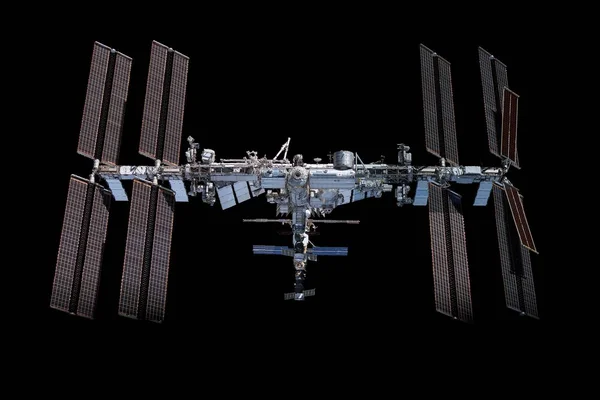
NASA and SpaceX Set October 7 Undocking for Crew 12 After Nearly Eight Months at ISS
Four astronauts will leave the International Space Station aboard a SpaceX Dragon on October 7, with a Pacific splashdown planned the following day off California.
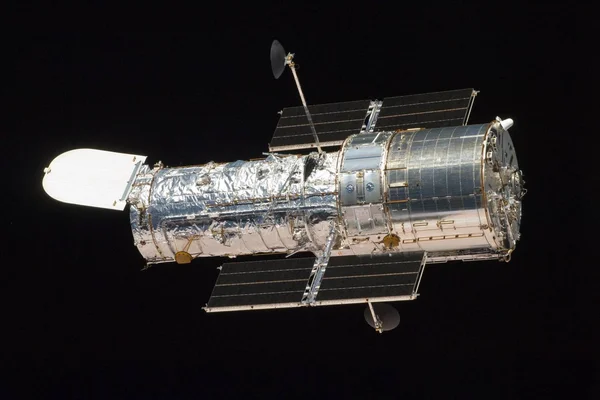
Hubble archival data points to first suspected second-generation planet around a white dwarf
The Nature Astronomy study links an unusually strong niobium signal in a quarter-century-old Hubble spectrum to a Jupiter-sized world that may have formed from a dying star's own ejected material.
Comments (0)
Log in or sign up to leave a comment.
No comments yet. Be the first to share your thoughts.