Planetary magnetic fields shape atmospheric escape, mediate interactions with stellar winds, and encode information about the deep interiors that generate them, yet they had never been measured directly for a planet beyond the solar system. Inside the solar system, robotic spacecraft have done the job by flying through the fields of Earth, Jupiter, Saturn, Uranus and Neptune. For the thousands of exoplanets now known, researchers have had to settle for indirect hints drawn from reflected light or from the chemistry of an atmosphere rather than from the field itself.
A direct signature has been known for decades. Auroral radio emission, produced by the electron cyclotron maser instability, is generated when energetic electrons spiral along magnetic field lines. The highest frequency that such a maser can emit is set by the strength of the magnetic field at its source, which means a radio spectrum doubles as a magnetometer. Aurora-like radio emission has previously been seen from Jupiter, Saturn and the sun, plus stars and brown dwarfs. For exoplanets there had been hints before, but none confirmed, largely because the source could not be ruled out as the host star.
The Beta Pictoris system, about 63 light-years away in the constellation Pictor, has long been a favorite laboratory for watching planetary systems take shape. Its star is young and 1.75 times as massive as the sun, and the system itself is only about 23 million years old. Beta Pictoris b, a gas giant, was first identified in 2008 with the European Southern Observatory's Very Large Telescope. It orbits at roughly eight times the Earth-Sun separation and takes about 24 years to complete one lap. Two more planets, c and d, were found in 2019 and 2026.
On October 2, 2026, a team led by Kevin N. Ortiz Ceballos, a doctoral researcher at the Center for Astrophysics | Harvard & Smithsonian, announced that it had detected auroral radio emission coming directly from that planet. The work used MeerKAT, an array of 64 radio telescope dishes in South Africa operated by the South African Radio Astronomy Observatory. The paper, posted to arXiv on September 15, 2026, lists Ortiz Ceballos alongside Edo Berger and Yvette Cendes, and reports that the emission implies a magnetic field of at least 1.25 kilogauss at the planet. It has not yet undergone peer review, which is underway.
Key Facts
CNN reported on October 2 that the detection traces repeating radio bursts that appear to come from Beta Pictoris b, and that the emission involves auroras similar to Earth's northern lights. Daily Galaxy reported on October 2 that the scientists connected the signal to electron cyclotron maser instability, the same mechanism behind auroral radio emissions observed from Jupiter, Earth, Saturn, Uranus and Neptune. Futura-Sciences reported on October 1 that the team analyzed four observing sessions conducted between February 2025 and May 2026, capturing rapid radio bursts along with weaker, continuous background emission over broad frequencies.
The numbers behind the claim are precise. Yahoo Tech reported on September 29 that MeerKAT's 64 antennas recorded both rapid, recurring bursts and persistent emission across a frequency range of 0.85 to 3.5 gigahertz, with the highest detected frequency implying a minimum magnetic field strength of approximately 1,250 gauss at the emission site. For comparison, Earth's surface field runs around 0.5 gauss and Jupiter's strongest regions reach roughly 14 gauss. Berger, a professor of astronomy at Harvard University and a coauthor, said the magnetic field on the planet is at least 200 times stronger than the magnetic field of Jupiter.
Localization is the achievement that separates this result from earlier attempts. The team reported that the planet reaches an angular separation of up to 0.55 arcseconds during its 24-year orbit, while the host star is magnetically quiet, and that astrometric calibration matched the position of the radio source to the orbit of the gas giant. Joseph Callingham of the University of Amsterdam, who was not involved in the work, wrote that what is unique for this study is that the researchers localise the emission to the planet itself, separate from the star. MeerKAT's interferometric design, which combines the signals of 64 dishes, made that separation possible in a way earlier radio searches could not.
The planet itself is a young, massive benchmark. Beta Pictoris b is a gas giant with a mass estimated between 9 and 13 times that of Jupiter, commonly described as about 12 Jupiter masses, and it orbits a star roughly 64 light-years from Earth in a system about 23 million years old. During one 2025 observation the researchers noted two distinct radio bursts occurring roughly eight hours apart, matching the planet's known rotation period, although additional observing runs are needed to confirm that the pulses repeat on a strict schedule. The preprint itself runs to 32 pages with 9 figures and 3 tables, and its abstract states plainly that this is the first direct detection of auroral radio emission from an exoplanet, with the MeerKAT array.
Analysis
What this really means is that exoplanet magnetism has moved from inference to measurement. Until now, every statement about the magnetic field of a planet beyond the solar system rested on models or on proxy observations, and the preprint says exactly that: planetary magnetic fields shape atmospheric escape, mediate interactions with stellar winds and encode information about planetary interiors, yet they have not been directly measured for planets beyond the solar system. A radio frequency is a far more direct instrument than a spectrum of reflected starlight, because the emission is generated by the field itself rather than merely altered by it.
The bigger picture here is that the technique is portable. The detection depended on a fortunate combination: a young, self-luminous giant planet with a strong dynamo, a host star that is magnetically quiet, and an array capable of resolving the two objects. Other young giants, and the brown dwarfs that already show similar bursts, offer the same ingredients. The team also noted that the inferred field strength aligns with theoretical predictions developed for cold, magnetized brown dwarfs, and that the measurement matches predictions based on dynamo scaling for young, massive giant planets, a useful check that the number is not an artifact of a single assumption.
The caveats deserve to be stated as clearly as the result. The paper has been posted to arXiv and has not been peer reviewed, and the researchers themselves emphasize that more observing runs are needed before the eight-hour spacing of the bursts can be called a strict schedule. The 3.5-gigahertz upper observing limit of MeerKAT means the 1,250-gauss figure is a lower bound at the emission region, not a ceiling, so the true field could be stronger. CNN reported on October 2 that the paper was posted September 15 to arXiv and that peer review is underway, which is the normal path for a result of this size.
The skeptical counterargument, that the signal might be stellar, has been anticipated. Callingham told CNN that although hints of exoplanet radio emissions had appeared before, none were confirmed, largely because the source could not be ruled out as the host star. Here the emission was localized to the planet, and Berger said the team recorded it multiple times at multiple frequencies and that it was there every single time. That combination of repetition, circular polarization and spatial separation is what moves this from a candidate to a detection in the eyes of the people who study these signals.
Why It Matters
Magnetic fields are not a decoration on a planet; they are part of how it lives and dies. They steer atmospheric escape, control the interaction with stellar wind, and set the conditions under which an atmosphere can be retained over billions of years. Because the field is generated in a planet's interior, measuring it is one of the few ways to probe what is happening deep inside a world that can never be visited. For a planet only about 23 million years old, with residual internal heat that may be fueling an unusually powerful magnetic dynamo, the measurement also offers a snapshot of magnetic evolution at an early stage.
The result also settles a question that the public asks immediately. The signal is natural. The team emphasizes that these auroral radio signals carry no artificial patterns or technosignatures of intelligent life, and Berger addressed the point directly, noting that he understands radio signals are associated with searches for extraterrestrial intelligence but that this is something very different. The evidence points to energetic electrons streaming along planetary magnetic lines, the same physics that lights up Jupiter's aurora.
For the wider field, the discovery opens a new frontier in studying world interiors across the galaxy, by using signals generated by the planets themselves rather than only reflected light or atmospheric characteristics. It also gives dynamo modelers a real number to test against, in a regime of young, massive, rapidly spinning giant planets that has until now been populated mostly by theory.
Next Up
Peer review is the immediate step, and independent follow-up observations are the next. The team says additional observing runs are needed to confirm that the pulses repeat on a strict schedule, and the 1,250-gauss value will stand or fall on whether other instruments and other groups can recover the bursts at the same position, frequency range and polarization. Until then, the field strength remains a lower bound derived from the highest frequency MeerKAT could capture.
Beyond that, the method invites a broader survey. If young giant planets emit auroral radio bursts at these frequencies, then the same 64-dish array and its successors can be pointed at other young systems in the hope of adding more points to a data set that currently contains exactly one exoplanet. The era of measuring magnetic fields on planets around other stars has a first entry, and the field is now waiting for its second.
Related Articles

Google Puts Four TPUs in Orbit on SpaceX Mission to Test Project Suncatcher
Google confirmed its first Project Suncatcher prototype satellite, built with Planet and carrying four TPUs, reached orbit on SpaceX's Transporter-18 and is operating as expected.
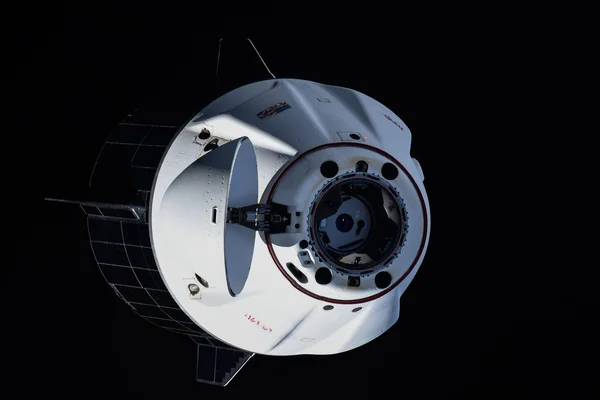
NASA and SpaceX Send Four Astronauts to Space Station in Record 7 Hour 50 Minute Trip
The Crew 13 mission lifted off from Cape Canaveral on October 1, 2026, carrying four astronauts to the International Space Station on a planned 7 hour 50 minute transit that NASA says is the fastest by a U.S. spacecraft.

Pakistan to Pick First Astronaut for China Tiangong Flight as Two Pilots Train in Beijing
Two Pakistani pilots are training in Beijing for a one-week Shenzhou-24 mission to China's Tiangong station, with SUPARCO set to choose the first foreign astronaut in October.
Comments (0)
Log in or sign up to leave a comment.
No comments yet. Be the first to share your thoughts.