Astronomers have spent decades puzzling over how the first supermassive black holes grew so massive so quickly. Now, a new simulation suggests that the mysterious objects known as little red dots, first spotted by the James Webb Space Telescope, are the visible signatures of rapidly growing black holes born from heavy seeds in the early universe. The study, led by Sunmyon Chon of the Max Planck Institute for Astrophysics, was published in the journal Nature on September 16, 2026. It used the Japanese supercomputer ATERUI III at the National Astronomical Observatory of Japan to recreate the first billion years after the Big Bang.
The simulations show that intense far-ultraviolet radiation from nearby galaxies can suppress normal star formation in gas clouds. Instead of breaking apart and producing many ordinary stars, the gas continues to accumulate under gravity. This process can eventually produce a single supermassive star, which then collapses into a black hole seed of about one million solar masses. Once formed, these seeds are surrounded by dense gas disks that trap radiation, allowing the black holes to grow at rates dozens of times faster than would be possible in the modern universe.
Little red dots are compact, red-tinted objects that date back to about one billion years after the Big Bang. They were first seen through the James Webb Space Telescope and mentioned in a 2023 draft paper. Each takes up roughly one pixel in the telescope's images, yet they are surprisingly common. Most scientists now agree that the dots are black holes of some kind and that the red light comes from clouds of dust being sucked inside.
But their exact nature has remained a topic of debate. Some researchers, such as Rohan Naidu of the University of Hawaii, have proposed that the dots are a new phenomenon: recently formed black holes shrouded in brightly burning hydrogen gas, resembling stars. Others, including Roberto Maiolino of the University of Cambridge, favor a missing step in the evolution of a typical black hole. The new simulation offers a third path, linking the dots directly to the birth and rapid growth of massive black holes.
Key Facts
The New York Times reported on September 16 that the simulation relies on known physics to recreate the first billion years after the Big Bang. It shows that massive black holes might form naturally from the chaotic swirls of material available in the early universe. As the holes rapidly pick up that material, their light emissions appear like the little red dots astronomers see today. Chon told the newspaper that at 500,000 years, the object looks like a little red dot, but after maybe one million years or so, the surrounding gas is mostly accreted into the black hole.
Nature reported on September 16 that the team's cosmological radiation-hydrodynamic simulations naturally produce heavy black hole seeds in overdense protocluster regions exposed to intense far-ultraviolet radiation. The collapse of supermassive stars produces seeds of approximately 10^6 solar masses, which undergo brief super-Eddington growth. These systems reproduce the Balmer features and red continua seen in little red dots and rapidly grow into overmassive black holes by redshift z of about 8. The paper notes that supermassive black holes are known to exist less than a billion years after the Big Bang, yet how they were seeded and grew remains unclear.
The National Institutes of Natural Sciences reported on September 16 that the simulations show little red dots are black holes growing at a rate that would be impossible today, thanks to conditions in the early universe. Once formed, these black hole seeds are surrounded by dense gas disks. This environment traps radiation, enabling the black holes to grow at rates dozens of times faster than would be possible in the modern universe. The team started with the conditions surrounding a galaxy in the early universe and then zoomed in to individual gas clouds.
Moneycontrol reported on September 17 that the simulated seeds could begin with masses around one million Suns, far heavier than many conventional black-hole seed models. The newly formed black holes remained embedded in extremely dense gas, which formed a thick disk that trapped radiation. The team said the simulated properties of these rapidly growing black holes match the little red dots observed by JWST. Because their light has travelled for billions of years, astronomers are observing them as they existed when the universe was still very young.
According to the study, the seeds grow to overmassive black holes of more than roughly 10^7 solar masses by redshift z of about 10, and to about 3x10^7 solar masses by redshift z of about 8. A little red dot looks like a red dot at roughly 500,000 years, and the surrounding gas is mostly accreted into the black hole within about one million years. The simulations also show that five of eight massive clusters above 10^6 solar masses display little-red-dot-like V-shaped spectra, and that all halos above 10^9 solar masses host a black hole more massive than 10^5 solar masses. The Lyman-Werner intensity reaches J21 of about 1000.
Analysis
The new work is notable because it explains the little red dots without invoking exotic physics or chance accidents. Intense far-ultraviolet radiation from nearby galaxies suppressed star formation in gas clouds, so instead of forming many small stars, the gas continued to accumulate under gravity and eventually produced a single supermassive star. That star collapsed into a black hole seed, which then grew rapidly in a dense gas disk.
This scenario directly addresses a long-standing mystery: how supermassive black holes with masses millions or even billions of times that of the Sun appeared so quickly, in less than 600 million years after the Big Bang. The simulation suggests that the answer lies in the extreme conditions of the early universe, where heavy seeds could form naturally and then undergo brief phases of super-Eddington growth. The resulting black holes would be overmassive compared to local scaling relations, exactly as inferred from JWST observations of little red dots at redshifts greater than 4 to 6.
What this really means is that the little red dots are not a separate class of object but a natural stage in the early growth of massive black holes. The red light is not a sign of something entirely new, but rather the glow of dust and gas being consumed at extraordinary rates. The simulation thus offers a unified pathway linking the birth of massive seeds, their short-lived obscured growth phases, and the overmassive black holes discovered by JWST. This interpretation contrasts with the 'black hole star' idea proposed by Naidu and the missing-step scenario favored by Maiolino, though Chon remains open to other explanations.
The analysis also highlights the power of combining detailed cosmological simulations with supercomputer technology. The ATERUI III supercomputer allowed the team to conduct the most detailed cosmological simulations to date of conditions in the early universe, following the collapse of one halo with the moving-mesh code AREPO. The fact that the simulated properties match the observed little red dots so well is a strong point in favor of the heavy-seed model.
Why It Matters
Understanding how the first supermassive black holes formed is one of the biggest challenges in modern astrophysics. In the 50 years since the first black hole was spotted, astronomers have discovered millions of these objects, so dense that their gravity prevents anything, even light, from escaping. As Chon told The New York Times, 'They are everywhere in our universe, but we still do not know how they are formed.' The new simulation provides a plausible answer for at least some of them.
The results are important because they explain the ubiquity of little red dots. If the dots were rare or required fine-tuned conditions, they would be difficult to explain. But the simulation shows that they arise as a natural consequence of the conditions in the early universe, without requiring exotic assumptions. This helps astronomers understand why JWST sees so many of them. It also provides a framework for interpreting future observations of distant black holes and their host galaxies.
Moreover, the study connects the dots to the broader population of overmassive black holes. By showing that heavy seeds can grow into black holes of more than 10^7 solar masses by redshift 10 and about 3x10^7 solar masses by redshift 8, it offers a cosmological explanation for their abundance and properties. This could reshape models of galaxy and black hole coevolution, and it may help explain how the most massive black holes in the local universe acquired their mass.
Next Up
Chon hopes to fine-tune the model and remains open to other explanations. Future work will likely involve comparing the simulations with more JWST observations and refining the treatment of feedback and radiation transport. The team's approach could also be extended to other epochs and environments, potentially revealing how the first black holes influenced the formation of galaxies.
As astronomers continue to study the little red dots, the new simulation provides a solid foundation for interpreting these enigmatic objects. If confirmed, it would mark a major step forward in understanding the origins of the most massive black holes in the universe, and it would bring the field closer to solving a mystery that has persisted for decades.
Related Articles
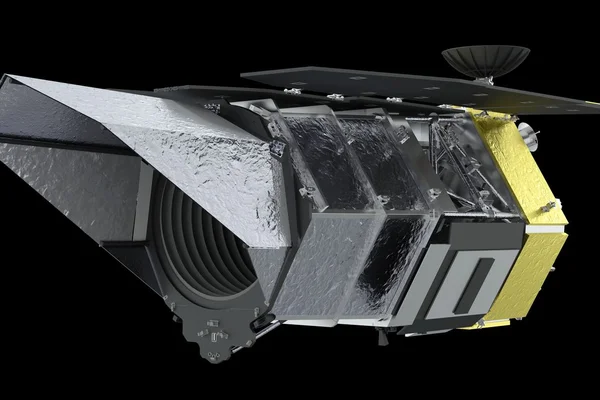
NASA Activates Roman Space Telescope Camera and Checks Out Coronagraph
NASA says its 300-megapixel Wide Field Instrument captured first starlight while the Coronagraph passed checkout, with the first science images expected in early 2027.
Europe launches FLEX and Copernicus Sentinel 3C on single Vega C rocket
The European Space Agency and Avio launched the FLEX Earth Explorer and Copernicus Sentinel-3C on a single Vega C rocket from French Guiana, with both satellites confirmed in orbit after separate deployments.
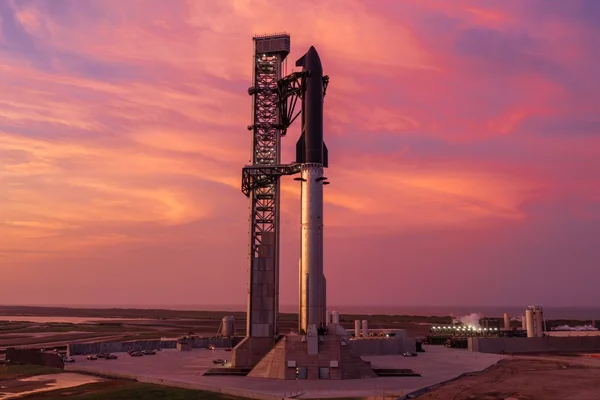
SpaceX launches 700th Falcon rocket and completes SES broadband constellation
The September 13, 2026 mission from Cape Canaveral delivered the final three O3b mPOWER satellites, finishing a 13 spacecraft medium Earth orbit network for SES and marking a reusable rocket milestone for SpaceX.
Comments (0)
Log in or sign up to leave a comment.
No comments yet. Be the first to share your thoughts.