Japan opened a new chapter in planetary exploration on October 20, 2026, when the Japan Aerospace Exploration Agency launched the Martian Moons eXploration spacecraft, known as MMX, aboard an H3 rocket from the Tanegashima Space Center in Kagoshima Prefecture. JAXA reported on October 20, 2026, that H3 Launch Vehicle flight No. 10 lifted off at 04:41:03 Japan Standard Time and that MMX separated into its predetermined orbit 71 minutes and 13 seconds later. The agency said the rocket flew as planned. The flight was the 10th for the H3, a two-stage vehicle developed jointly by JAXA and Mitsubishi Heavy Industries.
MMX is intended to be the first mission to land on Mars' moon Phobos and return samples from the Martian system. Kyodo News reported on October 20, 2026, that Phobos orbits roughly 6,000 kilometers from the Martian surface and is about 20 to 30 kilometers in diameter, while DLR describes Phobos as up to 27 kilometers across and Deimos as 15 kilometers across. Those small targets explain why the mission relies on autonomous navigation and careful radio control from Earth. JAXA leads MMX with contributions from NASA, ESA, CNES and DLR, and the mission is Japan's third sample-return effort after the Hayabusa and Hayabusa2 asteroid probes.
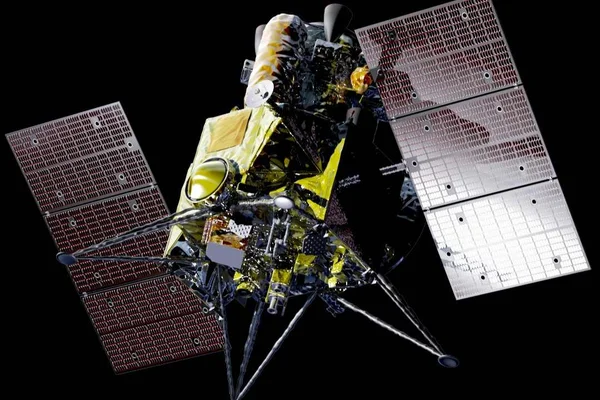
The MMX spacecraft weighs 4,480 kilograms and is built around propulsion, exploration and return modules. It has four landing legs, stands about 5.3 meters tall and spans about 9 meters with its solar panels deployed. Kyodo News reported on October 20, 2026, that development cost totaled about 55.3 billion yen, or about $350 million. NASA's contribution includes the MEGANE spectrometer, a Honeybee Robotics pneumatic sampler and Deep Space Network support. Space.com reported on October 19, 2026, that NASA invested about $87 million through the end of the mission and will receive at least 15 percent of the planned 10-gram sample for study at Johnson Space Center.
The H3 used the two-engine, four-booster configuration, the most powerful version. Space.com reported on October 19, 2026, that the 63-meter rocket jettisoned four solid boosters in pairs just before two minutes and shed payload fairings about 80 seconds later. Its first stage uses two LE-9 engines burning liquid hydrogen and liquid oxygen for 1,471 kilonewtons of thrust. A trans-Mars injection burn lasting about six minutes and 25 seconds pushed MMX to a maximum velocity of about 38,858 kilometers per hour. The spacecraft separated about 71 minutes after liftoff.
Key Facts
JAXA confirmed that H3 flight No. 10 flew as planned and released MMX into its predetermined orbit 71 minutes and 13 seconds after liftoff. The launch took place at 04:41:03 Japan Standard Time on October 20, 2026, from Tanegashima Space Center. DLR reported on October 19, 2026, that the same liftoff occurred on schedule at 21:41 Central European Summer Time, reflecting the same instant across time zones. No anomalies were reported in JAXA's official statement, which confirmed launch and separation and was followed by a separate update on initial operations.
On October 21, 2026, JAXA reported that MMX had completed its initial critical operations phase and was in good health. The phase covered the period after separation from the launch vehicle and included deployment of the solar array paddles, establishment of three-axis attitude control and release of the medium-gain antenna hold-down mechanism. JAXA said it would conduct initial functional checks of onboard equipment while preparing for outbound cruise operations. The confirmation came roughly one day after liftoff and showed that the probe was operating under its own power.
DLR reported on October 19, 2026, that the German-French Idefix rover, built jointly by DLR and CNES, will be released from a height of roughly 40 to 100 meters above Phobos. After an unbraked impact, a rebound and bounces, the rover must autonomously right itself, deploy solar panels and begin work. Idefix is set to explore for about 100 days and to become the first lander to touch down on Phobos around the turn of 2028 and 2029. Gravity on Phobos is less than one-thousandth of Earth's, and temperatures swing by more than 200 degrees Celsius over a seven-hour day and night cycle.
After arriving in the Martian system in August 2027, MMX will study the moons with eight scientific instruments, deploy Idefix, land on Phobos and collect at least 10 grams of soil from a depth of 2 centimeters. The spacecraft will make two touchdowns on Phobos, observe Deimos and depart from Mars orbit in November 2030. A capsule is scheduled to return the samples to Earth in July 2031, with Space.com reporting that the capsule is to land in Australia. Kyodo News reported on October 20, 2026, that Prime Minister Sanae Takaichi welcomed the launch on X and that the launch was originally slated for 2024 but was postponed after H3's maiden flight failed. JAXA is preparing to transfer H3 operations to Mitsubishi Heavy Industries.
Analysis
The first judgement to make about MMX is that its launch is not merely a scientific milestone. The bigger picture here is that Japan has combined a demanding sample-return mission with the maturing of the H3 rocket and a wider international partnership. JAXA has flown Hayabusa and Hayabusa2, but MMX adds a landing on a low-gravity moon, a rover deployment and a return capsule that must survive reentry in 2031. Each step carries independent risk, and the mission's value comes from testing them together rather than from any single instrument.
The H3 flight itself matters because the rocket had a difficult start. Kyodo News reported that the launch was originally slated for 2024 but was postponed after H3's maiden flight failed. A successful 10th flight with the most powerful configuration, carrying a 4,480-kilogram spacecraft, gives JAXA and Mitsubishi Heavy Industries a stronger record as they prepare to transfer H3 operations to the company. That record is not a guarantee of future reliability, but it is a concrete step toward the confidence Japan needs for routine access to space.
The international split of responsibilities also shapes the result. NASA contributed the MEGANE spectrometer, a pneumatic sampler and Deep Space Network support, and invested about $87 million while expecting at least 15 percent of the 10-gram sample. DLR and CNES built Idefix, while ESA is among the mission's contributors. What this really means is that MMX is a shared scientific investment with Japanese leadership, not a purely national showcase. The arrangement gives Japan a central role in first-of-its-kind Martian moon science while giving partners defined hardware and sample access.
Why It Matters
MMX matters for planetary science because it targets a class of body that has never been sampled. Phobos and Deimos are small compared with Mars, yet a returned sample would give laboratories on Earth material that cannot be fully analyzed by remote instruments. The planned 10 grams from a depth of 2 centimeters is a small mass, but it is enough for coordinated study across multiple institutions, including Johnson Space Center under NASA's arrangement. Japan's earlier Hayabusa and Hayabusa2 missions established a sample-return track record, and MMX extends that work from asteroids to a Martian moon.
The mission also matters for spaceflight economics and policy. The spacecraft's development cost of about 55.3 billion yen, or about $350 million, is modest relative to many flagship planetary efforts, and the mission spreads risk and cost through NASA, ESA, CNES and DLR contributions. The H3 launch links the science mission to Japan's launch industry at a moment when JAXA is preparing to transfer H3 operations to Mitsubishi Heavy Industries. A successful MMX would strengthen the case for the H3 as a reliable vehicle for science and commercial payloads, while a failure would raise questions about both the rocket and the mission architecture.
Next Up
MMX is now in a cruise phase expected to last about 10 months before arrival at the Martian system in August 2027. JAXA said it will conduct initial functional checks of the spacecraft's onboard equipment while preparing for outbound cruise operations, after completing solar array deployment, three-axis attitude control and antenna release. The next major test will be Mars orbit insertion and the start of observations of Phobos and Deimos with the mission's eight scientific instruments.
After that, the schedule calls for the release of Idefix around the turn of 2028 and 2029, two touchdowns on Phobos by MMX itself, a flyby of Deimos, departure from Mars orbit in November 2030 and return of the sample capsule in July 2031. If the plan holds, the capsule will bring the first samples from a Martian moon to Earth, closing a mission that began with an H3 launch from Tanegashima on October 20, 2026.
Related Articles

Tsinghua one gram wireless microscope records over 8,500 neurons in moving mice
A Tsinghua led team has published details of a 1.0 gram head mounted mesoscope that images a 6 mm cortical field and captures more than 8,500 neurons in a freely moving mouse.
Quantinuum Hits 99.9995 Percent Logical Fidelity on Helios, a Tenfold Error Correction Record
The trapped-ion company says its 98-qubit Helios machine cut logical errors to five per million operations, a result outside researchers describe as a serious advance toward fault tolerance.
Japan set to launch MMX to Phobos on October 20 in world first Martian moon sample return
JAXA's Martian Moons eXploration spacecraft is scheduled to lift off from Tanegashima aboard an H3 rocket and aims to bring at least 10 grams of Phobos soil back to Earth by 2031.
Comments (0)
Log in or sign up to leave a comment.
No comments yet. Be the first to share your thoughts.