For systems neuroscientists, the laboratory mouse has always been a compromise. The animal can climb, swim, socialize and explore, but the instruments that resolve individual neurons have often required a cable, a bulky head stage or a rigid benchtop optical path. The result is a persistent tension between behavioural freedom and cellular detail.
Mesoscopes were built to widen the view. By imaging a broad cortical field rather than a narrow column, they capture activity across distributed circuits that support sensation, action and social behaviour. Early wireless versions promised to take that wide view into freely moving animals, yet many delivered a narrow field, modest neuron counts or hardware heavy enough to alter how a mouse moved.
Airscope is the latest attempt to resolve that tension. Nature reported on October 19, 2026 that the wireless mesoscope weighs 1.0 gram, images a 6 mm cortical field at 4 micrometre lateral resolution and 12.5 Hz, and recorded 8,583 neurons in a single mouse. The paper presents the work as a cortex wide imaging platform for naturally behaving mice rather than a one off demonstration. It comes from Tsinghua University's IDG/McGovern Institute for Brain Research and Department of Automation, with collaborators at Fudan University, Princeton University, Northeastern University and the Sixth Medical Center of Chinese PLA General Hospital. Corresponding authors include Jiamin Wu, Pu Dai and Qionghai Dai.
Key Facts
Airscope's specifications are tightly packed. Bioengineer.org reported on October 19, 2026 that the device achieves its 4 micrometre lateral resolution across a 6 mm field at 12.5 Hz with an aspheric lens design whose total track length is 2.84 times shorter than previous miniaturized microscopes. Aspheric lenses correct spherical aberration without multiple corrective elements, compressing the optical path while preserving image quality across the full field. The device uses LED illumination and fluorescence collection for calcium imaging, stores data on an onboard SD card and streams a real time neuronal preview over Wi Fi. A 2 megapixel sensor performs on device compression so megapixel images can travel wirelessly.
The neuron count is the number that has travelled furthest. Xinhua reported on October 20, 2026 that Airscope can simultaneously record more than 8,500 neurons across 14 cortical areas in one cerebral hemisphere of a single mouse, about 25 times more than existing wireless imaging devices, and can record at the same site for more than 200 days. CTOL Digital Solutions reported on October 20, 2026 that the supplementary table lists 27 experimental entries and only one exceeds 8,500, at 8,583. The median entry is 4,560 neurons, the mean is 4,639 and the range runs from 1,736 to 8,583.
Behaviour was tested well beyond a standard cage. The team recorded mice exploring a 5 square metre natural habitat and tracked mice in a large maze with 32 ends. Xinhua reported on October 20, 2026 that mice in the habitat moved more than twice as fast as in cages and displayed 16 categories of behaviour, and that cortical activity changed systematically with terrain area. A deep learning model could determine which area a mouse was in from neural activity alone, with accuracy far above chance. Bioengineer.org reported on October 19, 2026 that demonstrations included room scale arenas of 2.3 by 2.3 metres with sandy, floral and grassland zones, tree hollows, shelters, staircases and running wheels. The team also used a 15 by 8 binary maze and social dominance tube tests in which dorsal cortical activity prospectively decoded which animal would win.
The engineering details make the platform concrete. Bioengineer.org reported on October 19, 2026 that Airscope uses a rapid battery exchange system and that the team built a zero shot behaviour analyzer called SAM2Mice on the Segment Anything Model architecture. SAM2Mice segments and tracks multiple animals without task specific training and maintains identity tracking with five freely interacting mice. CTOL Digital Solutions reported on October 20, 2026 that the microscope is listed at 1.0093 grams after encapsulation, that an optional SD card adds 0.3175 grams and an optional battery adds 1.7323 grams, and that the authors wrote in the peer review file that the approximately 1 gram figure refers to the body without SD card and battery because those parts are modular. Adding the battery brings carried mass to about 2.7 grams; adding the card as well brings it to 3.06 grams. The review put the bill of materials at about 77.4 US dollars, built around an ESP32 chip and an OV2640 camera sensor.
Analysis
What this really means is that Airscope's importance lies less in a single record than in the combination of field size, neuron yield, behaviour and cost. The 8,583 neuron figure is real, but it is an upper bound from one of 27 experimental entries. The median of 4,560 neurons is a more honest guide to typical performance, and it still represents a large step for a head mounted wireless device. CTOL Digital Solutions reported on October 20, 2026 that the 25 times comparison against earlier head mounted scopes is fair because the supplement lists earlier devices at roughly 200 to 300 neurons, including a 3.9 gram Miniscope and a 2.7 gram wScope. The same review notes that the 3.9 gram Miniscope is also listed without its battery, which complicates a simple weight comparison.
The optical claim deserves separate attention. A total track length 2.84 times shorter than previous miniaturized microscopes is an engineering result, not a marketing flourish. It is what allows a 6 mm field and 4 micrometre resolution to fit into a package a mouse can carry without a cable. Bioengineer.org reported on October 19, 2026 that the central problem was fitting a benchtop scale mesoscope into a wearable package while keeping a field of view large enough for distributed cortical circuits. The aspheric lens approach answers that problem by removing multiple corrective elements and compressing the path. The 12.5 Hz frame rate is fast enough for calcium imaging and the 2 megapixel sensor with on device compression addresses the wireless bandwidth bottleneck.
The biological results show why the platform matters. The Nature paper reports cortical activity patterns across multiple dorsal regions that correlate with behavioural signatures of social dominance, and shows that dorsal cortical population activity prospectively decodes competition outcomes across paired animals. It also reports reward location associated cortical activity during maze exploration and characterizes Granger causal influence from spinal cord to cortex during fear conditioning, enabled by simultaneous brain and spinal recordings. Those are not decorative demonstrations. They show that a wireless mesoscope can test hypotheses that require unconstrained movement, multiple animals and recording sites beyond the cortex. The bigger picture here is that systems neuroscience gains a tool for naturalistic experiments rather than a better way to watch a head fixed mouse.
The caveats are equally clear. Fully wireless operation requires the battery, which brings the carried mass to about 2.7 grams, and adding the SD card brings it to 3.06 grams. The authors themselves cite roughly 5 grams as the weight a mouse can bear on its head, so Airscope sits below that limit but is not a 1 gram system in every configuration. Validation included interleaved two photon recordings across 36 paired sessions in 3 mice covering 1,196 neurons, with an F1 score of 0.78, recall of 0.81 and trace correlation of 0.82. Those numbers support the device, but they do not make it a replacement for every benchtop measurement.
Why It Matters
Neuroscience has spent years moving toward more natural behaviour. Xinhua reported on October 20, 2026 that mice wearing Airscope could climb ropes and squeeze through tubes with no significant difference in travel distance, speed or path tortuosity compared with mice not wearing the device, and that neuronal signal quality was comparable to conventional benchtop microscopes. That matters because behavioural freedom is not a cosmetic feature. It changes the circuits that are engaged and the questions that can be asked.
The multi animal capability adds another dimension. SAM2Mice maintains identity tracking with five freely interacting mice, and the paper reports concurrent recording from multiple animals. Social dominance, competition and reward seeking unfold between animals, across space and over time. A device that can record from more than one animal while preserving behaviour gives researchers a way to connect distributed cortical activity to social outcomes rather than inferring those links from one animal at a time. The paper's conclusion points in that direction, describing large scale cellular resolution recording with unconstrained behaviour as making naturalistic multi animal cortical recording experimentally practical.
Next Up
The immediate next step is replication and broader use. The paper reports stable same site recording for more than 200 days, which is long enough to support longitudinal studies, but independent groups will need to reproduce the neuron counts, the behaviour analyzer and the wireless performance in their own hands. The modular battery and SD card design gives users a tradeoff between mass and session length, and the 77.4 US dollar bill of materials suggests that many labs could build or adapt the device. Zhang Yuanlong, an assistant professor at Tsinghua University's School of Life Sciences, said in comments reported by Xinhua that Airscope gives neuroscience greater behavioural freedom and lets large scale neural observation follow animals into richer natural behaviours.
Related Articles
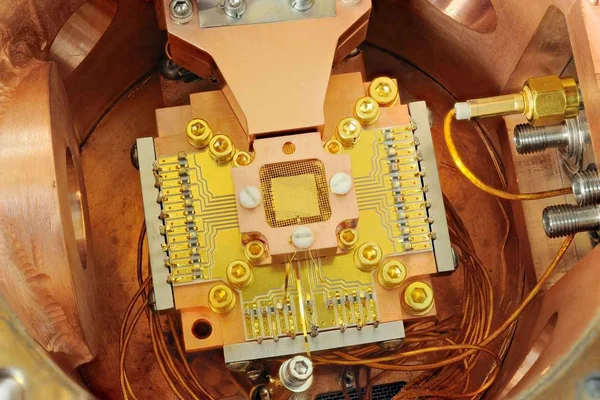
Quantinuum Hits 99.9995 Percent Logical Fidelity on Helios, a Tenfold Error Correction Record
The trapped-ion company says its 98-qubit Helios machine cut logical errors to five per million operations, a result outside researchers describe as a serious advance toward fault tolerance.
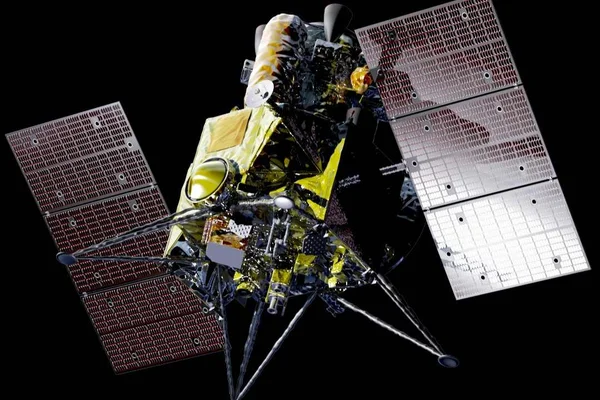
Japan set to launch MMX to Phobos on October 20 in world first Martian moon sample return
JAXA's Martian Moons eXploration spacecraft is scheduled to lift off from Tanegashima aboard an H3 rocket and aims to bring at least 10 grams of Phobos soil back to Earth by 2031.

Astronomers identify WD J1330+6435, the first star that would look green to human eyes
A University of Warwick team says the white dwarf WD J1330+6435, about 280 light-years away in Draco, would look chartreuse to the human eye, a first for any star.
Comments (0)
Log in or sign up to leave a comment.
No comments yet. Be the first to share your thoughts.