A quantum computer's usefulness is bounded less by how many qubits it contains than by how often those qubits get things wrong. Physical qubits are fragile. A stray vibration, a drifting laser or a stray photon can flip a state, and a computation long enough to be commercially interesting accumulates errors faster than any classical control system can chase them down. That is why the field's real scoreboard has shifted from raw qubit counts toward error rates, and why a result measured in millionths can matter more than a bigger machine.
The standard remedy is quantum error correction. Rather than relying on one fragile qubit, engineers entangle many physical qubits into a single logical qubit and repeatedly measure the pattern of correlations between them without reading out the encoded information itself. That pattern is called a code, and its job is to detect and repair errors before they corrupt the stored value. The yardstick is logical fidelity, the probability that an operation on the protected qubit returns the right answer. A logical qubit that is merely a little better than its parts is not enough. To run long algorithms, the logical error rate has to fall steeply every time the code is enlarged, a property known as scaling.
Quantinuum, the trapped-ion quantum computing company based in Broomfield, Colorado and listed on Nasdaq under the ticker QNT, has been working this problem on Helios, its commercial machine. Helios contains 98 physical qubits, each an ion held in place and manipulated with lasers and electromagnetic fields. The company describes its architecture as an end-to-end framework with all-to-all qubit connectivity, high-fidelity physical operations and hardware-level error correction, programmable through its developer platform.
On October 19, 2026, the company said it had reached 99.9995 percent logical fidelity on Helios, the equivalent of five errors per million operations. Quantinuum described the figure as a world record, ten times lower than its own record set in September 2026 and roughly 100 times lower than the best published result across all other hardware modalities, which was reported by Google Quantum AI on a superconducting system. The company said the accuracy now sits in the target range for Apollo, its planned universal fault-tolerant quantum computer, expected in 2029.
Key Facts
New Scientist reported on October 19 that the Helios work, led by David Hayes at Quantinuum and colleagues, demonstrated the lowest error rate for logical qubits yet recorded. The team encoded the machine's 98 trapped ions using a color code, and in memory tests the logical qubits made as few as five errors per million uses, against hundreds per million in similar past experiments.
The same coverage noted where the record does not yet reach. A two-logical-qubit, error-corrected operation had an error rate roughly 10 times higher, at about seven errors per 100,000 qubit uses. The scaling result was the more striking part: error rates fell twelve-fold when a logical qubit grew from seven to 19 physical qubits, and fell again by the same factor when it grew from 19 to 37.
StreetInsider reported on October 19 that both the September and October records ran on the same Helios hardware using different codes. The September demonstration used Quantinuum's Helix code, which needed 10 physical qubits per logical qubit. The color code used in the new study required up to 37 physical qubits per logical qubit but delivered lower logical error rates, a direct illustration of the trade-off between accuracy and overhead.
The Quantum Insider reported on October 19 that each tested increase in code distance reduced the remaining logical errors by a factor of 12, and that Quantinuum argues the result suggests fault tolerance can be delivered with significantly fewer qubits than other modalities require. The company said its framework lets it test, refine and combine different codes, optimizing between accuracy and efficiency on the same machine.
Independent reaction was positive but measured. Robin Blume-Kohout, co-director of Sandia National Laboratories' Quantum Performance Lab, who was not involved in the work, said the paper shows real, serious performance gains, according to Quantinuum's announcement, and noted that the logical qubit is nearly 100 times better than its component physical qubits. He added that a scaled-up version could reach useful fault-tolerant reliability with fewer than a million physical qubits.
Analysis
What this really means is that the argument in quantum computing has moved from whether error correction works at all to which architecture pays the least overhead for it. A logical error rate of five per million operations is not yet the stuff of useful machines, but it is a demonstration that adding physical qubits to a code buys a predictable, exponential reduction in mistakes. That property, not the headline percentage, is what a fault-tolerant computer is built out of.
Context matters here. The nearest comparable published number comes from Google Quantum AI's superconducting hardware, and Quantinuum puts the gap at about 100 times. Trapped ions have long been praised for fidelity and questioned on speed, while superconducting circuits have been praised for speed and questioned on coherence. A record that leans on fidelity plays to the ion trap's strength, and the company is explicit that it reads the result as validating its chosen path.
The bigger picture here is that overhead, not raw qubit count, will decide who reaches fault tolerance first. The color code consumed up to 37 physical qubits for each logical qubit, which means a 98-qubit machine can host only a handful of protected qubits at that distance. Thomas Wong of Creighton University made the point to New Scientist: Helios has only about 100 physical qubits, while useful applications on the scale of a megaquop machine would need on the order of 100 logical qubits. The record is real, and so is the distance to a working system.
That distance is why the scaling factor of 12 deserves more attention than the five errors per million figure. Error correction only becomes fault tolerance when enlarging the code suppresses errors faster than the extra hardware introduces new ones. Quantinuum says every tested increase in code distance cut the remaining errors by a factor of 12, and that consistency, repeated across two steps in code size, is the evidence that the architecture behaves as theory requires. Steven Flammia of Virginia Tech called it a definitely impressive technical advance, according to New Scientist, and said it sets the course for a machine capable of one million reliable operations, a goal described with the term megaquop, coined by John Preskill of Caltech.
Why It Matters
For the industry, the practical consequence is a smaller hardware bill. If logical errors fall by a factor of 12 with each step up in code distance, the number of physical qubits needed for a given reliability drops sharply compared with approaches that scale more slowly. Quantinuum says the result suggests fault tolerance can be delivered with significantly fewer qubits than other modalities require, and Blume-Kohout's estimate, fewer than a million physical qubits for a scaled-up version, is the kind of figure that turns a physics experiment into an engineering plan.
For investors, the announcement is a milestone on a roadmap rather than a shipped product. Quantinuum is a public company, and a claim of a 10x improvement over its own September record and roughly 100x over the best superconducting result is the sort of comparative statement that gets scrutinized. What can be checked from outside is the pattern: two different codes, Helix and the color code, run on the same 98-qubit hardware within a month, with the more expensive code buying better fidelity.
For the wider field, the result lands as several groups start promising fault tolerance on a timetable. A megaquop machine, one capable of a million reliable operations, has become the near-term benchmark, and Murphy Niu of UC Santa Barbara described the Helios result to New Scientist as a major step toward scalable fault-tolerant quantum computing.
Next Up
The next data point is hardware. Hayes told New Scientist that Quantinuum's next machine, Sol, will be nearly twice as large as Helios, which would put it near 200 physical qubits if that ratio holds. More qubits means more logical qubits at a given code distance, and the color code's overhead makes that arithmetic the thing to watch.
Beyond that, the company has pointed to Apollo in 2029 as its universal fault-tolerant system, and it is not alone on the calendar. QuEra has announced a megaquop machine by 2028. The competition now is less about who can claim the lowest error rate for a single logical qubit than about who can put dozens of them together and keep the factor of 12 holding.
Related Articles
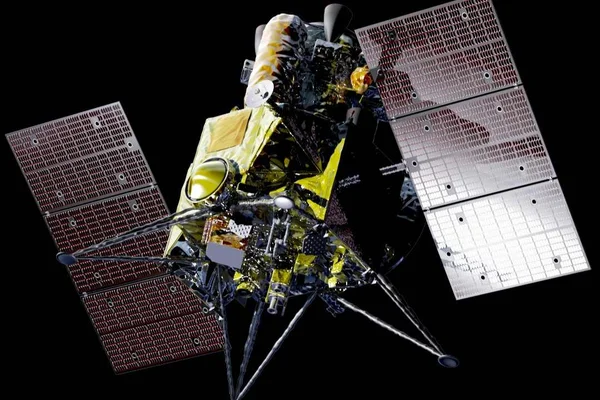
Japan set to launch MMX to Phobos on October 20 in world first Martian moon sample return
JAXA's Martian Moons eXploration spacecraft is scheduled to lift off from Tanegashima aboard an H3 rocket and aims to bring at least 10 grams of Phobos soil back to Earth by 2031.
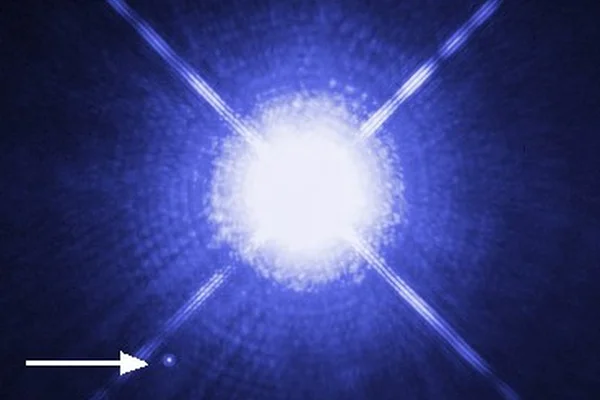
Astronomers identify WD J1330+6435, the first star that would look green to human eyes
A University of Warwick team says the white dwarf WD J1330+6435, about 280 light-years away in Draco, would look chartreuse to the human eye, a first for any star.

Shanidar Neanderthal Spear Wound May Be Earliest Known Case of Lethal Attack
A 15 mm hole in a 75,000-year-old shoulder blade from Shanidar Cave points to a wooden spear as the likely cause of death, while a healed facial wound suggests the same Neanderthal received care.
Comments (0)
Log in or sign up to leave a comment.
No comments yet. Be the first to share your thoughts.