Italy and the Czech Republic have joined forces to press Brussels for relief from the European Union's carbon market rules, warning that the bloc's industrial base risks lasting damage unless the burden of its green rules is eased. In a joint letter seen by Euronews, Prime Ministers Giorgia Meloni and Andrej Babis demanded a 'temporary suspension' of the EU Emissions Trading System (ETS) and changes to the bloc's carbon market and methane rules.
The push comes amid what the two governments describe as an unprecedented energy shock, with high energy and carbon costs colliding with the bloc's decarbonisation targets. The letter warns that 'the combination of some of the world's highest energy prices, high carbon costs and exceptional fuel prices risks further weakening European manufacturing'.
The initiative is timed for a summit of EU leaders in Brussels on October 15-16, where Rome and Prague hope to build a broader coalition within the European Council. Italian Prime Minister Giorgia Meloni visited her Czech counterpart Andrej Babis in Prague last week to coordinate the plan of action between the two capitals ahead of next week's summit.
Beyond the headline call for a temporary suspension, the joint proposal outlines several targeted interventions: an extension of free carbon allowances for heavy industry under the ETS, and a freeze on the phasing out of free carbon allocations for sectors affected by the bloc's carbon border tax. Italy and Czechia framed the measures as 'temporary' interventions that 'preserve long-term climate objectives'.
Key Facts
Euronews reported on October 7 that the joint letter states: 'A temporary suspension of the EU ETS would provide immediate relief to European industry from carbon costs. However, in the absence of sufficient support for such an option, it is worth considering a number of targeted and immediately actionable alternatives that the European Council could promote to alleviate the impact of the current shock.' The letter also targets the bloc's recently weakened methane rules, seeking a temporary suspension of methane-related requirements affecting imported oil, gas and coal.
Carbon Herald reported on October 1 that Italy and the Czech Republic are preparing a joint push to reshape EU energy policy, with the EU ETS2 at the center of proposals aimed at containing energy costs. The initiative by prime ministers Giorgia Meloni and Andrej Babis is expected to be presented at the EU leaders' summit on Oct. 15-16. Rome and Prague want the EU to make greater use of its Market Stability Reserve to limit cost pressures linked to carbon allowances; the European Commission says about 190.5 million allowances are scheduled to enter the reserve between September 2026 and August 2027.
The two governments are also calling for greater flexibility in the distribution of carbon allowances and measures that could reduce the impact of carbon costs on electricity generation. They want to postpone the rollout of ETS2, the system that extends carbon pricing to buildings, road transport and other sectors. EU institutions have already adjusted the timetable, with the system's operations now scheduled for 2028, while auctions of ETS2 allowances are due to begin in 2027. The EU has established an EUR 86.7 billion ($98 billion) Social Climate Fund for 2026-2032 to help address the impact of carbon pricing on vulnerable households. Under current EU rules, importers face additional monitoring, reporting and verification requirements for methane from Jan. 1, 2027.
Cyprus Mail reported on October 7 that Direct Democracy Cyprus leader Fidias Panayiotou told a European Parliament debate on energy that '20 per cent of electricity bills goes just to pay CO2 emissions through the EU emissions trading system [ETS]'. European Energy Commissioner Dan Jorgensen said 'it is important to stick to temporary and well-targeted measures', warning that 'fiscal resources are limited'. The same report noted that the price of a barrel of crude oil peaked at a little over $106 on September 15, and as of Wednesday evening sat at around $89 and is on a gradual downward trend. Euronews also reported on October 7 that Italian Defence Minister Guido Crosetto recently went further, calling the ETS 'unjust, absurd, unsustainable in international competition'.
Analysis
The bigger picture here is that the EU's carbon market has become the primary battleground for a widening conflict between the bloc's climate ambition and its industrial competitiveness. The joint Italian-Czech letter is not an isolated protest; it reflects a growing willingness among member states to challenge the core architecture of EU climate policy when energy prices spike. The demand for a temporary suspension of the ETS is the most radical element, but the letter itself acknowledges that such a step may lack sufficient support, which is why it pivots to a menu of targeted alternatives.
Those alternatives deserve close scrutiny. Using the Market Stability Reserve more aggressively could dampen allowance prices without changing the ETS's legal framework. Extending free allowances for heavy industry and freezing the phase-out for carbon border tax sectors would directly reduce costs for manufacturers. Delaying ETS2, even if only by a year or two, would postpone the political pain of extending carbon pricing to road transport and buildings, where households are already struggling with high fuel and heating bills. The Social Climate Fund of EUR 86.7 billion is meant to cushion that blow, but its size relative to the number of affected households across the EU is a matter of debate.
The methane rules are another front. Suspending monitoring, reporting and verification requirements for imported oil, gas and coal would ease compliance costs for importers, but it would also weaken a key tool for cutting emissions from the energy supply chain. The Commission's response, voiced by Energy Commissioner Dan Jorgensen, suggests that Brussels is willing to consider temporary and well-targeted measures but is wary of open-ended suspensions that could undermine the ETS's credibility. Jorgensen's warning that fiscal resources are limited is a signal that the EU cannot simply spend its way out of the crisis.
What this really means is that the EU faces a political trilemma: it cannot simultaneously maintain a stringent carbon market, protect energy-intensive industry from global competition, and keep household energy bills affordable without either relaxing climate rules or finding new money. The Italian-Czech push is an attempt to force a choice, and the October summit will reveal how many member states are willing to side with Rome and Prague. The fact that Italy's own inflation rate hit 4.2 per cent year-on-year in September, up from 3.3 per cent in August, adds domestic pressure on Meloni to deliver relief.
Why It Matters
The outcome of this debate will shape the EU's credibility as a global climate leader. If the bloc suspends or significantly weakens its carbon market, it risks undermining the investment certainty that has driven the growth of renewable energy and low-carbon manufacturing. It could also weaken the EU's ability to impose carbon border adjustments, which are designed to prevent carbon leakage and level the playing field for domestic producers. On the other hand, if the EU ignores industrial concerns, it may face plant closures, job losses and a political backlash that could put the entire decarbonisation agenda at risk.
The timing is critical. The ETS2 is scheduled to begin operations in 2028, with allowance auctions starting in 2027. Any delay now would push back that timeline and create uncertainty for businesses and households preparing for the new carbon costs. The methane import rules due on January 1, 2027, are even closer, and a suspension would send a signal that the EU is willing to retreat from its environmental standards when energy security is at stake.
For households, the debate is about whether carbon pricing will make already high energy bills even less affordable. Panayiotou's claim that 20 per cent of electricity bills goes to CO2 emissions under the ETS may be contested by some analysts, but it captures a real political dynamic: voters are increasingly sensitive to the cost of climate policy. The Social Climate Fund is intended to address that, but its EUR 86.7 billion budget must be distributed across member states over the 2026-2032 period, and many national governments argue it is insufficient.
Next Up
EU leaders will meet in Brussels on October 15-16, where the Italian-Czech proposal is expected to be discussed. Rome and Prague are seeking a broader coalition within the European Council, and the summit's conclusions will indicate whether a majority supports a temporary suspension of the ETS, a delay to ETS2, or merely targeted flexibility measures. The European Commission, which has already adjusted the ETS2 timetable once, will likely be asked to produce a formal assessment of the options.
In the weeks that follow, attention will turn to whether the Commission proposes legislative changes to the Market Stability Reserve, the free allowance rules, or the methane import requirements. Any such proposals would need approval from the European Parliament and member states, a process that could take months. Meanwhile, energy prices, oil market volatility and inflation data will continue to shape the political calculus for Meloni, Babis and their allies. The next major test will be whether the summit produces concrete action or simply a statement of intent.
Related Articles
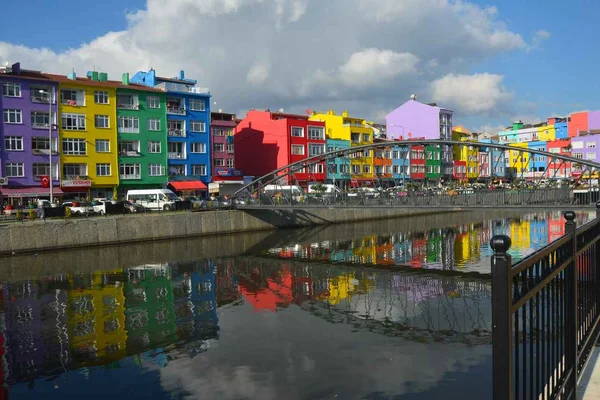
Istanbul landfill ranked among world worst methane emitters weeks before COP31 summit
Satellite monitoring shows the Silivri landfill near Istanbul emits 7.4 tonnes of methane an hour, a finding that complicates Turkey's methane agenda as it prepares to host COP31 in Antalya.
Supreme Court Weighs Suncor v. Boulder Climate Damages Suit in New Term
The justices heard nearly two hours of argument on whether ExxonMobil and Suncor Energy can be sued under Colorado law for climate damages, with Justice Alito recused and a four to four tie possible.
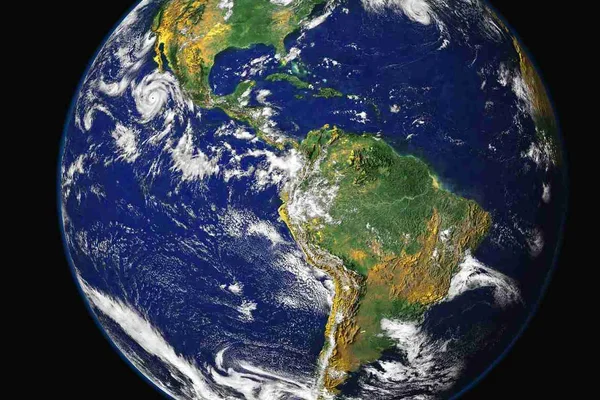
Antarctic ice loss is locked in this century but emissions cuts can still cap sea level rise
Machine learning and satellite calibration show Antarctica will very likely shed ice this century no matter what, while the pace of emissions cuts decides how much sea level rise coasts must absorb.
Comments (0)
Log in or sign up to leave a comment.
No comments yet. Be the first to share your thoughts.