Antarctica is the largest source of uncertainty in projections of future sea level rise. The continent's ice sheet rests on land and holds the world's largest store of frozen freshwater, enough to raise global mean sea level by about 58 meters, or roughly 190 feet, if all of it were to melt. When that ice moves off the land and into the ocean, it raises the seas. Over the period from 2006 to 2018, Antarctic mass loss accounted for roughly 10 percent of global mean sea level rise, a share that scientists expect to grow as the planet warms.
For years, researchers have disagreed about a fundamental question: will Antarctica gain more ice than it loses this century, or lose more ice than it gains? Warmer air carries more moisture, and extra snowfall over the continent could in principle add mass even as warming eats away at the ice from below and at its edges. Floating ice shelves act like brakes that restrain the glaciers behind them. Warmer ocean water thins those shelves from below, and as they weaken, glaciers flow faster into the sea. Which of these competing effects wins out, and by how much, has been one of the most consequential open questions in climate science.
A new study published in Nature Geoscience on 30 September 2026 offers a sharper answer. An international team, including Rutgers climate scientist Robert Kopp, used a machine-learning emulation framework to quantify how each individual physical assumption cascades into projection uncertainty, then applied Bayesian calibration against satellite observations to reduce projection bias. The paper, published open access under DOI 10.1038/s41561-026-02102-1, concludes that the Antarctic Ice Sheet is very likely already committed to losing mass over the twenty-first century, even under aggressive emissions reduction scenarios.
That conclusion does not mean emissions choices are irrelevant. The same analysis finds that higher emissions make greater loss more likely, and that cutting emissions now can still cap how much the ice sheet adds to the oceans by 2100. The distinction between what is locked in and what remains within human control is the central message of the work.
Key Facts
Nature Geoscience reported on September 30 that the team used machine learning to analyze an existing collection of ice-sheet simulations, rapidly exploring combinations of assumptions, then checked the results against satellite measurements of Antarctic ice loss from 2002 to 2021. That calibration step is what lets the authors make probabilistic statements instead of simply presenting a wide range of possible futures.
The headline probabilities are stark. The team puts at least a 92 percent probability on the finding that the Antarctic Ice Sheet is committed to twenty-first-century mass loss even under aggressive emissions reduction scenarios. It puts at least an 89 percent probability on the companion finding that higher emissions drive greater Antarctic mass loss by 2100, directly elevating near-term coastal risks. Under the most ambitious low-emission goal consistent with the Paris Agreement, in which the world cuts carbon dioxide emissions to net zero around 2050, the analysis still indicates that Antarctica very likely loses ice overall.
Rutgers University announced on October 1 that the study identifies a wide gap between emissions pathways at the high end. Under very high emissions, the authors identify cascading mechanisms that could produce up to 25.4 centimeters, about 10 inches, of sea level rise by 2100, a figure at the 95th percentile, with a median estimate of 15.7 centimeters, or roughly 6 inches. Those numbers represent Antarctica's contribution alone and exclude Greenland, mountain glaciers and the thermal expansion of ocean water.
Phys.org reported on October 3 that the research provides evidence that decisions about emissions today can influence how much water Antarctica adds to the oceans by 2100. The team found at least an 89 percent probability that the most ambitious low-emission goal consistent with the Paris Agreement would result in less Antarctic ice loss by the end of the century than a scenario with very high emissions.
The Conversation reported on September 30 that the researchers examined hundreds of thousands of potential futures and concluded that additional snowfall in a warmer climate is very unlikely to replace all the ice Antarctica loses. The ice sheet responds to climate change slowly, so the consequences of today's emissions can persist long after those gases enter the atmosphere.
Analysis
The study's most useful contribution is not a single number but a decomposition of uncertainty. Antarctica's future has been hard to pin down because uncertainty propagates through emissions scenarios, atmosphere-ocean general circulation models, ice-sheet dynamics and sea-level physics, each layer adding its own spread. By quantifying how each physical assumption cascades into the final projection, the team makes clear which choices still matter and which do not. Emissions pathways matter enormously. The formulation of sliding laws and ice-shelf melt parameterizations matters too, but in a different way: it shapes how confident scientists can be rather than what the ice itself will do.
The bigger picture here is that the long-running debate over whether Antarctica would gain or lose ice this century has effectively been settled in favor of loss, and the remaining argument is about magnitude. Yucheng Lin, an assistant professor at the City University of Hong Kong and a former Rutgers postdoc, framed the stakes directly. What we still control is how much, and whether we set off the chain reaction that takes us to the high end, Lin said. Every ton of greenhouse gas we add makes it worse, and the effect lasts for hundreds of years.
Kopp, a Distinguished Professor in the Department of Earth and Planetary Sciences in the Rutgers School of Arts and Sciences, put the policy case plainly. Coastal communities need to prepare for rising seas, and the amount of rise they will have to manage still depends on the choices we make today, he said. Cutting emissions now can limit the risks facing future generations.
One nuance deserves emphasis. The 25.4 centimeter figure is a 95th percentile estimate drawn from the subset of simulated futures that produce the highest losses while remaining consistent with satellite observations. That constraint is a feature rather than a flaw, because it keeps the high end tethered to what the ice sheet has actually been observed doing rather than to the most alarming parameter combinations a model can generate. Even so, the spread between a median of 15.7 centimeters and an upper estimate of 25.4 centimeters is large enough to matter for any coastal city designing defenses meant to last for decades.
Why It Matters
Coastal communities are the immediate constituency for this research. Sea level rise from Antarctica is not evenly distributed: regional ocean dynamics mean some coastlines experience more than the global mean, and the difference between a median and an upper estimate translates into very different requirements for sea walls, drainage systems, wetland restoration and insurance pricing. The authors argue that effective management of these risks to densely populated coastal communities requires rapid emissions reductions together with improved constraints on climate model selection, sliding laws and ice-shelf melt parameterizations.
There is also a planning asymmetry at work. Infrastructure built today will still be standing in 2100, so the upper end of the range is what engineers and city budgets must contend with, even though the median is the more likely outcome. That is why a study framed around probabilities rather than single projections has practical value: it tells decision makers how much weight to place on the tail of the distribution.
The research also reframes a long-running argument about snowfall. If extra snowfall cannot offset the ice lost to ocean-driven melting at the margins, then Antarctica's net contribution to sea level is a function of emissions policy rather than a self-correcting balance. The continent holds the equivalent of 57.9 meters of global mean sea level in frozen freshwater, and even a small shift in how fast that ice reaches the ocean reshapes the baseline that every coastal adaptation plan is built on.
Next Up
The authors call for improved constraints on climate model selection, sliding laws and ice-shelf melt parameterizations, the physical processes that dominate the spread in their projections. Narrowing those uncertainties is the next research frontier, and it will require both better observations of the Southern Ocean and better theory for how ice slides over bedrock.
On the policy side, the paper's message will feed into the next round of national emissions commitments and into adaptation planning in low-lying coastal regions. The window in which emissions choices can still shape Antarctica's contribution to sea level by 2100 remains open, but it narrows with every year of delay.
Related Articles
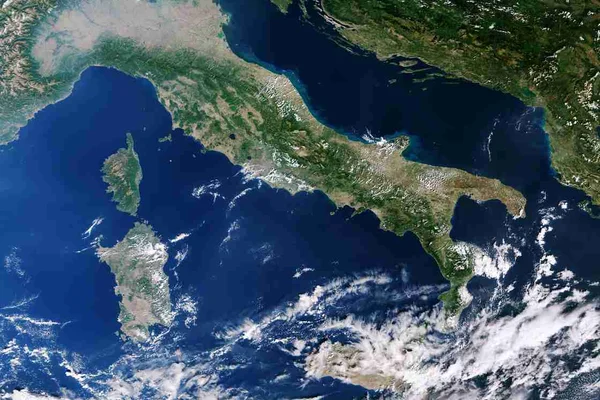
Copernicus report finds summer 2026 was Europe's hottest on record with 52 percent heat stress
The EU climate monitor said 52 percent of the continent faced feels-like temperatures above 38 degrees Celsius, Western Europe's hottest summer on record and the third warmest for Europe overall.
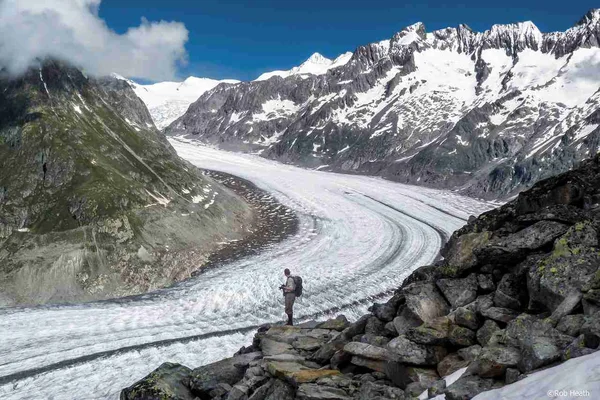
Swiss glaciers lose 5.5 percent of their ice in 2026 as five year melt nears one fifth
Switzerland's glaciers have now lost 19.4 percent of their volume in five years, and glaciologists warn that the ice is collapsing from the inside as melt rates explode.
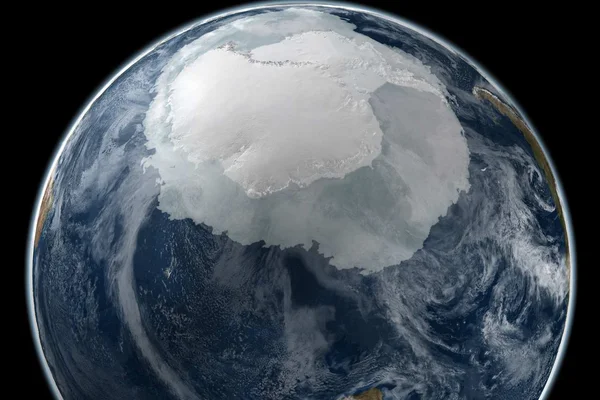
Antarctic winter sea ice hits third lowest maximum on record as four worst years cluster since 2022
Provisional satellite data show the Southern Ocean's winter ice cover peaked on 14 September at 17.59 million square kilometers, the third smallest in a record that begins in 1979.
Comments (0)
Log in or sign up to leave a comment.
No comments yet. Be the first to share your thoughts.