Intel at Hot Chips 2026 in Palo Alto on August 25 confirmed the final specifications for Crescent Island, its next-generation data center GPU built for AI inference. The 350-watt air-cooled PCIe card features 32 Xe3P cores, 256 XMX matrix engines, 32MB of unified L2 cache, and up to 480GB of LPDDR5X memory in ODM configurations, with Intel's own branded card expected to ship with 160GB. Intel first announced Crescent Island at the 2025 Open Compute Project Global Summit, added technical details at Computex 2026, and presented the full architecture at this week's symposium.
Why 480GB Matters
Intel said the card's unusually high memory capacity is intended for "large, token-intensive workloads," a category that includes agentic AI and long-context model serving where KV cache footprints can dominate cost and performance. Xe3P offers a marked improvement over both Xe2 and Xe3, with the XMX units moving from a four-deep systolic array to a 16-deep design. The Vector Engine gains FP8 and FP4 precision and microscaling formats support, while the General Register File doubles to 1MB per Xe core. Crescent Island also includes full-rate FP64 support with 64 FMAs per Xe core, 512KB of L1/SLM cache per core, and an industry-standard open AI software stack that Intel describes as "Day 0-ready."
An Inference-First Design
Crescent Island is built specifically for agentic AI inference rather than gaming, so it omits any 3D or ray-tracing hardware found in Intel's consumer graphics chips. Intel instead packed eight Vector Engines and eight XMX Engines into each Xe3P core, for 256 of each across the full GPU. The card is designed to fit air-cooled enterprise servers rather than require a proprietary liquid-cooled rack architecture, positioning it against accelerator cards from Nvidia and AMD that typically demand denser cooling. Intel has not disclosed a final memory-bandwidth figure, performance benchmarks, or pricing for Crescent Island.
Intel's Wider Inference Push
The Crescent Island details come alongside Intel's broader inference-focused strategy. The chip's PCIe Gen5 x16 interface and 350W air-cooled envelope suggest Intel is targeting mainstream enterprise server rooms where high-bandwidth HBM-based accelerators are impractical to deploy at scale. Customer sampling for Crescent Island is targeted for H2 2026, with general availability and partner OEM configurations expected in 2027. The Xe3P architecture is also expected to power Intel's Arc-C series GPUs for client devices, expanding the same compute fabric from data center to laptop form factors.
What to Watch Through Year-End
Three checkpoints follow. Customer samples reaching OEM partners like Dell, HPE, and Supermicro in H2 2026 will be the first concrete read on whether Crescent Island's 480GB LPDDR5X configuration delivers the per-watt efficiency Intel has been promising versus HBM-equipped accelerators from Nvidia. Independent benchmarks against Nvidia's Groq 3 LPX and AMD's next-generation Instinct cards, expected once sampling hardware reaches third-party testers, will measure whether Intel's open-software bet pays off. And Intel's broader data center roadmap — including the next-generation "Falcon Shores" follow-on — will determine whether Crescent Island is a one-off inference play or the start of a sustained data center GPU cadence competitive with the dominant vendors.
Related Articles
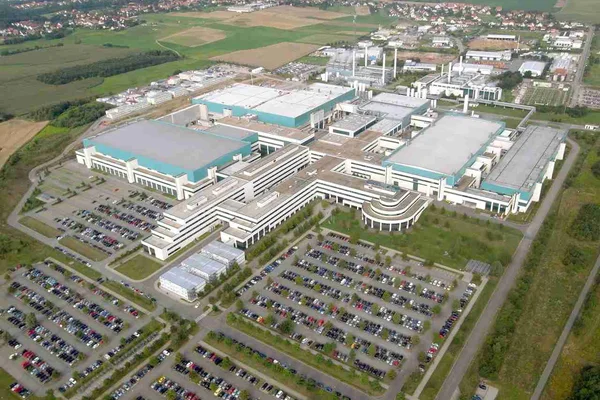
GlobalFoundries signs $2 billion five-year deal with TSMC for first US silicon interposer supply
GlobalFoundries will build silicon interposers for TSMC at its Malta, New York fab under a five-year, $2 billion agreement, with volume production expected in the first half of 2028.

Samsung posts record $80.2 billion quarterly profit as AI memory boom lifts chipmakers
Samsung's preliminary third quarter figures point to a 782.5 percent profit jump and a 55 percent operating margin, with TSMC also booking record revenue on the same AI demand.
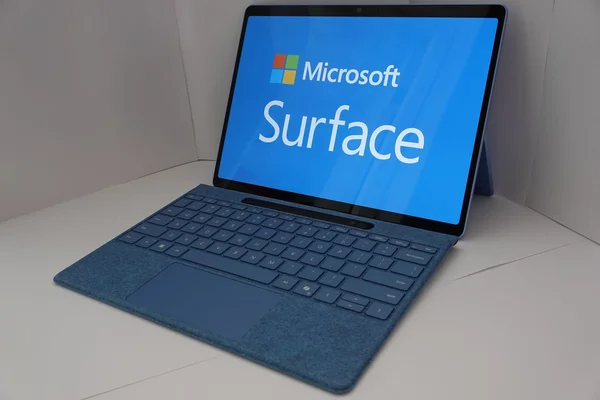
Microsoft Opens Preorders for Surface Laptop Ultra Starting at 2599
The 15 inch Surface Laptop Ultra pairs Nvidia's RTX Spark N1X superchip with up to 128 GB of unified memory and ships October 16 starting at $2,599.
Comments (0)
Log in or sign up to leave a comment.
No comments yet. Be the first to share your thoughts.