Astronomers have reopened one of the oldest files in the Hubble Space Telescope archive and found a chemical fingerprint that may belong to a planet born after its own star died. The star is HS 0209+0832, a white dwarf, the collapsed core left behind when a low-mass star burns through its nuclear fuel and loses its outer envelope of gas and dust. A study published on Monday, October 5, 2026, in Nature Astronomy reports that unusually high levels of the element niobium in archived Hubble spectra point to a gas giant that formed from the material the dying star cast off. Researchers describe the candidate as a second-generation planet.
A white dwarf is not a star in the ordinary sense. It no longer fuses fuel in its core and shines mainly because it retains heat from its earlier life, cooling slowly over billions of years. A second-generation planet, in the vocabulary the team uses, is a world that forms around that stellar remnant from the star's own cast-off material rather than from the cloud that gave birth to the star. The distinction inverts the usual order of things, because the death of the star becomes the raw material for a new world.
The evidence comes from a cold case that is decades old. When Hubble first observed HS 0209+0832 in 1999, the resulting spectrum contained roughly 100 chemical features that nobody could identify. The data sat unresolved for more than a quarter of a century until Jamie Williams, a doctoral candidate at the University of Warwick in the United Kingdom, returned to the archive with an updated chemical database and found that niobium matched many of those mystery features.
Niobium is not exotic on Earth, where it is used in jewelry and in medical imaging devices. What is extraordinary is the quantity found in this system, and the fact that this is the first time the element has been seen in this setting. Its presence points to an origin in the brief, violent conditions inside a dying star rather than in the ordinary chemistry of a stellar nursery.
Key Facts
ESA/Hubble reported on October 5 that the niobium signature is the central clue in the Nature Astronomy paper. Lead author Jamie Williams said: "Rather than the white dwarf stage being a kind of epilogue ... the systems we are familiar with [are] only the first chapter of a potentially much longer tale." NASA Science reported on October 5 that niobium is present in our solar system and is used on Earth in jewelry and medical imaging devices, but that the amount detected in the HS 0209+0832 system points to a planet forming from material ejected as the star dies rather than from the star's birth. Williams said the high abundance of niobium was a signature she was unfamiliar with when she first found it in the archival data.
Co-author Boris Gaensicke, also of the University of Warwick, said niobium "had not been reported in any other white dwarf analyzed to date." That absence is part of what makes this object stand out. Niobium is one of the elements heavier than iron, and co-author Nicholas Stone, a theoretical astrophysicist at the University of Wisconsin-Madison, explained that such elements are not produced by thermonuclear fusion inside stellar cores. They "can only be synthesized in the exotic conditions that briefly emerge inside dying stars," he said, which makes niobium a signpost of a dying star's innards thrown into space.
The team did not rely on Hubble alone. The researchers confirmed the Hubble observations with data from NASA's retired FUSE mission, the Far Ultraviolet Spectroscopic Explorer, which also showed strong niobium signatures. NASA's TESS mission observed the white dwarf for four months and detected periodic brightness variations indicating that a planet orbits at about 3.7 million miles (6 million kilometers), a distance much smaller than Mercury's orbit around the Sun. The team estimates the candidate is a Jupiter-sized gas giant that is rapidly losing its atmosphere.
IFLScience reported on October 5 that niobium around HS 0209+0832 was detected at levels about 1,000 times higher than in our Sun. Because a first-generation planet could not carry that much niobium, the excess supports a second-generation origin, although the outlet noted that the conclusion is not entirely clear-cut. Williams told IFLScience that the object "doesn't look like anything in the Solar System and it doesn't really look like anything that we've seen in the universe before," describing what she called a completely new kind of planet.
The Space Telescope Science Institute reported on October 5 that the new analysis points to the possibility of dead white dwarf stars hosting second-generation planetary systems. STScI, which conducts Hubble science operations in Baltimore, credited the illustration of the scenario to NASA, ESA, Leah Hustak and STScI. The image depicts a Sun-like star swelling into a red giant, then collapsing into a white dwarf surrounded by its expelled outer layers, the reservoir from which a second-generation planet could take shape.
Analysis
What this really means is that the standard story of planetary systems, in which planets form once and then simply endure whatever their star does, is incomplete. If a white dwarf can gather new worlds from the wreckage of its own outer layers, then planet formation is not a single event tied to a star's birth. It can restart later, around a stellar corpse, using recycled material that has been processed inside a dying star. That is a materially different picture of how long a planetary system can remain active, and it stretches the potential lifetime of a system far beyond the brief window that conventional models assume.
The niobium detection is what makes the claim more than speculation. Heavy elements such as niobium are not manufactured by ordinary fusion in a stellar core, so their presence near a white dwarf cannot be explained by the chemistry of the star's birth cloud. The material has to come from the extreme conditions that existed while the star was dying. The roughly 100 unidentified features in Hubble's 1999 spectrum, matched to niobium with an updated database, give the argument a concrete archival basis rather than a purely theoretical one.
The bigger picture here is that the researchers are not claiming certainty. IFLScience noted that the conclusion is not entirely clear-cut, and the candidate planet is described as suspected rather than confirmed. The mechanism the team proposes is indirect but physically motivated: the hot young white dwarf may strip the planet's outer material into a comet-like tail, and that material forms a disk and falls onto the star, allowing Hubble to detect niobium that would otherwise be invisible. The planet, in this reading, is being destroyed by the very object that created it, which is a strange and self-consuming kind of inheritance.
There is also an abundance argument worth noting. The heavy elements in question are not produced in white dwarfs themselves, but white dwarfs are far more numerous than the massive stars that end as supernovae, as IFLScience observed. If second-generation planets are even moderately common around them, the total number of planetary systems across cosmic history could be substantially larger than a count based only on stars like the Sun would suggest.
Why It Matters
The fate of the candidate planet is part of the story. Williams believes the world would likely survive its current punishment, cooling alongside the white dwarf as the remnant fades. Eventually the white dwarf will settle at a consistent temperature, and she suggests the planet could then sit in a stable habitable zone for millions of years. That is a peculiar kind of longevity: a planet that outlives the star that made it and then finds a stable thermal home around its ember.
The finding also changes how astronomers think about archival data. Hubble's 1999 spectrum was not new when this result appeared. It became a discovery only because a better chemical database allowed an old observation to be reinterpreted. NASA described the work as breaking open a cold case in the Hubble data archive, and the phrase is apt: the telescope's long operational history is itself an instrument that improves as laboratory spectroscopy improves.
Finally, the result connects stellar evolution to planetary science in a way that had been largely theoretical until now. The team's interpretation relies on material forged inside a dying star, expelled into space, and then incorporated into a new world. If that interpretation holds, the boundary between the life and the death of a planetary system is far blurrier than the conventional narrative suggests, and the search for life elsewhere may eventually have to include stars that are already dead.
Next Up
Williams has secured observation time on Hubble to search for more candidates of this kind. "If we find one second-generation planet around a white dwarf, then I think it's very possible that we could find many, many more," she told IFLScience. The search will draw on the same combination of archival spectra, ultraviolet data in the tradition of the retired FUSE mission, and brightness monitoring of the kind TESS provided for four months on HS 0209+0832.
For now, HS 0209+0832 remains a single object with a single unexplained abundance and a single suspected companion. Confirmation, or refutation, will come from more white dwarfs measured the same way. The question the team has posed is simple enough to state and hard to answer: if one dead star can seed a new planet, how many others did the same?
Related Articles
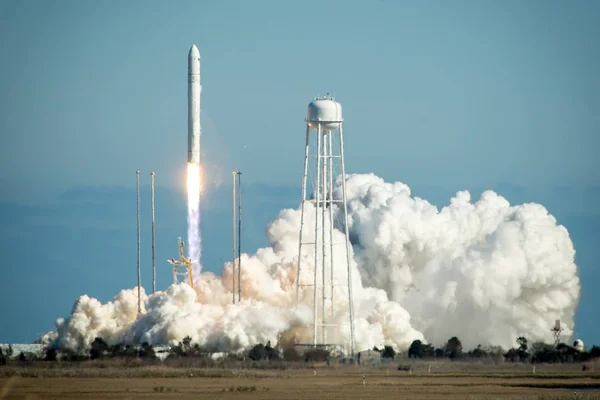
Pentagon picks Northrop Grumman and True Anomaly to build GEO reconnaissance satellites
The Defense Innovation Unit and Space Systems Command have selected Northrop Grumman and True Anomaly to prototype satellites that will photograph objects in geosynchronous orbit by 2028.
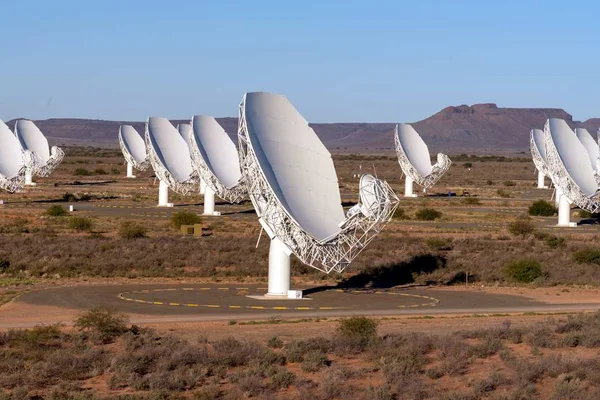
Astronomers trace first exoplanet radio emission to Beta Pictoris b with MeerKAT
MeerKAT's 64 dishes in South Africa recorded circularly polarized bursts from Beta Pictoris b, implying a magnetic field at least 200 times stronger than Jupiter's.

Google Puts Four TPUs in Orbit on SpaceX Mission to Test Project Suncatcher
Google confirmed its first Project Suncatcher prototype satellite, built with Planet and carrying four TPUs, reached orbit on SpaceX's Transporter-18 and is operating as expected.
Comments (0)
Log in or sign up to leave a comment.
No comments yet. Be the first to share your thoughts.