Google is stepping back into the personal computer business, and this time it is aiming at the top of the market rather than the bottom. On October 4, 2026, the first five Googlebook laptops reached stores in the United States, built with Acer, Asus, Dell, HP and Lenovo and priced from $899. Preorders opened on September 21. Every machine pairs Android-first software and Gemini with a neural processing unit rated at 45 TOPS.
The Googlebook category was revealed at Google I/O earlier this year. Ars Technica reported on September 21 that Google is entering laptops again, with Android-powered machines meant to be real computers with premium hardware, on-device apps and development tools. The line is deliberately separate from the budget Chromebooks that have carried Google's laptop ambitions for more than a decade. Chromebooks are cheaper and more stripped down, while Googlebooks start with 16GB of memory and use aluminum and magnesium materials.
The platform is new as well. Mashable reported on September 21 that a Google spokesperson confirmed the operating system is called Googlebook OS, blending Android, ChromeOS and Gemini. That combination promises the Android app catalogue, ChromeOS window management and an assistant that can act inside apps rather than only answer questions.
Pricing makes the intent plain. The five launch machines run from $899 for the Acer Googlebook 14 to $1,299 for the Asus Googlebook 14 and the HP Googlebook 14, placing the family alongside the MacBook Air and many Windows laptops. Each model carries either an Intel Core Ultra Series 3 chip, code-named Panther Lake, or a Qualcomm Snapdragon X Elite, with 16GB of memory as the baseline and 32GB upgrades available on some configurations.
Key Facts
The lineup spans five machines. The Acer Googlebook 14 is the only convertible in the first round, with a 360-degree hinge, an Intel Core Ultra 5 or Core Ultra 7 processor, 16GB of RAM, 256GB or 512GB of storage and a 14-inch 2.8K OLED touch display at 500 nits. The Dell XPS Googlebook uses a Snapdragon X Elite with 16GB to 32GB of RAM and 512GB or more of storage behind a 13.4-inch 2.5K IPS touch screen, the only panel in the group that is not OLED. The Lenovo Googlebook 15 offers a 15.3-inch 2.8K OLED touch display. The HP Googlebook 14 pairs a Snapdragon X Elite with a 14-inch 2.8K OLED panel plus facial and fingerprint recognition. The Asus Googlebook 14 tops the range with a 14-inch 3K OLED display and a carbon-fiber chassis.
That $899 entry point comes with a caveat. The Verge reported on September 21 that Acer's Kelly Odle called $899 the laptop's initial launch price available for a limited time, and said Acer plans to reevaluate pricing over time based on component supplies and other market pressures. Ars Technica reported on September 21 that only the Acer model is under $1,000.
Portability is a theme. The Asus Googlebook 14 is the lightest of the first five at 2.2 pounds, or roughly 1.0 kilogram, with an HDMI port among more connections than most of its siblings. The Dell XPS Googlebook is 12.5mm thick, weighs about 2.5 pounds and includes a machined aluminum body and a haptic touchpad. The Acer model is 13.9mm thick, the Lenovo machine is 15.95mm and 2.68 pounds, and the HP model is 14mm and about 2.7 pounds in an all-aluminum chassis with its own haptic touchpad. All five are fanless, all use 120Hz displays, and Google claims up to 14 hours of video playback and 16 hours of web browsing. Each lid carries the Glowbar, an illuminated strip that lights at boot and shows battery level, with a developer API promised.
The feature list leans on Gemini. Magic Pointer is a Gemini-powered cursor that pops up contextual actions when shaken. Cast your apps mirrors Android phone apps onto the laptop after pairing. Create My Widget builds desktop widgets from a written description. Rambler transcribes speech, removes filler such as ums and ahs and adds punctuation. Universal file search spans laptop and phone with instant sync. Buyers get 12 months of Google AI Pro with 5TB of cloud storage plus three-month trials of YouTube Premium, Adobe Photoshop and CapCut.
The rollout extends beyond the United States almost immediately. Archyde reported on September 28 that the series launches in the United States on October 4, 2026, followed by a wider release on October 5 in Germany, France, Great Britain, Ireland, Canada and Australia. Google and Qualcomm representatives spoke at the Snapdragon Summit on September 24, 2026, saying the platform targets agentic AI capabilities that could not run on decades-old desktop architectures. Qualcomm said Snapdragon X processors run desktop web content and mobile apps natively, without emulators or virtual machines, and warned that AI data-center construction is causing DRAM and NAND shortages that threaten end-user pricing.
Analysis
What this really means is that Google is no longer content to compete at the bottom of the laptop market. For years the Chromebook name stood for cheap, cloud-first machines, and Google left the premium tier to Apple and to Microsoft's partners. The Googlebooks invert that arrangement. With a 45 TOPS NPU, baseline 16GB of memory and an operating system built around Android apps and Gemini, the line challenges Copilot+ Windows PCs and the MacBook Air in the same $899 to $1,299 band. The pitch is not cheaper hardware. It is an assistant that can act, and a phone and a laptop that behave as one device.
The pricing structure nevertheless looks fragile. Acer's $899 price is explicitly temporary, and the component environment explains why. Qualcomm's warning about DRAM and NAND shortages, delivered at the Snapdragon Summit on September 24, 2026, is a reminder that memory pricing rather than marketing may decide what these laptops cost next year. Acer said it will reevaluate pricing based on component supplies and market pressures, and Apple's MacBook Neo has already seen increases.
There is also a measurement problem. Reported prices for the middle of the range varied by outlet: Ars Technica listed the Dell XPS Googlebook at $999 and the Lenovo Googlebook 15 at $1,099, while Mashable and Archyde put the Dell at $1,199. Differences of that kind usually reflect configuration, regional pricing or information released on different days, but they show how quickly the picture is moving. Consistent across the coverage are the floor and the ceiling: $899 for the Acer convertible and $1,299 for Asus and HP, with a 45 TOPS NPU and up to a decade of updates on every machine.
The bigger picture here is a bet on agentic computing as the defining feature of a personal computer. Cast your apps, Magic Pointer, Rambler and universal file search are attempts to make Gemini the connective tissue between a phone and a laptop, so that context and files follow the user instead of sitting in separate silos. The 10-year update commitment supports that strategy, because an assistant that accumulates context is worth more when the machine stays current. The risk is that the plan depends on developers adopting the promised Glowbar API and on Android apps behaving well on 14-inch and 15.3-inch displays.
Why It Matters
The launch reopens a platform contest that much of the industry assumed had settled. Windows and macOS have divided the premium laptop market for years, with ChromeOS confined to the low end. A third operating system, backed by five major manufacturers and a chip supply split between Intel and Qualcomm, gives buyers a real alternative at a moment when AI features are the main reason to upgrade. If Googlebooks find an audience, the pressure reaches Microsoft, Apple and every Windows manufacturer that now has to justify its own AI PC pricing.
The 10-year update pledge may prove to be the most consequential detail. Long software support changes resale values, corporate refresh cycles and the environmental case for buying new hardware. Even if only some buyers care, a decade of updates sets a benchmark that rivals must answer, matching the direction Google has taken with Chromebooks and Pixel phones. The catch is that software support and hardware support are different things, and a fanless design with soldered memory will eventually limit what those updates can deliver.
Component economics could blunt the story. Qualcomm's warning about memory shortages, and Acer's refusal to call $899 permanent, suggest that affordability in this class is not entirely in Google's hands. The same memory market that affects the Googlebooks affects MacBooks and Windows machines, so rising RAM prices could make the whole premium AI laptop segment more expensive just as it becomes more interesting. For buyers, the October 5 expansion into Germany, France, Great Britain, Ireland, Canada and Australia will test whether launch pricing survives contact with international markets.
Next Up
The next milestones are retail availability and reviews. The machines arrive in stores on October 4 in the United States, with the wider release on October 5, and the coming weeks will show whether the Acer Googlebook 14 holds its $899 price, how the fanless designs handle sustained workloads and whether the Intel Panther Lake and Snapdragon X Elite versions differ in battery life. Expect close scrutiny of Magic Pointer, Cast your apps and Rambler, and of the developer response to the Glowbar API.
Beyond that, the question is whether five models become a family. Google has said Chromebooks are not going away, which leaves the company running two laptop platforms with different price points and different operating systems. If Googlebook OS finds traction, the more interesting announcement may be the second wave of devices, and whether additional partners, more form factors and lower prices follow.
Related Articles

Nvidia adds 64GB DGX Spark at $4,999 while 128GB model rises to $6,950
Nvidia's new 64GB DGX Spark starts at $4,999 and ships October 23 through six PC makers, while the 128GB model now lists at $6,950 as memory supply remains tight into 2027 and 2028.

Nvidia Raises Shield TV Pro to $299.99 and Ends Base Shield TV After Seven Years
The $100 jump leaves Nvidia's flagship Android TV box at its highest price yet, with the cheaper tube model now out of production as memory costs ripple through consumer electronics.
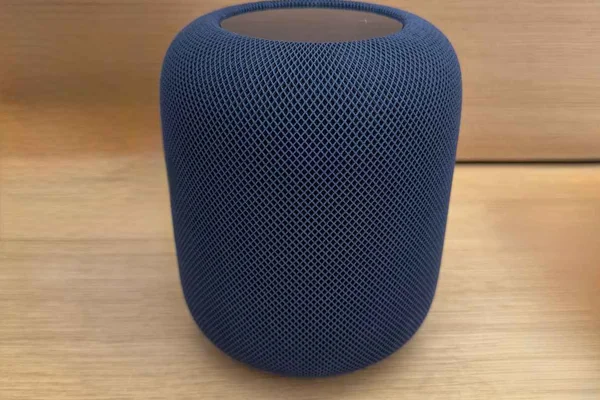
Apple to launch J490 smart home hub on October 13 with new HomePod mini and Apple TV
The iPhone maker will introduce a 6-inch smart display code-named J490, a refreshed HomePod mini, and a new Apple TV box, according to Bloomberg.
Comments (0)
Log in or sign up to leave a comment.
No comments yet. Be the first to share your thoughts.