Advanced Micro Devices has closed its purchase of Taalas, a Toronto company that designs silicon tailored to individual AI models. AMD announced the completion on November 17, 2026. The agreement had been announced on August 6, 2026, and the company had expected to close by the end of 2026, subject to regulatory approvals and customary closing conditions. Taalas was founded in 2023.
The financial shape of the transaction drew attention. Unite.AI reported on November 17 that a November 4, 2026 quarterly filing valued the then pending cash and stock transaction at approximately $2.9 billion, including contingent consideration of up to approximately $1.4 billion. Securities.io reported on November 17 that the contingent portion was roughly 48 percent of the potential transaction value, calculated from AMD's figures. The closing announcement did not restate the final purchase price.
Taalas is not a conventional GPU designer. Its pitch is a chip that hardwires an entire AI model, weights included, so that storage and computation sit together on one chip at DRAM level density. The company says the approach attacks the bottleneck created by shuttling model data between separate memory and compute components, and that it can turn a previously unseen model into custom silicon in two months. Its HC1 technology demonstrator is built around the Llama 3.1 8B model.
AMD frames the acquisition around a shift in AI demand. Vamsi Boppana, senior vice president of the Artificial Intelligence Group at AMD, said customers need a broad range of compute solutions optimized for their workloads, and that Taalas expands AMD's ability to deliver differentiated inference performance and efficiency. AMD said it plans to integrate Taalas technology into its accelerator roadmap and to develop system level solutions alongside AMD Instinct GPUs, complementing AMD EPYC CPUs, AMD ROCm software and the AMD Helios rackscale solution.
Key Facts
AMD Newsroom reported on November 17 that the acquisition had closed. The announcement described Taalas as a pioneer in specialized AI inference silicon and said the deal strengthens AMD's full stack AI portfolio and long term inference roadmap. It did not restate a final price or a product delivery schedule for the planned integration.
Unite.AI reported on November 17 that AMD's November 4 quarterly filing put the pending cash and stock deal at approximately $2.9 billion, with up to about $1.4 billion in contingent consideration. The agreement itself was announced on August 6, 2026. AMD had expected completion by the end of 2026, a timetable the closing met. Securities.io reported on November 17 that the contingent consideration equaled roughly 48 percent of the potential transaction value, based on AMD's figures.
Taalas was founded in 2023 and is headquartered in Toronto. Taalas co-founder and CEO Ljubisa Bajic said at the agreement stage that the company was founded to rethink AI inference from the ground up by building hardware around the model. He said the Canada based team combined deep technical expertise with a willingness to challenge conventional approaches, and that joining AMD would provide scale, engineering resources and global reach. Bajic is also a co-founder and former CEO and CTO of Tenstorrent, according to EE Times.
EE Times reported on February 19 that HC1 can exceed 16,000 tokens per second per user on Llama 3.1 8B, with internal testing closer to 17,000 under some conditions and an online chatbot demo reaching more than 15,000 when the publication tried it. The chip is built on TSMC's 6 nanometer process, has an 815 square millimeter die and 53 billion transistors, and one chip fits the entire 8B model. A server with 10 HC1 cards is listed at 2.5 kilowatts and can be deployed in standard air cooled racks; the chip itself uses around 250 watts.
Unite.AI reported on November 17 that Taalas measures 17,000 tokens per second per user in its own labs with 1,000 token input and 1,000 token output sequences. The same report said the system does not require high bandwidth memory, advanced packaging, 3D stacking, liquid cooling or high speed I/O. HC1 retains configurable context window sizing and supports fine tuning through low rank adapters. Its first generation quantization combines 3 bit and 6 bit parameters and introduces some quality degradation relative to GPU benchmarks, while a second generation design adopts standard 4 bit floating point formats.
Analysis
The strategic logic is easy to state and harder to execute. AMD already sells Instinct GPUs for training and inference, and it positions those chips inside Helios rackscale systems with EPYC CPUs and ROCm software. Taalas adds a different bet: silicon that gives up generality to gain efficiency on a known model. What this really means is that AMD is hedging against the possibility that a meaningful share of inference demand will gravitate toward fixed function or model specific hardware rather than remain on general purpose GPUs.
That hedge is credible because the performance gap in Taalas' own testing is large. EE Times reported on February 19 that Cerebras can achieve close to 2,000 tokens per second per user for Llama 3.1 8B, SambaNova around 900, Groq around 600, and that Taalas tested Nvidia Blackwell generation hardware internally at around 350. Taalas also cited a total cost of ownership figure of 0.75 cents per million Llama 3.1 8B tokens. If those numbers hold in customer deployments, model specific silicon could change the economics of high volume, narrow workload inference.
The caveats are just as important. The HC1 demonstrator only runs Llama 3.1 8B, and EE Times reported that Taalas admits the model is quantized aggressively. Unite.AI reported that first generation quantization introduces some quality degradation relative to GPU benchmarks, although a second generation design moves to standard 4 bit floating point formats. A chip that is excellent on one model is not automatically a platform. AMD's challenge is to turn a two month customization process and a two mask change into something repeatable, supportable and attractive to customers whose model choices change quickly.
The deal structure reinforces the uncertainty. With up to about $1.4 billion, or roughly 48 percent of the potential value, tied to contingent consideration, a material part of the payout depends on future performance rather than closing alone. The bigger picture here is that AMD is buying an option on a more specialized inference future while protecting its core Instinct franchise. The closing announcement gave no product delivery schedule, and Securities.io noted that the central open question is how the model focused design will be incorporated into future accelerator and system level products. That is the test investors and customers should watch.
Why It Matters
Inference is becoming the volume business of AI. Every query, agent step and generated token consumes compute after a model is deployed. AMD's rationale is that demand is shifting toward increasingly specialized workloads, and that customers want compute optimized for those workloads rather than one general purpose device for everything. Taalas gives AMD a technical answer to that argument, even if the commercial answer is not yet proven.
For customers, the appeal is a system that avoids high bandwidth memory, advanced packaging, 3D stacking, liquid cooling and high speed I/O, according to Unite.AI. Those are precisely the layers that a model specific design can simplify. A design that merges storage and computation on one chip at DRAM level density could, in principle, deliver faster token generation with simpler servers. The trade off is that the model must be known in advance, which makes the approach best suited to stable, high volume deployments rather than experimentation.
For AMD, the acquisition also expands its engineering presence in Canada, a point the company emphasized in its announcement. That matters for engineering talent. It also brings a Toronto based team whose HC1 design borrows ideas from early 2000s structured ASICs. EE Times reported that Taalas changes only two masks to customize a chip for a specific model, with those masks able to change both model weights and dataflow through the chip.
Next Up
The immediate question is integration. AMD said it will fold Taalas technology into its accelerator roadmap and develop system level solutions alongside Instinct GPUs, EPYC CPUs, ROCm software and Helios. It has not said when a product will ship, what it will be called or which models it will support. The first credible milestone will be a disclosed product schedule or a customer deployment that shows the model specific approach working outside Taalas' labs.
A second question is whether AMD can preserve Taalas' speed advantage without inheriting its constraints. The HC1 story rests on Llama 3.1 8B, aggressive quantization and a narrow workload. The second generation 4 bit floating point design and the low rank adapter support are steps toward flexibility, but they do not by themselves prove that model specific silicon can become a mainstream AMD product line. Until AMD answers that, the deal valued at approximately $2.9 billion while pending remains a strategic option as much as a finished capability.
Related Articles
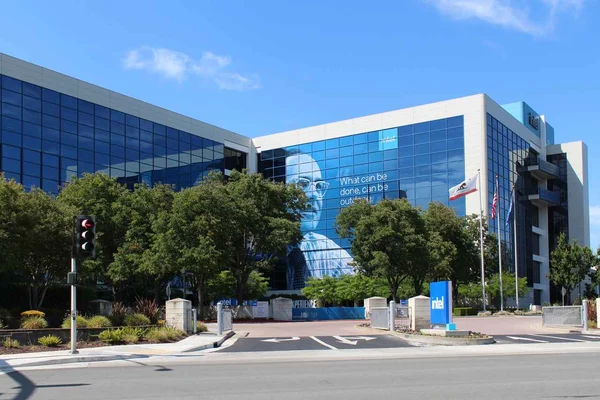
Intel Pitches 350W D270 GPU Against Nvidia RTX PRO 6000 With 5.9x FP64 Claim
Intel's first published D270 benchmarks show large FP64 gains over Nvidia's RTX PRO 6000 on options pricing, but the vendor numbers come from pre-production silicon with no price or launch date.
US Judge Lets DRAM Supply Conspiracy Case Against Samsung, SK hynix and Micron Proceed
A California federal court has allowed 17 buyers to pursue claims that the three biggest memory makers starved the market of conventional DRAM while steering capacity to AI chips.
Samsung Weighs $8 Billion Modine Takeover to Build an AI Cooling Business
A reported takeover of Wisconsin chiller maker Modine would hand Samsung North American factories and hyperscale customers as AI racks outgrow conventional air cooling.
Comments (0)
Log in or sign up to leave a comment.
No comments yet. Be the first to share your thoughts.