A study published in Science on August 27 used coral records from the Galapagos Islands to show that El Nino events over the past 40 years have been significantly stronger than at any point in the previous 1,000 years, implicating human-caused global warming as the leading explanation. The finding was reported by Inside Climate News and the journal's own news service.
The Method
Lead author Julia Cole of the University of Michigan and colleagues examined cores from 13 corals, including living colonies and ancient fossil boulders from the Galapagos, a location long described as the heart of El Nino. By analyzing strontium-to-calcium ratios and oxygen isotopes in coral skeletons, which record seawater temperature as they grow, the team reconstructed monthly temperature records spanning the past millennium. They combined the coral records with 12 state-of-the-art climate models to rule out natural variability.
Key Findings
El Nino-Southern Oscillation variability in the eastern equatorial Pacific is now roughly 36 percent greater than during the pre-industrial era, driven mainly by stronger El Nino events. Events in recent decades were also about 16 percent more intense than those of the 20th century. The intensification began in the late 19th century and has shown a striking amplification over the past 40 years, coinciding with the acceleration of fossil fuel burning.
Implications
The study lands as a powerful El Nino develops in 2026, projected by forecasters to become one of the strongest on record and potentially push global temperatures to 1.7 to 1.8 degrees Celsius above pre-industrial levels. Stronger El Ninos amplify floods, droughts, wildfires, and crop failures worldwide. The 1982 to 1983 event alone killed about 95 percent of shallow-water corals around the Galapagos, and the authors say the record underscores the urgency of transitioning away from fossil fuels.
Related Articles
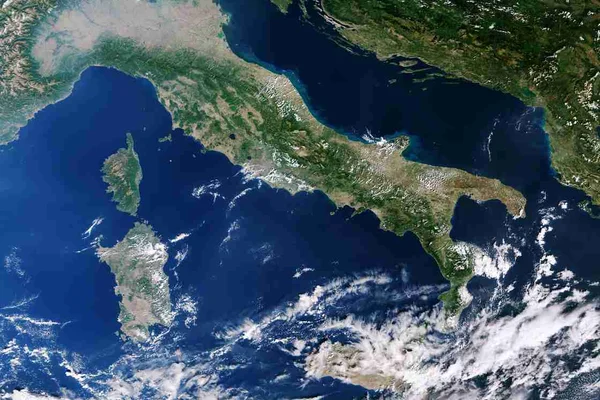
Copernicus says September 2026 was second warmest on record as El Niño strengthens
Global average surface air temperature reached 16.27°C in September 2026, 1.63°C above pre-industrial levels, marking the second straight month above the 1.5°C threshold.
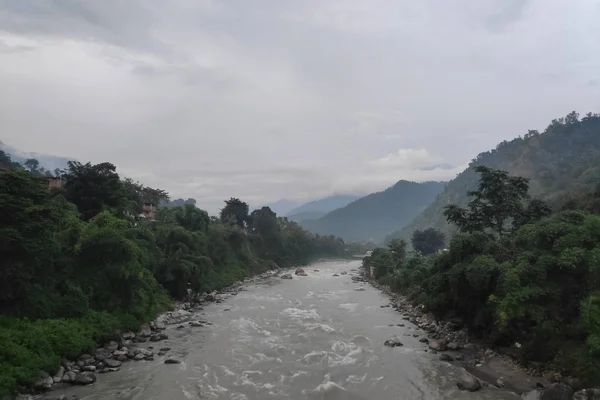
Nepal landslide dam breach sends flash flood through Gorkha, leaving five missing
Rescuers in Nepal's Gorkha district deployed helicopters and hundreds of personnel after a landslide dam on the Budhi Gandaki River burst, destroying bridges, houses and a hydropower camp.

Amazonas Declares Fire Emergency in 36 Municipalities as Smoke Shuts Manaus for Third Day
Smoke from hundreds of wildfires pushed Amazonas state to declare an emergency across 36 municipalities while schools and municipal offices in Manaus remained shut for a third day.
Comments (0)
Log in or sign up to leave a comment.
No comments yet. Be the first to share your thoughts.