SoftBank Group's push into physical artificial intelligence hit an unexpected obstacle in Beijing this week, when Chinese authorities refused to clear the Japanese investment giant's purchase of ABB Ltd's robotics business. The prohibition leaves a transaction valued at roughly $5.4 billion in limbo and raises difficult questions about how far Masayoshi Son's conglomerate can extend its reach into the industrial machinery that surrounds modern AI software.
The deal dates back to October 8, 2025, when SoftBank and ABB entered into a definitive agreement for the robotics division. For ABB, the sale was part of a broader restructuring. The Swiss engineering group had originally envisaged an initial public offering of the unit, but concluded that SoftBank's offer was more attractive. The transaction carried an enterprise value of around $5.4 billion, and ABB had anticipated net proceeds of about $5.3 billion.
China's weight in the business is the reason the review mattered so much. China is the largest market for ABB's robotics division, representing around 30% of its robot-related business. More than 90% of the robots destined for Chinese customers are manufactured locally, and ABB has operated a robot factory in Shanghai since 2022, built at a cost of $150 million. ABB Engineering (Shanghai) houses the division's global robotics headquarters and an important research and production base.
The decision also fits a wider pattern of tightening scrutiny. In April, China's National Development and Reform Commission blocked Meta Platforms' $2 billion acquisition of the agentic AI startup Manus, and Beijing has spent the year clamping down on transfers of vital data abroad, including in robotics. The ABB case is now the second major deal stopped by China in 2026.
Key Facts
SoftBank said in a press release on November 6, 2026, that it had received notification on November 4, 2026 from the Office of the Working Mechanism for Foreign Investment Security Review in China that the acquisition of ABB Ltd's robotics business in China had been prohibited. The notice does not by itself terminate the global agreement, but it blocks the transfer of ABB's Chinese robotics operations, which the deal cannot close without.
ABB confirmed the block on November 5. Reuters reported on November 5 that China's state planner had told SoftBank it would not allow the US$5.4 billion acquisition of ABB's robotics segment to proceed. The same report noted that the case marks the second major deal blocked by China this year, after Meta was ordered to unwind its US$2 billion-plus acquisition of Manus.
Markets reacted quickly. Bloomberg reported on November 5 that SoftBank's shares were down around 7% in Tokyo, while The Straits Times reported on November 5 that the stock ended the day down 6.8% and ABB shares were down 1.1% in morning trading. SoftBank declined to comment, and the NDRC did not immediately respond to a request for comment.
The industrial footprint at stake is substantial. ABB Robotics has about 7,000 employees and supplies robotic arms and industrial machinery to manufacturers such as BMW. Its U.S. headquarters and factory are in Auburn Hills, Michigan. In China, ABB operates about 30 local companies with around 15,000 employees in nearly 130 cities. The Robot Report reported on November 5 that the deal was valued at $5.375 billion.
SWI swissinfo.ch reported on November 5 that Beijing's concerns, described in a Financial Times report, included robotics production data finding its way abroad and being used to train AI models, potentially including models from OpenAI, in which SoftBank holds a significant stake. Authorities also examined whether intellectual property must remain in China, and a spin-off of parts of the business to Chinese owners had been considered. The European Commission had already approved the takeover.
Analysis
What this really means is that the binding constraint on SoftBank's physical AI strategy is no longer capital or engineering ambition but political permission. SoftBank can write large checks, and it has, but it cannot buy its way past a regulator that treats factory data as a strategic asset. The China business is not a peripheral slice that can be dropped casually. It is roughly 30% of the robotics unit's business and the site of most manufacturing for local customers.
The timing was particularly painful. According to SWI swissinfo.ch, the decision came as a surprise to SoftBank, which as recently as the previous week had assumed approval would be granted and is now assessing whether a fresh attempt is possible. A company that had been managing the process to obtain approvals suddenly found the most important one closed.
The strategic logic behind the purchase was never primarily about near-term revenue. Bloomberg Intelligence analyst Kirk Boodry said ABB Robotics "lacks the cutting-edge innovation found across SoftBank's physical AI startup portfolio, but its domain expertise and manufacturing knowhow had been expected to transform robotic concepts into actual businesses." That is precisely the kind of hard-won industrial competence that cannot be replicated quickly, and it is why investors had looked to ABB's expected contribution to reassure themselves that Son was not overextending.
The bigger picture here is that the deal has become a test of whether a global transaction can survive when one jurisdiction controls an essential piece. Brussels cleared it. China did not. The structure assumed regulatory approvals would arrive in sequence, but a prohibition covering the Chinese operations effectively freezes the whole because the buyer cannot take ownership of a business it cannot operate in its largest market. SoftBank said it is in close dialogue with ABB and that both parties are working constructively on the transaction, language that leaves room for a restructured approach without promising one.
Why It Matters
For the wider robotics industry, the precedent is the point. Data generated on factory floors is now treated as security-relevant material, not commercial exhaust. The Financial Times reporting suggests the review examined whether production data could travel overseas and train models, including OpenAI systems backed by SoftBank. If that reasoning hardens into standard practice, cross-border acquisitions of automation companies will need data separation, local ownership or both.
The block also lands in a year of mounting friction. The Robot Report noted that the move comes as robotics becomes a political battleground, with China preventing the Meta and Manus deal in April, the Trump administration moving toward a Section 232 national security review of imported robots, and the FCC banning new foreign-made advanced robotic devices including humanoids and quadrupeds. Restrictions are multiplying on both sides, and neither is limited to one technology layer.
For ABB, the financial and strategic consequences are concrete. The company had anticipated net proceeds of around $5.3 billion and recently announced the $5.5 billion purchase of British automation specialist Rotork. A stalled disposal complicates the restructuring it set out to complete, and the unit it wanted to hand off remains on its books. For SoftBank, the setback follows other strains: its near-$65 billion bet on OpenAI and pledges of hundreds of billions of dollars on data center projects have made investors sensitive to any sign of overreach, and the blocked deal removes one expected source of reassurance.
Next Up
SoftBank has said it will promptly announce any decisions on matters requiring disclosure, and both parties describe themselves as working constructively. The immediate question is whether a fresh attempt is possible, and whether it would involve carving out the China business, local ownership of part of the unit, or stronger data localization commitments. SWI swissinfo.ch reported that a spin-off of parts of the business to Chinese owners had already been considered.
Beyond this transaction, the watch items are the NDRC's approach to future technology deals and whether other jurisdictions follow with their own conditions. The blocked deal came less than a week after SoftBank-backed payments company OPay withdrew a US IPO citing a regulatory inquiry, after pricing 16 million American depositary shares at US$19 each to raise US$304 million. For a group betting heavily on AI, the regulatory weather now matters as much as the technology.
Related Articles
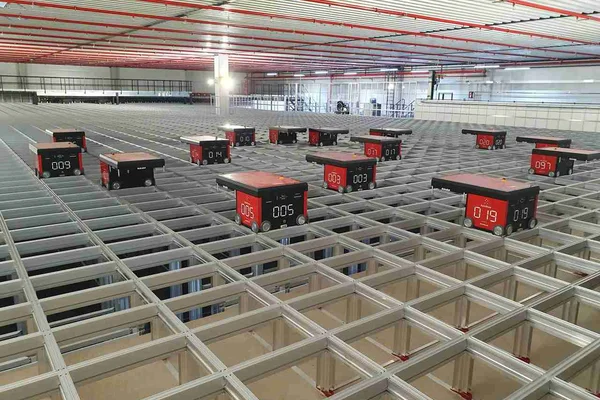
AutoStore Agrees to Buy Dutch Pallet Robotics Firm Logiqs for Up to 30 Million Euros
The Norwegian cube-storage maker will pay cash for a 60-person Dutch developer of roaming pallet systems, adding a warehouse layer that sits beneath its bin-based grid.
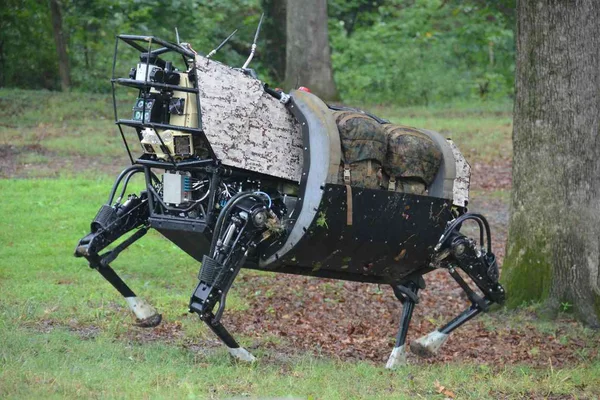
Boston Dynamics Rebuilds Stretch Robot With 81 Percent Less Cabling After 100,000 Field Hours
Boston Dynamics rebuilt its trailer unloading robot around field data, cutting internal wiring by 81 percent and shortening a swerve drive replacement from a full day to about an hour.
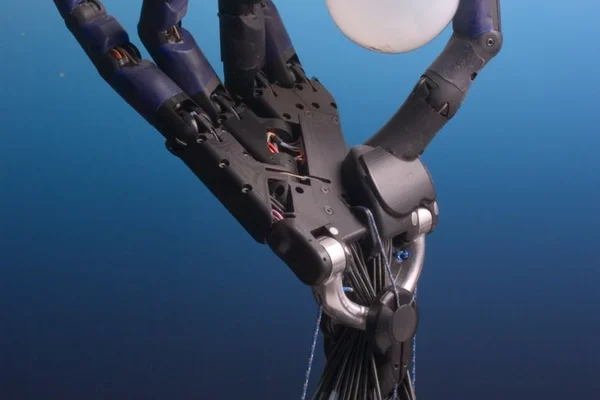
Agility Robotics wins shareholder approval for $2.5 billion SPAC and Nasdaq listing
Investors backed the humanoid maker's merger with Churchill Capital Corp XI, clearing the way for a Nasdaq debut as AGLT with roughly $465 million in gross capital.
Comments (0)
Log in or sign up to leave a comment.
No comments yet. Be the first to share your thoughts.