AutoStore Holdings Ltd. has spent more than two decades selling a specific idea of warehouse automation: thousands of small robots running on a grid, fetching bins of individual items rather than shifting whole pallets. The Norwegian company, listed under the ticker AUTO and headquartered in Nedre Vats, built its business on that cube-based architecture. Its systems are trusted by more than 1,350 customers across 68 countries, with roughly 2,050 installed worldwide. That footprint makes AutoStore one of the most widely deployed names in goods-to-person robotics, and it also marks the edge of the product map: almost everything it sells begins with a bin.
The pallet is the layer underneath. Before a warehouse can pick individual items, cartons arrive stacked on pallets, and those pallets must be stored, retrieved and moved, often in chilled or frozen rooms where human labour is unpleasant and costly. Bin-based cube systems do not address that step. Pallet automation has stayed a separate market, served by crane-based aisle systems, shuttle racking and a small group of specialists. Entering it is not a simple extension of an existing grid: the loads, the safety envelope and the software all change.
Logiqs BV is one of those specialists. The Netherlands-based company builds roaming pallet automated storage and retrieval systems, a category in which robotic carriers travel inside a rack structure to move pallets rather than a crane serving one aisle at a time. Its iCUBE platform is deployed at approximately 30 customer sites across multiple geographies and end markets, and the company employs 60 people with automation, software and product capabilities. That is small next to AutoStore, but it arrives with installed reference sites and a product already in commercial service.
AutoStore announced on 5 November 2026 that it had agreed to acquire Logiqs for a purchase price of up to EUR 30 million. On the same morning it published third-quarter results for the period ending 30 September 2026, a coincidence of timing that let the strategic and financial stories land together. AutoStore reported revenue of USD 192.1 million, up 38.2% from USD 139.0 million a year earlier, and raised full-year 2026 revenue guidance to around USD 750 million from around USD 700 million.
Key Facts
AutoStore said in its announcement on 5 November 2026 that the transaction is expected to close in the fourth quarter of 2026, subject to customary closing conditions. The purchase will be funded from existing cash reserves and is not expected to have a material impact on the company's financial results. The release was datelined Nedre Vats, Norway. Chief executive Mats Hovland Vikse called the deal another step towards building an autonomous, intelligent fulfilment platform, and said Logiqs' core technology will over time bring roaming pallet automation into the AutoStore platform for new and existing customers.
Unite.AI reported on 5 November 2026 that the agreement would add pallet-handling automation to AutoStore's fulfilment platform, and it reviewed the Logiqs iCUBE brochure for detail on the hardware. Pallets ride on proprietary E-Carriers rated for loads of up to 1.6 tonnes, with as many as three shifts of operation on a single charge. The carriers use a 48-volt electrical system and regenerative braking, with a cruising speed of one metre per second. Vertical Transporters can carry an E-Carrier, a pallet, or both together, and additional carriers can be deployed to a system level during peak periods.
RobotsBeat reported on 5 November 2026 that the acquisition is an all-cash deal, and it listed manufacturer-specified carrier capabilities of up to 1,750 kilograms and up to 16 hours of operation on one charge, while noting that these are vendor specifications whose suitability depends on loads, layout and conditions. The trade outlet framed the purchase as a move beyond cube-based bin storage into palletized goods, a layer of material flow that sits before goods are broken into smaller units. It also noted that Logiqs markets iCUBE for refrigerated and frozen environments.
The software is part of the package. The Logiqs control layer lets operators plan pallet movements, manage carriers and transporters, view real-time system status, run automated inbound and outbound procedures, buffer and pre-sort goods, and configure inbound and outbound strategies. For AutoStore, whose proposition rests heavily on orchestration software sitting above the grid, that is a familiar asset.
Logiqs' chief executive Reyer van der Louw said the deal offers an opportunity to accelerate the company's technology together with AutoStore, citing cultural similarities as a starting point for collaboration. Parth Joshi, AutoStore's chief product officer and president of its product business unit, said Logiqs' deep experience and insight address an exciting new product and technology area. Neither side announced an integrated product, launch date or roadmap.
Analysis
The bigger picture here is that AutoStore is buying a second layer of material flow, not a second product line. Pallet storage is where a warehouse's story starts, before the bins and the item-level picking on which AutoStore built its franchise. A customer that already runs a cube system still has to solve the pallet problem somewhere, and today that answer comes from another vendor, often with another software stack and service contract. Owning a pallet system gives AutoStore a credible answer to a question its sales force currently has to deflect.
The price looks modest against the balance sheet paying it. Up to EUR 30 million is small relative to the USD 192.1 million of revenue AutoStore booked in a single quarter, and it comes from cash rather than debt or equity. AutoStore reported a gross margin of 71.3% for the quarter, down 1.8 percentage points from 73.1% a year earlier, and cash flow conversion of 78%. A deal of this size can be absorbed without strain, which is why the company expects no material impact on results.
The strategic value is easier to argue than the financial one. AutoStore serves more than 1,350 customers across 68 countries and about 2,050 systems, while Logiqs brings roughly 30 installed sites plus 60 engineers and product people. Cross-selling a pallet platform into an existing base of more than a thousand accounts is the obvious thesis, and it explains why a small Dutch hardware maker matters to a listed Norwegian company. Whether it converts depends on how quickly the two architectures can share software, service organisation and sales motion.
The risks are the ordinary ones that attach to small acquisitions by larger platforms. Logiqs' carriers, lifts and racking are a different mechanical system from AutoStore's grid, and merging control software across two robot families takes time. AutoStore has given no launch date, describing integration as a future development effort. There is also a channel question, because pallet systems are typically sold through integrators and installed project by project, a rhythm that differs from AutoStore's product-led model. Value will be realised in quarters, not in the announcement.
Why It Matters
For customers, the significance is consolidation at the level of the warehouse floor. A retailer or grocery operator planning a new facility has to stitch together pallet storage, case handling and item picking from separate vendors, then make the software talk. Every additional layer one vendor can supply through a single control plane reduces integration risk and the number of people to call when something jams at two in the morning.
For the robotics market, the deal signals that bin storage is maturing into a platform war. Companies that won the first wave of goods-to-person automation now have to broaden their footprint or watch competitors assemble a wider stack around them. Vikse argues that supply chains are becoming increasingly strategic to customers, who want productivity, flexibility and resilience. A vendor that covers more of the flow is harder to displace, and that is the real prize behind a EUR 30 million cheque.
For AutoStore's investors, the timing matters as much as the target. The acquisition was disclosed alongside the strongest third-quarter order intake in the company's history, USD 178 million, up 17% year over year, and a guidance raise. Buying a growth option from a position of strength, in cash, without moving the numbers, is a low-risk way to extend the story. The open question is whether pallet automation becomes a real revenue line or a feature attached to the grid.
Next Up
The immediate milestone is completion. AutoStore expects the transaction to close in the fourth quarter of 2026, subject to customary closing conditions, which leaves a narrow window and pushes integration work into early 2027. Watch for the first disclosure of any Logiqs contribution in the company's reporting.
Beyond closing, the open question is product. Neither company has announced an integrated offering, a release date or a combined roadmap, and AutoStore describes the move as enabling future expansion rather than an immediate launch. The next signal will be a named customer running AutoStore software over Logiqs hardware, or a pallet product carrying AutoStore branding.
Related Articles
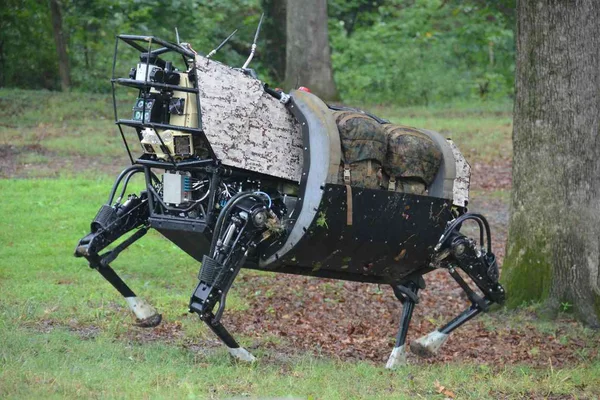
Boston Dynamics Rebuilds Stretch Robot With 81 Percent Less Cabling After 100,000 Field Hours
Boston Dynamics rebuilt its trailer unloading robot around field data, cutting internal wiring by 81 percent and shortening a swerve drive replacement from a full day to about an hour.
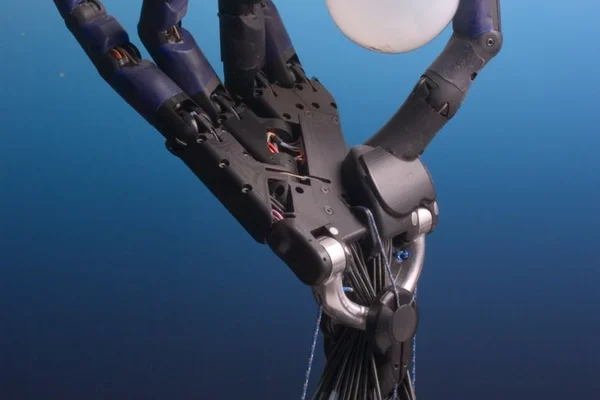
Agility Robotics wins shareholder approval for $2.5 billion SPAC and Nasdaq listing
Investors backed the humanoid maker's merger with Churchill Capital Corp XI, clearing the way for a Nasdaq debut as AGLT with roughly $465 million in gross capital.
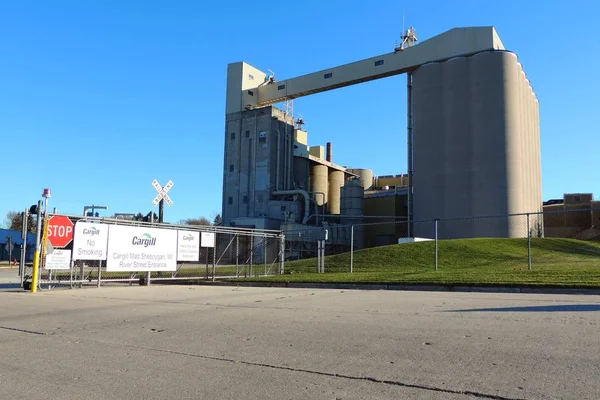
Cargill and Neptune Robotics Launch Robot Hull Cleaning Trial at the Port of Singapore
Cargill will supply bulk carriers and operational feedback while Neptune Robotics tests AI-driven cleaning, inspection and fuel savings measurement under Singapore's port innovation programme.
Comments (0)
Log in or sign up to leave a comment.
No comments yet. Be the first to share your thoughts.