The surface of the asteroid Bennu is so loosely packed that it is roughly 50 times weaker than freshly ground coffee, according to a study published on September 4 in Nature Communications. Researchers led by Paul Sánchez of the University of Colorado Boulder and Michael R. Swift of the University of Nottingham estimated that Bennu's surface has a tensile strength below 1 pascal, a staggeringly small number that explains why NASA's OSIRIS-REx spacecraft sank several centimeters into the asteroid when it touched down in 2020. Phys.org reported on September 4 that the finding emerges from a new model of how granular material holds together, calibrated directly against measurements from the samples OSIRIS-REx returned to Earth in 2023.
The numbers put the result in context. Freshly ground coffee, a famously loose material, has a tensile strength on the order of 50 pascals, which means a cube of coffee grounds can just barely support its own weight under weak gravity. Bennu's surface, at below 1 pascal, is weaker still, so weak that a person standing on the asteroid would sink as though wading through a pit of the lightest powder imaginable, and any spacecraft landing on it has almost nothing solid to push against.
The weakness is not an accident of Bennu alone. The researchers built a general framework that predicts the strength of any granular asteroid from the size and shape of its particles, which means the same physics can be applied to other rubble-pile objects in the solar system. The model explains why so many small asteroids behave like collections of gravel rather than solid rock, and it gives planetary scientists a tool to predict how a spacecraft or a future mining operation would interact with any given asteroid's surface before ever arriving.
Key Facts
The study's central estimate is that Bennu's surface tensile strength is below 1 pascal, making it about 50 times weaker than the roughly 50 pascal strength of freshly ground coffee. Phys.org reported on September 4 that this is the first time a granular-bridge model has been calibrated against actual returned asteroid samples, giving the estimate an empirical foundation rather than leaving it purely theoretical.
The modeling work was extensive, and Phys.org reported on September 4 that the team ran 78 simulations using a contact dynamics method implemented in the open-source code LMGC90, modeling grains between 2 and 5 centimeters across and testing 10 polyhedral shapes that ranged from nearly round to highly elongated. The simulations captured how grains form bridges and how those bridges resist separation, which is what determines whether a surface holds together or crumbles under the slightest load.
The Bennu application used cohesive forces measured from the OSIRIS-REx samples, which were collected in 2020 and returned to Earth in 2023. By feeding those measured forces into the granular-bridge model, the researchers were able to explain why Bennu's surface is so extraordinarily weak: it lacks the fine dust that would fill the voids between larger grains and create contact points that bind the material together. The shortage of fine particles leaves the larger grains touching only at rare points, and those few contacts provide almost no strength.
The framework also connects to a long-standing puzzle about asteroid spins. Phys.org reported on September 4 that small asteroids under roughly 150 meters across, or about 490 feet, can spin with periods below 2.4 hours, fast enough that a solid object would fly apart. Rubble-pile asteroids can survive these spin rates only because they are held together by gravity and weak cohesion rather than solid rock, and the new model gives researchers a quantitative way to predict which spin rates a given granular surface can survive.
Analysis
What this really means is that the cosmic objects we think of as mountains are, in mechanical terms, closer to piles of sand, and the engineering consequences are enormous. The OSIRIS-REx mission nearly lost its sample when the spacecraft's collector sank deep into Bennu's surface, and the new model explains exactly why that happened. Any future mission that wants to land on an asteroid, deflect one, or mine one will have to treat the surface as a fluid-like granular medium rather than solid ground, which changes everything from landing-gear design to the anchors a mining rig would need.
The bigger picture here is that a coffee-grounds comparison, while charming, is pointing at a genuine scientific shift. For decades, planetary scientists modeled asteroids as either solid bodies or simple rubble piles, but the returned Bennu samples have revealed a more subtle picture in which the size distribution of grains, not just their bulk composition, dictates behavior. The finding that missing fine dust is the culprit is a reminder that the smallest components of a surface can dominate its largest-scale behavior, a lesson that applies equally to sand dunes on Earth and to the surfaces of planets and moons across the solar system.
The comparison to coffee also serves a practical purpose: it gives engineers and the public an intuitive anchor for a number that is otherwise meaningless. A tensile strength below 1 pascal is hard to visualize, but everyone understands that coffee grounds collapse under their own weight. That intuition is exactly what a mission designer needs when deciding whether a sampling device will punch through an asteroid surface or bounce off it, and it is why the paper's authors chose the analogy so deliberately.
The most important legacy of the paper may be methodological. Because the model ties surface strength to the size and shape of the surface grains, it converts a property that could previously only be measured by landing on an asteroid into something that can be estimated from orbital imagery, which can resolve individual boulders on the objects spacecraft have already photographed. That means the next decade of asteroid missions can begin with better-informed engineering designs instead of learning, as OSIRIS-REx did, that the surface was far softer than pre-mission models assumed, and it gives the growing number of proposed asteroid investigations a shared yardstick for comparing one target against another before any of them launches.
Why It Matters
The finding has immediate relevance for planetary defense. If a hazardous asteroid ever needs to be deflected, the method that works depends on how the surface responds to an impact, and a surface 50 times weaker than coffee will absorb energy very differently from solid rock. A kinetic impactor that would shove a solid body off course might simply crater a granular one, so knowing the surface strength of specific asteroids is now a prerequisite for credible deflection planning, not an academic nicety.
For the mining industry that is beginning to talk seriously about asteroid resources, the result is a warning about assumptions. Companies and agencies have sketched concepts for anchoring drills and processing equipment to asteroid surfaces, and those concepts assume the surface can bear a load. Bennu's example suggests many asteroids will offer almost no purchase at all, which means any serious extraction operation will need to grapple with the material itself, perhaps by sintering or binding the regolith, before it can process anything. For planetary science, the general model gives researchers a way to estimate surface strength from telescope observations of particle size, extending the reach of the OSIRIS-REx samples to asteroids that have never been visited.
Next Up
The natural next step is to apply the model to other rubble-pile asteroids whose grain sizes can be estimated from spacecraft imagery, starting with the objects already photographed by missions such as Hayabusa2's Ryugu and NASA's upcoming visits. Watch for the model to be folded into planetary-defense simulations, where surface strength is a critical unknown for deflection scenarios. The team's framework also invites laboratory experiments that mix grain sizes in controlled proportions to test the prediction that fine dust is the binding ingredient, experiments that would validate the mechanism directly and sharpen the estimate that Bennu is the weakest world humans have ever measured.
Related Articles
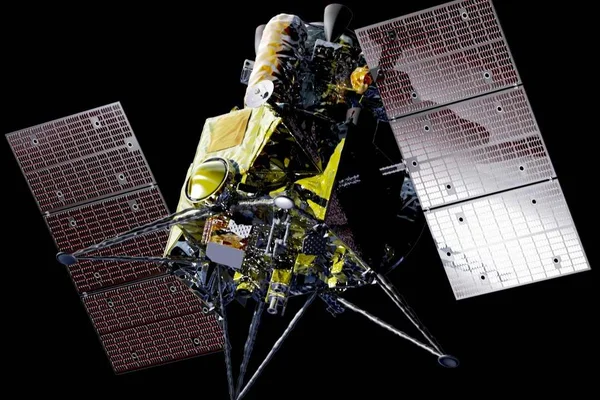
Japan launches MMX, first mission to land on Phobos and return samples
JAXA's 4,480-kilogram probe lifted off on an H3 rocket and is now cruising toward the Martian system, where a German-French rover and two landings will support sample collection for return in 2031.
Tsinghua one gram wireless microscope records over 8,500 neurons in moving mice
A Tsinghua led team has published details of a 1.0 gram head mounted mesoscope that images a 6 mm cortical field and captures more than 8,500 neurons in a freely moving mouse.
Quantinuum Hits 99.9995 Percent Logical Fidelity on Helios, a Tenfold Error Correction Record
The trapped-ion company says its 98-qubit Helios machine cut logical errors to five per million operations, a result outside researchers describe as a serious advance toward fault tolerance.
Comments (0)
Log in or sign up to leave a comment.
No comments yet. Be the first to share your thoughts.