AMD has begun shipping its Instinct MI455X accelerator to hyperscale customers, the first data-center GPU built on TSMC's 2nm process and the first credible challenge to Nvidia's Rubin generation in the high-end training market. Initial customer disclosures from two large U.S. hyperscalers and one European cloud provider suggest volumes will ramp faster than the previous MI355X generation.
What's New
The MI455X combines AMD's latest CDNA 4 architecture with TSMC's N2 process, allowing the company to integrate roughly 30% more compute into the same power envelope as the MI355X. Memory bandwidth — historically AMD's weak point — has been addressed with an upgraded HBM4 stack running at 1.2 TB/s, putting it within striking distance of Nvidia's B200/R200 class. AMD is also bundling its ROCm 8 software stack with first-party support for the major training frameworks.
「For the first time, ROCm isn't the reason a customer says no. That's the single biggest shift in this generation,」 said an infrastructure lead at one of the launch customers.
The Hyperscaler Calculus
Hyperscalers have been quietly diversifying their accelerator supply for two years, primarily motivated by Nvidia's pricing power and supply concentration. The MI455X gives them a real second source for the largest training workloads — not for every workload, but for a meaningful subset. One hyperscaler confirmed it is already running MI455X clusters alongside Nvidia in production.
The Limits
The MI455X is not going to displace Nvidia at the frontier. Software maturity, networking (the Ultra Ethernet consortium is still finalizing its first-generation spec), and Nvidia's ability to ship larger coherent domains remain structural advantages. But the gap has narrowed enough that for the first time, buyers are evaluating accelerators on workload fit rather than as a binary choice. That alone is the most important shift in the data-center GPU market since 2018.
AMD's next event, the Advancing AI conference in San Francisco next week, will set the tone for the second half. The market will be watching for large-volume customer disclosures, ROCm roadmap commitments, and any signal on pricing.
Related Articles

Anritsu 220 GHz VectorStar Powers Africa First Sub Terahertz Measurement Facility at Pretoria
The University of Pretoria's CEFIM has installed an Anritsu 220 GHz VectorStar VNA, doubling its calibrated measurement ceiling from 110 GHz to 220 GHz and creating Africa's only comprehensive sub-terahertz facility.
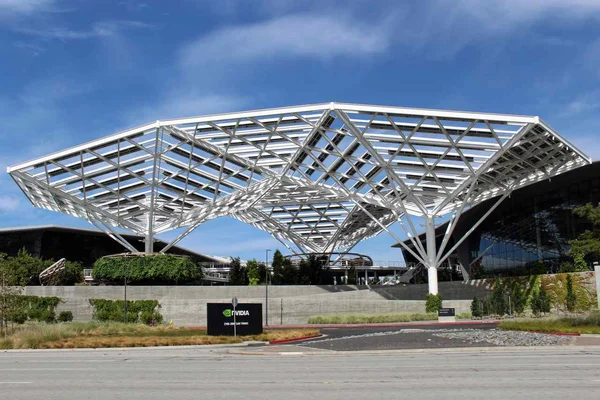
Nvidia opens rack ecosystem to d-Matrix as Raptor inference XPUs join NVLink Fusion
The Santa Clara chip startup will connect its upcoming Raptor inference accelerators to Nvidia MGX racks via NVLink Fusion, targeting initial availability in late 2027.
SMIC Narrows Foundry Market Share Gap With Samsung as Top 10 Foundries Hit Record $53.49 Billion Quarter
SMIC's second quarter revenue surged 20 percent to more than $3 billion, lifting its foundry market share to 5.4 percent and narrowing the gap with Samsung Foundry at 5.9 percent, according to TrendForce.
Comments (0)
Log in or sign up to leave a comment.
No comments yet. Be the first to share your thoughts.