SK hynix published its third quarter 2026 results on October 28, and the numbers reset nearly every benchmark the memory industry has used for a decade. Revenue for the July to September period reached 104.6155 trillion won, operating profit reached 83.3338 trillion won, and net profit reached 39.7756 trillion won on a K-IFRS consolidated basis. The operating margin came in at 80%, a record for the chipmaker. It was the first quarter in the company's history in which sales exceeded 100 trillion won, and the sixth consecutive quarter in which both revenue and operating profit set a new high.
The result is the clearest financial expression yet of how the artificial intelligence buildout has changed the memory business. High bandwidth memory, the stacked DRAM that sits beside accelerators in AI servers, has moved from a premium niche product to the component that largely determines how quickly data centers can be expanded. SK hynix supplies HBM to Nvidia, whose accelerators anchor most large scale AI training clusters, and the company began mass production and shipment of HBM4, the sixth generation of the technology, during the third quarter. Server DDR5 also sold strongly, and in NAND the company's 321-layer TLC enterprise solid state drives expanded its data center portfolio.
Entering 2026, the prevailing worry among investors was the opposite of the reported outcome. The concern was that the AI capital spending cycle would peak, that memory prices would roll over, and that a glut would arrive just as new capacity came online. Those fears had weighed on semiconductor stocks through the autumn and had produced a visible correction in the sector. The October 28 release answered them with contracted volume guidance stretching years into the future rather than a single quarter of favorable pricing.
The market reaction was immediate and unusually large for a company of SK hynix's size. Korean chip stocks rallied hard, and the scale of the move indicated how much of the bear case had been built on the assumption that memory demand was a spot market phenomenon nearing its top rather than a structural shortage with multiyear contracts behind it.
Key Facts
The headline figures beat every published consensus by a wide margin. SK hynix Newsroom reported on October 28 that revenue rose 327.9% year on year and 31.9% quarter on quarter, while operating profit climbed 632.1% year on year and 37.6% quarter on quarter. Against LSEG SmartEstimates, which weight forecasts toward analysts with more consistently accurate records, revenue of 104.62 trillion won compared with 98.34 trillion won expected, and operating profit of 83.33 trillion won compared with 76.72 trillion won expected. The FnGuide consensus cited in coverage of the release put average forecasts at 98.2257 trillion won in revenue and 76.964 trillion won in operating profit.
The balance sheet moved as dramatically as the income statement. Cash and cash equivalents reached 114.5 trillion won at quarter end, up 26.5 trillion won from the prior quarter. Borrowings fell 2.8 trillion won to 15.8 trillion won, and net cash rose to 98.7 trillion won. Net profit of 39.7756 trillion won was up 215.71% year on year but landed below the 61.29 trillion won FnGuide forecast, a reminder that the quarter's quality was carried by operations rather than by one-off items.
Pricing and product mix explain most of the operating leverage. DRAM average selling prices rose by a high-20s percentage from the previous quarter on roughly 10% shipment growth, and server DDR5 shipments rose more than 40% sequentially. NAND average selling prices rose by a mid-20s percentage, more than offsetting a slight decline in shipment volumes. In dollar terms the quarter translated to about $78.86 billion in revenue and $62.23 billion in operating profit.
Demand visibility is the part of the disclosure that matters most for 2027 and beyond. TrendForce reported on October 28 that SK hynix has secured long term agreements with 14 major customers including global cloud service providers, up from 10 in the second quarter, and is exploring extensions beyond the typical five year term. Existing agreements already cover more than 50% of planned production capacity for both 2027 and 2028. With additional demand under negotiation, DRAM and HBM output is effectively sold out through 2029, and the company expects memory supply shortages to persist through 2030.
Capital returns were raised to match the cash generation. SK hynix plans about 100 trillion won in shareholder returns for fiscal 2026, comprising at least 30 trillion won in cash dividends and at least 60 trillion won in buybacks and cancellations. The board approved a third quarter cash dividend of 14 trillion won, equal to 20,000 won per share and including a 10,000 won special dividend that shares gains from the company's Kioxia investment, alongside a 20 trillion won buyback, half of which is to be cancelled this year after a previously announced 40 trillion won program was completed.
Analysis
An 80% operating margin is not a normal semiconductor number, and it should not be read as a normal cyclical peak. Cyclical peaks are usually accompanied by rising inventories, loosening contract terms and customers who hedge by dual sourcing. What SK hynix described is the opposite: customers signing contracts of up to five years, capacity for 2027 and 2028 more than half committed, and a price mechanism that floats within an agreed range rather than resetting at spot. That is the profile of a supplier with structural scarcity on its side, not a supplier riding a bubble.
The bigger picture here is that high bandwidth memory has become a bottleneck industry with the bargaining position of a utility and the pricing power that comes with being one of a very small number of qualified sources. When a component determines whether a multibillion dollar data center can be energised on schedule, the supplier captures a share of the value that has little to do with wafer cost. That is why revenue could triple while operating profit rose more than sevenfold, and why the margin expanded faster than sales.
The sceptics still have material points, and they deserve weight. Net profit missed consensus even as operating profit destroyed it. Management guided that the profitability gap between HBM and conventional DRAM will narrow significantly, which implies the mix premium that lifted this quarter will compress as conventional DRAM pricing catches up. TrendForce also noted speculation that Nvidia may favour 8-Hi HBM4 over the previously planned 12-Hi HBM4E for Rubin Ultra, and while CFO Kim Woo-hyun reaffirmed that 12-Hi HBM4 deliveries remain on track with customer agreed schedules, the episode shows how quickly a single customer's architecture decision can reprice a product line.
Competitive and geographic diversification is the second counterweight. Local media reported that Alibaba, Tencent and ByteDance were seeking long term server memory supply deals with Samsung Electronics and SK hynix, with some pushing to extend contracts through 2035. That is demand broadening, but it is also demand spreading across suppliers. A market that is sold out through 2029 invites capacity additions everywhere, including at rivals, and the same shortage forecast that supports today's pricing is an incentive for substitution and for customers to sponsor new supply.
Why It Matters
SK hynix sits at the base of the AI supply chain, one layer beneath Nvidia and two beneath the hyperscalers. Its ability to ship HBM4 at volume in the fourth quarter is therefore a constraint on how fast accelerators can be delivered, not merely a question of one company's earnings. The company said it will ramp its M15X facility in Cheongju to maximum capacity by the end of the year and expects HBM4 to surpass HBM3E in both shipment volume and revenue in the fourth quarter, becoming its flagship product. The finalized negotiations with major customers on 2027 HBM volumes and pricing, with terms reflecting HBM4's higher value, set the tone for the next contract cycle across the industry.
The market consequences were visible in Seoul. Korea JoongAng Daily reported on October 28 that the Kospi rose 6.63% to close at 6,012.44 points, its biggest single day gain since July 31, while SK hynix shares jumped 10.89% to finish at 1,487,000 won and Samsung Electronics surged 9.01% to 242,000 won. For an index concentrated in memory makers, a single earnings release moved national equity wealth by an amount comparable to the gross domestic product of a mid-sized economy, and it did so on the strength of guidance about 2029 rather than on the third quarter alone.
The decision to halt the Solidigm IPO review also matters beyond the balance sheet. CEO Kwak Noh-Jung cited financial market volatility and a correction in semiconductor stocks as the main reasons to discontinue the review of pre-IPO fundraising and listing options for the U.S. subsidiary. Keeping Solidigm inside the group preserves optionality in NAND, where enterprise SSD demand from AI storage tiers is now adding to the shortage rather than diluting it.
Next Up
The fourth quarter is the test of the guidance. HBM4 must overtake HBM3E in shipments and revenue, M15X must reach maximum capacity by year end, and the 2027 HBM contracts already negotiated must convert into revenue at the value the company described. Investors will also watch whether the long term agreements extend beyond five years and whether the customer count above 14 keeps rising, since both would signal that the shortage through 2030 is being locked in contractually rather than merely forecast.
The larger question for 2027 is capital intensity. SK hynix said it plans to significantly increase investment next year, and the return on that spending will decide whether the current margin structure survives the capacity it funds. For now the company enters the new year with 98.7 trillion won in net cash, a sold out order book through 2029, and the strongest pricing position in its history.
Related Articles
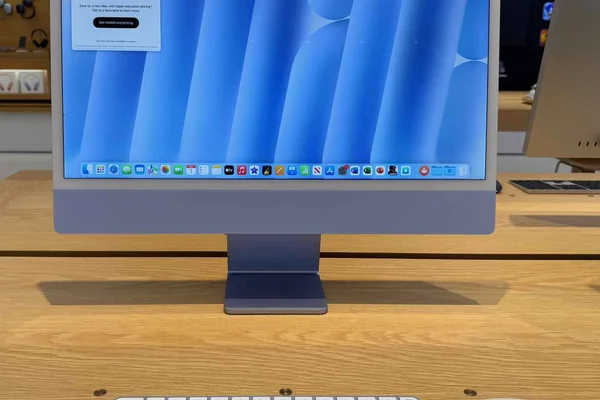
Apple unveils M6 iMac and 14 inch MacBook Pro before touchscreen Mac event
Apple has introduced an M6 powered 24 inch iMac starting at $1,499 and a 14 inch MacBook Pro starting at $1,999, with preorders opening October 28 and sales in 35 countries from November 6.
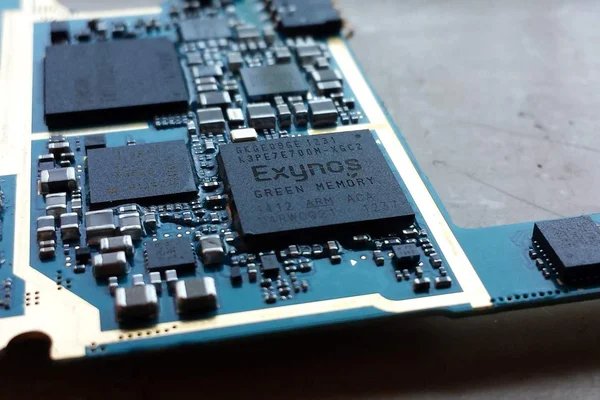
Samsung Exynos 2700 Tops Snapdragon 8 Elite Extreme Gen 6 in Internal Benchmarks
Samsung's in-house Exynos 2700 posted about 13,000 points on Geekbench 6.5 multicore against roughly 11,000 for Qualcomm's top Snapdragon, though the numbers come from unverified internal tests.
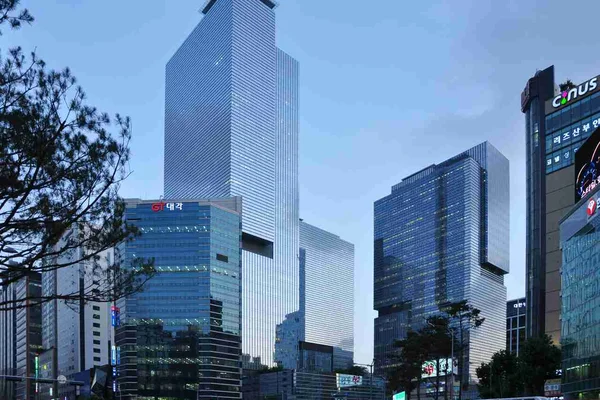
South Korea slashes chip fab approval timeline from over 10 years to under five
South Korea approved 13 regulatory changes on 23 October 2026 that let permits, land compensation and design run in parallel, cutting fab development from more than 10 years to within five.
Comments (0)
Log in or sign up to leave a comment.
No comments yet. Be the first to share your thoughts.