Apple refreshed two Macs on October 27, 2026, introducing a 24-inch iMac and a 14-inch MacBook Pro built around the company's M6 chip. Apple said both machines target faster everyday performance and, more pointedly, artificial intelligence tasks run directly on the device rather than in the cloud. The iMac starts at $1,499, while the 14-inch MacBook Pro starts at $1,999.
The desktop keeps the familiar thin all-in-one design and the same seven finishes: blue, green, pink, yellow, purple, orange, and silver. Apple is replacing the M4 chip in the iMac with M6, a generation that first appeared in the Mac mini in August. The 24-inch 4.5K Retina display, 12-megapixel Center Stage camera, six-speaker system, and color-matched accessories remain part of the package, alongside macOS 27.
On the portable side, the new 14-inch MacBook Pro also uses M6. Apple said it delivers up to 30 percent faster graphics and up to 25 percent faster AI performance than the M5 model, plus up to 24 hours of battery life, which the company described as the longest ever in a Mac. The notebook and desktop arrive one day before Apple's October 28 Pro and tell event in Los Angeles, a gathering that Bloomberg News has reported is expected to include Apple's first touchscreen MacBook Pro.
The launch fits a week of staggered product news rather than a single keynote. Apple introduced an iPad mini with an OLED display a day earlier, according to 9to5Mac, and followed with the M6 iMac and MacBook Pro a day later. The sequence puts the more affordable and familiar updates in front of customers first, while leaving the most closely watched redesign for the Los Angeles event.
Key Facts
Reuters reported on October 27 that Apple unveiled the 14-inch MacBook Pro and the iMac with M6, pitching faster performance for AI tasks run locally. The report put the MacBook Pro at $1,999 and the iMac at $1,499, with preorders opening on October 28 in 35 countries and regions, including the United States, and availability beginning November 6.
Apple Newsroom reported on October 27 that the iMac gains an up to 12-core CPU, two more cores than the M4 version, and an up to 12-core GPU that is up to twice as fast for graphics. Memory bandwidth rises to 170GB/s from 120GB/s, and the machine adds Wi-Fi 7 and Bluetooth 6. Apple also claims up to five times faster on-device AI performance than the M4 iMac and up to 18 times faster performance than the most popular Intel-based iMac.
MacRumors reported on October 27 that the base iMac costs $1,499 with a 10-core CPU, 10-core GPU, 16GB of memory, 256GB of storage, and two Thunderbolt 4 ports. A $1,699 configuration moves to a 12-core CPU and 12-core GPU and adds four Thunderbolt 4 ports. Memory tops out at 32GB, storage at 2TB, and a 2.5 Gigabit Ethernet power adapter is a $30 upgrade on the base model but standard on the higher-end version. MacRumors also reported PCIe 5.0 storage with twice the read and write speed.
9to5Mac reported on October 27 that the iMac brings the N1 wireless chip for Wi-Fi 7 and Bluetooth 6, up from Wi-Fi 6E and Bluetooth 5.3, along with up to 170GB/s of memory bandwidth. The publication noted that the $1,499 starting price is unchanged from the M4 generation, though it follows a June price increase; the previous iMac originally started at $1,299. Apple said preorders begin at 10:10 a.m. Pacific Time on October 28, with availability beginning Friday, November 6.
Analysis
The most revealing part of the announcement is not the exterior. Apple has kept the iMac's design, colors, display, and starting price, and has concentrated the upgrade on the chip, memory bandwidth, storage speed, and wireless connectivity. That is a deliberate message: the company wants buyers to see M6 as a meaningful generational jump even when the product looks identical on a desk. The claim of up to five times faster on-device AI than M4 is the headline number, but the supporting changes in CPU cores, GPU cores, and Neural Engine capacity are what make the claim plausible as a platform story rather than a single benchmark.
What this really means is that Apple is trying to turn on-device AI into the primary reason to replace a desktop, not a secondary feature listed after screen size and color. The iMac is a consumer desktop, and Apple is now arguing that local AI work, from photo processing to assistant tasks, is the kind of everyday activity that justifies a new generation. The dual 16-core Neural Engine and Neural Accelerators in each GPU core are the technical evidence behind that pitch, and the 170GB/s memory bandwidth figure shows that Apple is also addressing the data movement that can bottleneck AI workloads.
The MacBook Pro launch sharpens the same argument for portable users. A 25 percent AI improvement over M5 and a 30 percent graphics improvement are more modest than the iMac's comparison with M4, but they arrive alongside a claim of up to 24 hours of battery life. Apple's endurance figure is a practical selling point: it suggests that the new chip's performance gains have not come at the cost of battery life. For buyers who use a laptop as a primary machine, that combination may matter more than a raw benchmark record.
The timing is equally important. Apple is not waiting for its October 28 event to disclose the workhorse updates. By announcing the iMac and 14-inch MacBook Pro first, the company reserves the Los Angeles showcase for the products that carry more risk and more attention, including the touchscreen MacBook Pro that Bloomberg News has reported is expected. That order protects the core business: customers who want a known design at a known price can order immediately, while the company builds anticipation for a larger change. The 35-country rollout and the November 6 ship date give Apple a concrete commercial story either way.
Why It Matters
For Apple, the iMac and MacBook Pro are volume products that anchor the Mac business. The iMac's $1,499 starting price keeps it in the same position as the M4 model, despite the faster chip and new wireless standard, which makes the upgrade easier to justify for buyers who have been waiting. The $1,999 MacBook Pro does the same for the entry point to Apple's professional laptop line. Neither product is a radical redesign, and that is the point: Apple is protecting its installed base while asking it to pay for performance that is increasingly defined by AI.
For customers, the practical question is whether the new capabilities change daily work. Apple's numbers are company claims, not independent test results, and the iMac's largest multiples compare M6 with the older M4 or Intel machines rather than the immediately previous generation. The MacBook Pro's 25 percent AI gain over M5 is the cleaner year-over-year figure, while the iMac's five times claim is a comparison with M4. The direction is clear: local AI performance is now a specification that Apple expects shoppers to weigh alongside CPU speed, storage, and display quality.
For the wider PC market, the launch shows how central on-device AI has become to Apple's upgrade pitch. Apple is not positioning these machines as AI-only devices; the iMac still sells on its display, camera, speakers, and colors, and the MacBook Pro still sells on battery life and portability. The difference is that AI is now woven into those arguments. That makes the October 28 event more than a showcase for a touchscreen experiment. It is the next step in Apple's effort to define what a personal computer does with AI, and the M6 machines are the bridge that carries that message to a broad audience.
Next Up
Apple's Pro and tell event in Los Angeles on October 28 is the immediate next milestone. Bloomberg News has reported that the company is expected to show its first touchscreen MacBook Pro, a product that would mark a significant change to the MacBook line if confirmed. The week already includes the iPad mini update, the two M6 Macs, and the Los Angeles event.
Before then, customers can preorder the M6 iMac and 14-inch MacBook Pro on October 28 at 10:10 a.m. Pacific Time, with availability in 35 countries and regions beginning Friday, November 6. The iMac starts at $1,499 and the MacBook Pro at $1,999. The November 6 date applies to the two products announced on October 27.
Related Articles
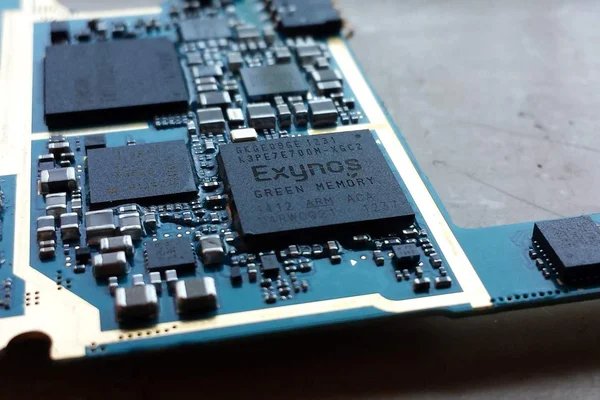
Samsung Exynos 2700 Tops Snapdragon 8 Elite Extreme Gen 6 in Internal Benchmarks
Samsung's in-house Exynos 2700 posted about 13,000 points on Geekbench 6.5 multicore against roughly 11,000 for Qualcomm's top Snapdragon, though the numbers come from unverified internal tests.

South Korea slashes chip fab approval timeline from over 10 years to under five
South Korea approved 13 regulatory changes on 23 October 2026 that let permits, land compensation and design run in parallel, cutting fab development from more than 10 years to within five.
NVIDIA adds $1.3 billion to Amkor packaging deal as AI capacity race widens
Amkor will receive prepayments from NVIDIA to fund packaging and interposer expansion in South Korea, part of a wider push to lock in substrates, testing and optics capacity through 2029.
Comments (0)
Log in or sign up to leave a comment.
No comments yet. Be the first to share your thoughts.