The Republic of Albania signed the Artemis Accords during a ceremony at NASA Headquarters in Washington on Monday, September 21, 2026, becoming the 73rd nation to join the United States led framework for the peaceful exploration of the Moon, Mars and beyond. Foreign Minister Ferit Hoxha signed on behalf of his country, and NASA Deputy Administrator Matt Anderson hosted the event. Ambassador of the Republic of Albania to the United States Ervin Bushati and U.S. Deputy Assistant Secretary of State for Space and Environment Connor Tomlinson also took part in the ceremony.
The Artemis Accords are a non-binding set of principles for civil space exploration, led by NASA and the U.S. Department of State, that apply to governments and civil activities rather than to national security operations. They were opened for signature on October 13, 2020, by eight founding nations: Australia, Canada, Italy, Japan, Luxembourg, the United Arab Emirates, the United Kingdom and the United States. The framework was created in response to growing interest in lunar activity from governments and private companies.
At the heart of the accords is a compact set of practical commitments. Signatories agree to explore peaceably and transparently, to render aid to those in need, to register their space objects, to release scientific data, to preserve historically significant sites and artifacts, to ensure that their activities do not interfere with the activities of others, to address space resources and the deconfliction of space activities, and to limit orbital debris. NASA describes these as the first set of practical principles for the Moon, Mars, comets and asteroids, and the agency presents them as a way to enhance safety, transparency and coordination among a widening circle of spacefaring and aspiring spacefaring states.
Albania arrives at the accords during a year of unusually fast expansion. The total stood at 70 signatories on July 17, 2026, following the accessions of Serbia and Mauritius on July 16 and July 17. Turkiye became the 71st signatory on August 31, 2026, signing through Minister of Industry and Technology Mehmet Fatih Kacir. Djibouti became the 72nd signatory and the eighth African nation to join on September 14, 2026, signing through Ambassador Mohamed Siad Douale. Albania's ceremony on September 21 pushed the framework to 73 countries.
Key Facts
NASA announced on September 18, 2026, through media advisory M26-070, that the Republic of Albania would sign the Artemis Accords at 12 p.m. EDT on Monday, September 21, at NASA Headquarters in Washington, becoming the 73rd country signatory. The advisory said Anderson would host Hoxha and Bushati for the ceremony, together with U.S. Department of State officials, and it instructed media who wished to attend to RSVP no later than 10 a.m. on September 21.
NASA reported on September 21, 2026, that Anderson opened the ceremony by welcoming Albania into the coalition of like-minded nations. "It is my privilege to welcome the Republic of Albania as the 73rd signatory of the Artemis Accords," Anderson said. "The relationship between our nations goes back more than a century. Today, we extend that partnership into space." Hoxha, speaking during the ceremony, said, "It is a great honor for Albania to join the growing community of nations that have signed these important Artemis Accords." He added that Albania affirms its commitment to peaceful, transparent, sustainable and cooperative exploration of space, grounded in international law and multilateral cooperation.
Albania is not a newcomer to orbital activity. The country launched two dedicated Earth-observation satellites, Albania-1 and Albania-2, in January 2023 aboard a SpaceX Falcon 9 rocket from NASA's Kennedy Space Center in Florida. NASA cites that launch as an example of how the United States has supported Albania's capabilities in space. Albania has also played an active role in NASA's Space Apps Challenge, the agency's annual global hackathon, mobilizing participants in more than 150 countries.
SpaceNews reported on September 21, 2026, that Albania was the latest country to sign the accords and that the accession formed part of a surge of new signatories ahead of a key meeting the following month. The trade publication also published a photograph caption identifying Anderson and Hoxha at the September 21 ceremony at NASA Headquarters, with a photo credit to NASA and Bill Ingalls. SpaceNews tied the coming gathering of signatory nations to the International Astronautical Congress in Antalya, Turkiye, in October 2026, where representatives are expected to discuss implementation of the accords' provisions on non-interference, data sharing and limiting lunar orbital debris.
Wikipedia records that, as of September 21, 2026, and with the accession of Albania, 73 countries have signed the Accords, up from a count of 70 as of July 17, 2026. The same reference entry lists the eight founding nations and notes that the accords remain open for signature indefinitely, with NASA anticipating that more nations will join.
Analysis
The bigger picture here is that the Artemis Accords have become a diplomatic instrument as much as a technical one. The principles themselves are non-binding, and they govern civil space activity rather than national security operations, which means no signatory surrenders legal sovereignty by signing. What the framework does instead is build a coalition around a shared vocabulary for behavior on and around the Moon. Each accession adds a vote of confidence in that vocabulary and, in practical terms, adds a partner that NASA can work with on future lunar exploration opportunities. When a small European country such as Albania signs, the value lies in widening the club and signaling that the United States led approach keeps attracting adherents.
The timing matters as much as the substance. The framework went from 70 to 73 signatories in roughly two months, with Turkiye on August 31, Djibouti on September 14 and Albania on September 21. SpaceNews reported on September 21, 2026, that the signing came as part of a surge ahead of a key meeting next month, and the gathering is widely tied to the International Astronautical Congress in Antalya, Turkiye, in October 2026. Bringing new members in before that meeting changes the room: more flags at the table, more voices in discussions about non-interference, scientific data sharing and the management of lunar orbital debris.
Albania's profile offers a useful illustration of what a like-minded nation looks like in this context. The country's two Earth-observation satellites, Albania-1 and Albania-2, flew in January 2023 on a SpaceX Falcon 9 from Kennedy Space Center, and Albanian participants have been active in the Space Apps Challenge, which NASA says mobilizes participants in more than 150 countries. It also fits the pattern the accords were designed to encourage: nations that may not yet run deep lunar programs can still commit to transparency, interoperability and the responsible use of space resources as those norms are being written.
What this really means is that the accords are functioning as a soft infrastructure for a lunar era that has not fully arrived. The principles on deconfliction of space activities and orbital debris are forward looking, aimed at problems that will intensify as more missions reach the Moon. By signing now, Albania and the other 2026 entrants position themselves inside the group that will interpret those principles later. The alternative, standing outside the framework, offers no seat when implementation details are negotiated, which is why a ceremony lasting perhaps an hour carries more weight than the modest size of the signatory's space budget might suggest.
Why It Matters
The 73 nation milestone matters because it quantifies the reach of a framework that began with just eight founding nations on October 13, 2020. Growth from eight to 73 in under six years, including a jump from 70 to 73 within about two months in 2026, shows that the accords have become the default reference point for civil lunar cooperation. For NASA and the State Department, that breadth is leverage: the more countries that endorse the principles, the more those principles look like the baseline for acceptable behavior in space.
It matters for smaller countries too. Albania's signing places it in a community that includes major space powers and emerging ones, and it opens the door to opportunities for future lunar exploration with NASA, according to the agency. The accords' provisions on data release and interoperability are designed to make cooperation easier, so a nation with Earth-observation experience can plug into scientific and technical exchanges that would be harder to arrange bilaterally.
And it matters for the governance of the Moon itself, where the principles cover space resources, heritage preservation and orbital debris, the issues most likely to generate friction as traffic around the Moon increases. A framework of 73 countries carries more normative weight than the eight nation group that started it. The accords are non-binding, but international norms often begin as voluntary commitments that later shape expectations, contracts and national laws.
Next Up
The next focal point is the gathering of signatory nations in October 2026, widely tied to the International Astronautical Congress in Antalya, Turkiye, where representatives are expected to discuss implementation of the accords' provisions, including non-interference, data sharing and the limitation of lunar orbital debris. Albania's accession, arriving weeks before that meeting, gives the framework additional momentum heading into the discussions.
Beyond that, the accords remain open for signature indefinitely, and NASA anticipates that additional nations will join. Having moved from 70 signatories in mid July 2026 to 73 by late September, the framework enters the autumn with a larger coalition, a full agenda and a clear expectation from its founders that the list will keep growing.
Related Articles
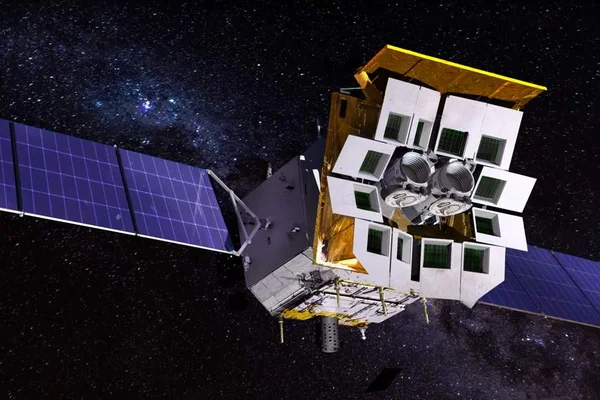
China Einstein Probe and LHAASO trace 42 light year X-ray tail from pulsar PSR J1740+1000
Astronomers using China's Einstein Probe satellite and the LHAASO observatory have traced a 42 light-year X-ray trail from a middle-aged pulsar, the longest such tail ever seen.
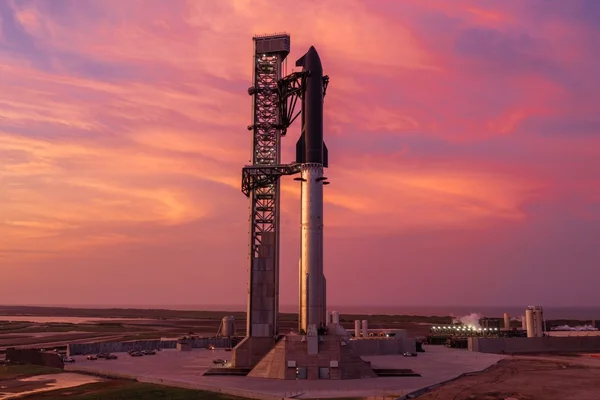
NASA awards SpaceX $946 million for three more crewed Crew Dragon flights to the ISS
The modified Commercial Crew contract adds Crew-15, Crew-16 and Crew-17 to SpaceX's manifest, pushing the company's total to 17 missions and $5.92 billion through 2030.

Black Holes of All Sizes Launch Jets at Same 2 Percent Feeding Threshold, Study Finds
A Nature Astronomy study finds supermassive black holes fire delayed radio jets when accretion falls to about 2 percent of the Eddington limit, matching stellar mass black holes.
Comments (0)
Log in or sign up to leave a comment.
No comments yet. Be the first to share your thoughts.