Xpeng's robotics unit closed a $900 million funding round on August 24, 2026, at a $6.3 billion post-money valuation, led by a consortium of Chinese state-backed investors including Guangzhou Industrial Investment Fund and IDG Capital. The same week, Tesla disclosed in an updated investor presentation that it has pushed mass production of the Optimus humanoid robot from late 2026 to end of 2027, while announcing plans to free up capacity at its Fremont factory for humanoid pilot lines by ending production of the Model S and Model X. The two developments together mark the clearest signal yet that the humanoid robotics race is bifurcating between US and Chinese leaders, with Chinese firms now outspending US peers on the embodied AI front.
The Xpeng Robotics Round
The $900 million round is the largest dedicated humanoid robotics funding round of 2026 and the second-largest ever, behind only the $1.2 billion round that Neura Robotics, a German startup, signed on August 23. The Xpeng round was structured as a primary issuance of $700 million and a secondary tender of $200 million from existing investors. Guangzhou Industrial Investment Fund, the lead state-backed investor, contributed $300 million; IDG Capital contributed $200 million; and the balance came from a mix of strategic investors including Foxconn, Xiaomi, and a sovereign wealth fund that Xpeng did not name. The post-money valuation of $6.3 billion values Xpeng's robotics unit at roughly half of Xpeng's entire automotive business, which is now valued at $13.4 billion on the Hong Kong Stock Exchange.
What Xpeng Plans to Build
Xpeng disclosed in its August 24 press release that the new capital will fund three initiatives. First, the construction of a 280,000-square-foot humanoid robot factory in Guangzhou that will produce 50,000 humanoid units per year when fully ramped in 2027. Second, the expansion of Xpeng's existing robotics R&D team from 700 engineers to 1,400 by year-end, with hiring concentrated in reinforcement learning, mechanical design, and AI safety. Third, the development of a new humanoid platform codenamed "Iron X3" that Xpeng says will target a $20,000 retail price point — half the announced price of Tesla Optimus and one-third the price of Figure 03. Xpeng has not yet disclosed the Iron X3 prototype timeline.
Tesla Pushes Optimus to 2027
Tesla's investor presentation, filed with the SEC on August 22, disclosed that mass production of the Optimus humanoid robot has been delayed from late 2026 to end of 2027. The presentation attributes the delay to two factors: first, a longer-than-expected calibration period for the Gen 3 actuator, which uses a new permanent-magnet motor design that has not previously been produced at scale; and second, Tesla's decision to free up capacity at its Fremont factory for humanoid pilot lines by ending production of the Model S sedan and Model X SUV, both of which have been in declining volume for two years. The Fremont capacity will host three Optimus pilot lines starting Q1 2027, with the goal of producing 1,000 Optimus units per month by end of 2027 — a fraction of Xpeng's 50,000-unit target.
The Bifurcation
The two announcements highlight the structural difference between the US and Chinese humanoid robotics stacks. Chinese players — Xpeng, Unitree, Fourier Intelligence, and UBTech — are racing to industrial-scale production with aggressive state-backed funding, government-supported factory construction, and a willingness to ship lower-cost robots into a broader consumer market. US players — Tesla, Figure, Apptronik, and Agility — are pursuing higher-cost, higher-capability robots with more sophisticated AI stacks, but at slower commercial velocities. The two approaches will likely converge over time, but the 2026-2027 window will be defined by Chinese volume and US capability.
What to Watch Through Year-End
Three checkpoints follow. The Xpeng Iron X3 prototype debut, expected at CES 2027 in January, will reveal whether the $20,000 price target is achievable at the announced capability level. Tesla's Q4 2026 Optimus pilot-line update, expected in late January, will be the first concrete signal of whether the end-of-2027 mass-production target is on track. And Unitree's next public benchmarking release, expected in November, will reveal whether the Shanghai-listed company — which has the most extensive public humanoid testing program in the world — has closed the gap with Xpeng's Iron X3 or whether the two companies have differentiated along capability tiers.
Related Articles
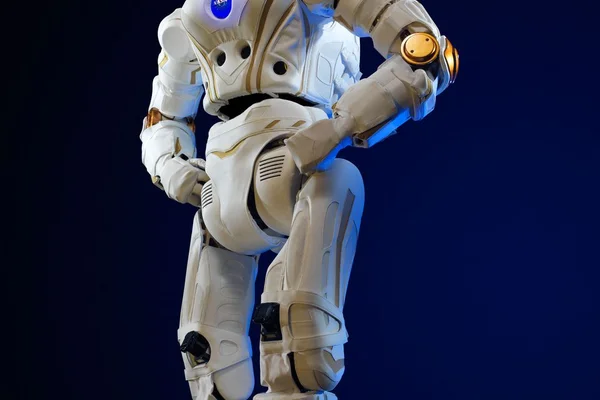
California Regulator Orders REK to Halt Unsanctioned Human Versus Humanoid Cage Fights
California's regulator says REK's September 18 human versus humanoid bout was unsanctioned, prompting a cease-and-desist and questions about old rules for new machines.
Ultra raises $62M to scale warehouse robots and deepen Physical Intelligence partnership
Brooklyn robotics startup Ultra closed a $50 million Series A led by Framework Ventures plus a $12 million seed round, and will run Pi's robot-brain model on its warehouse machines.
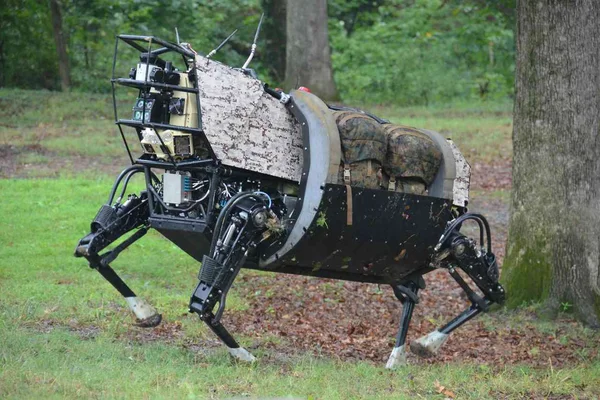
Boston Dynamics taps ex Amazon AI executive Rohit Prasad as CEO to lead Physical AI
Rohit Prasad, formerly Amazon's head scientist for Alexa and AGI, takes over as chief executive of Boston Dynamics as Hyundai pushes toward building 30,000 robot units a year by 2028.
Comments (0)
Log in or sign up to leave a comment.
No comments yet. Be the first to share your thoughts.