Boston Dynamics announced on October 6, 2026 that it had appointed Rohit Prasad, formerly a senior vice president and head scientist for Alexa and Artificial General Intelligence at Amazon, as its chief executive officer, effective October 7, 2026. The robotics company said the appointment accelerates its Physical AI strategy by combining world class robotics with advanced AI to commercialize intelligent machines at scale. The news was datelined Boston and was quickly followed by confirmation from its parent group in Seoul.
Prasad arrives with a resume built almost entirely around software intelligence rather than machines that walk. He spent 12 years at Amazon, where he was instrumental in building Alexa from its earliest days into a large scale consumer AI service used in hundreds of millions of households, and where he more recently led development of the Amazon Nova foundation model family used by enterprises. Before Amazon, he spent nearly 14 years at Raytheon BBN Technologies leading machine learning research for U.S. government and commercial use. He has been based in the Boston area for more than 25 years, a detail that matters for a company recruiting against MIT, Harvard University and the region's technology employers.
The company Prasad inherits has been reshaped over the past year. Hyundai Motor Group, which acquired majority ownership of Boston Dynamics in 2021, is moving to acquire SoftBank Group Corp.'s remaining stake to secure full ownership of the robotics pioneer. Its product portfolio now spans Spot, a quadruped inspection robot, Stretch, a box moving logistics robot, and Atlas, an electric humanoid platform still in development. Hyundai has also sealed strategic partnerships with Nvidia Corp. and Google DeepMind to develop Atlas.
Leadership turnover preceded the announcement. Robert Playter stepped down in February 2026 after six years as chief executive, only the second leader in that post in the company's more than 30 year history. Several top executives have left since then, including chief technology officer Aaron Saunders. Prasad is expected to join the company's board of directors subject to approval. Jaehoon Chang, vice chair of Hyundai Motor Group and chair of the Boston Dynamics board, pointed to the company's industry leading robotics, Prasad's proven ability to turn AI into products at global scale, and Hyundai's modern manufacturing, logistics and mobility capabilities as the foundation for scaling Physical AI.
Key Facts
Reuters reported on October 7 that Boston Dynamics, described as a humanoid robot maker owned by Hyundai Motor Group, had appointed Prasad as chief executive effective that same day, and that he previously served as senior vice president and head scientist for Alexa and Artificial General Intelligence at Amazon. The wire service reported on October 7 that Prasad would bring his experience turning physical AI breakthroughs into commercial success, and that he succeeds Robert Playter, who stepped down in February.
The manufacturing scale behind the strategy is already on paper. Reuters reported on October 7 that Hyundai Motor Group said in January it aims to build a factory capable of manufacturing 30,000 robot units annually by 2028, when it plans to start deploying them across all of its manufacturing sites. Bloomberg reported on October 7 that Hyundai plans to deploy the Atlas robot at its plant in Georgia starting in 2028 and to build the capacity to produce as many as 30,000 humanoids annually.
Prasad's track record gives the appointment its logic. The Asia Business Daily reported on October 7 that Hyundai Motor Group announced the hire as a step to strengthen its competitiveness in Physical AI and to accelerate commercialization and productization of its technologies, and that Prasad had played major roles across speech and language AI, conversational AI, generative AI, multimodal AI and Artificial General Intelligence. The same report noted that at Amazon he oversaw development of the Nova foundation model, and that before Amazon he spent about 14 years at Raytheon BBN Technologies working on machine learning, natural language processing and speech recognition.
The deployment sequence for Atlas has been described in stages. According to Bloomberg's October 7 report, the robots are expected to begin with simple tasks such as welding and logistics before being mobilized for more complex manufacturing processes, including component assembly, by 2030.
Boston Dynamics said in its October 6 announcement that Prasad would join the board subject to approval and that he is based in the Boston area, and it quoted him saying that Boston Dynamics is uniquely positioned to advance Physical AI through its world class robotics expertise, and that bringing together advanced AI and robotics can build intelligent systems that create meaningful value in real world environments.
Analysis
What this really means is that Boston Dynamics has decided its bottleneck is no longer mechanical. The company has spent more than 30 years building machines that balance, jump and manipulate objects, and it now has a humanoid platform, Atlas, that Hyundai wants inside its own plants. What it has not had is a leader whose career was spent shipping AI products to hundreds of millions of users. Hiring the executive who built Alexa and ran Amazon's AGI organization is a statement that the next phase of competition is about software that generalizes, not hardware that performs a demo.
The bigger picture here is that Hyundai is assembling a vertically integrated Physical AI stack. It owns the robot maker, it plans a factory for 30,000 units a year by 2028, it has plants in Georgia where Atlas is expected to start work the same year, and it has partnerships with Nvidia and Google DeepMind for the robot's intelligence. Adding Prasad to that stack gives Hyundai a leader who has already turned a research heavy AI program into a consumer product line at global scale. The group acquired majority ownership in 2021 and is now buying out SoftBank's remaining stake, which removes the last outside shareholder from the equation.
The risk is the same as the opportunity. Prasad has never run a hardware manufacturer. Boston Dynamics has lost several senior executives since February, including its chief technology officer, and the company's plans assume that Atlas can move from welding and logistics to component assembly by 2030 at a cost and reliability level its rivals have not achieved. A commercial organization that has to approach a 30,000 unit annual target within roughly two years is a different company from the research lab that made viral videos.
Still, the sequencing is deliberate. Simple tasks first, complex tasks later, with Hyundai's own factories as the first customer. That internal demand insulates Boston Dynamics from the hardest question in robotics, which is who buys the first thousand units. Prasad's job is to keep the intelligence improving while the manufacturing base scales.
Why It Matters
Humanoid robotics is at the stage where winners will be decided by integration rather than by any single breakthrough. Hyundai's combination of a robot platform, a factory plan, semiconductor and AI partners, and now a leader with a consumer AI track record puts it among a small group of players that can plausibly reach industrial scale. If Atlas begins welding at a Hyundai plant in Georgia in 2028 and the planned factory reaches 30,000 units a year, Physical AI stops being a research narrative and starts being a supply chain story.
The appointment also signals where value is migrating in AI. Prasad spent 12 years at Amazon making a voice assistant ubiquitous, then led work on the Nova foundation model family used by enterprises. Moving that kind of experience into a machine with arms, legs and a place on a production line suggests the industry views embodiment as the next commercial frontier rather than a science project.
For Hyundai Motor Group, the stakes include labor and competitiveness. Deploying humanoids across all of its manufacturing sites, as Reuters reported on October 7, is a capital allocation decision as much as a technology one, and it will be judged on uptime, throughput and safety rather than on how impressive the robots look.
Next Up
Prasad takes over on October 7, and the immediate items are board approval for his seat and the completion of Hyundai's purchase of SoftBank's remaining stake. The public milestones are already set: Atlas deployment at the Georgia plant starting in 2028, a factory capable of producing 30,000 robot units annually by 2028, and more complex manufacturing tasks including component assembly by 2030.
Watch for how quickly the Alexa style product thinking reaches Spot and Stretch, and whether the Nvidia and Google DeepMind partnerships translate into shipped capability. The Asia Business Daily reported on October 7 that Prasad is expected to leverage the network he built in Boston to accelerate talent acquisition, an early test of whether the company can replace the executives it lost and staff up for manufacturing scale.
Related Articles
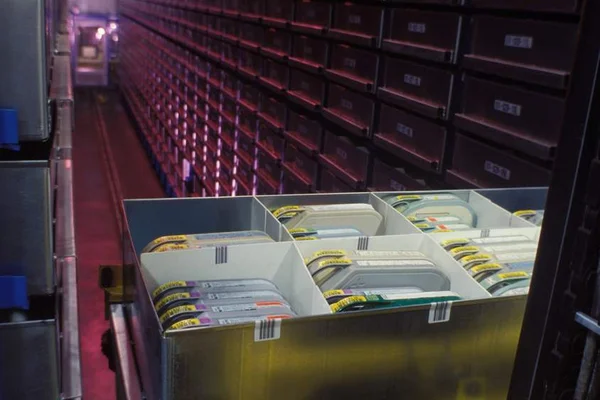
Exotec robots help First Supply promise next-morning delivery for 5 p.m. orders
First Supply's new West Salem distribution center runs 31 Skypod robots and more than 50,000 bin positions to turn a 5 p.m. order cutoff into guaranteed next-morning branch delivery.
Kawasaki Heavy aims for fully autonomous AI humanoid robot by 2030 using Noetra
The Japanese machinery maker will adopt Noetra's domestic physical AI in its Kaleido platform, targeting staged autonomy and initial factory and warehouse tasks.
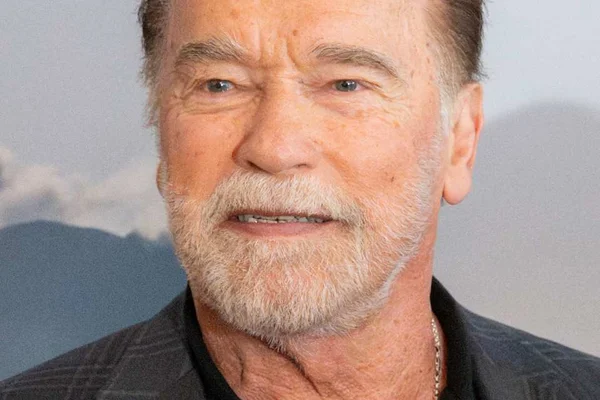
Figure AI melts most of its F.02 humanoid fleet in a 75 ton steel furnace in Finland
Figure AI retired most of its Figure 02 humanoid fleet by teaching the robots to leap into a 75 ton electric arc furnace in Imatra, Finland, after Arnold Schwarzenegger suggested melting them.
Comments (0)
Log in or sign up to leave a comment.
No comments yet. Be the first to share your thoughts.