On August 26, 2026, a catastrophic rock-ice avalanche on Langtang Lirung mountain in Nepal triggered a debris flood that swept through the Nepal-China border region, killing more than 1,400 people and leaving thousands missing. The collapse, initially mistaken for an earthquake, sent roughly 110 million cubic meters of rock and glacier ice plunging about 1,400 meters into the valley below. The impact released energy equivalent to a magnitude 5.2 earthquake, and the resulting flood wave traveled 200 kilometers in under seven hours, destroying communities and infrastructure along the way.
The World Weather Attribution (WWA) consortium published a rapid analysis on September 17, 2026, concluding that human-caused climate change was a key destabilizing factor in the disaster. The report, titled "Rapid Warming in the Himalaya Exacerbates Geohazard Cascades Beyond Adaptation Limits," found that decades of warming had thinned glaciers, thawed permafrost, and pushed the freezing line upward on Langtang Lirung, preconditioning the slope for collapse. The study involved more than 20 international experts.
Nepal, a nation of 30 million people, contributes only a fraction of global greenhouse gas emissions. Yet the country's high mountains are among the most vulnerable to climate change, with the region warming significantly above the global average. The Langtang Lirung collapse is one of the largest Himalayan geohazard cascades on record, and scientists say it highlights the limits of adaptation in a rapidly changing environment.
Al Jazeera reported on September 17 that the disaster was not caused by a single extreme weather event but rather a "compound crisis" shaped by long-term warming, glacier retreat, permafrost thaw, and geological instability.
Key Facts
The collapse occurred on August 26, 2026, on the north face of Langtang Lirung. Deutsche Welle reported on September 17 that a large rock avalanche caused a section of the glacier to collapse simultaneously, sending roughly 110 million cubic meters of rock and glacier ice hurtling downward. Inside Climate News reported on September 16 that new estimates put the initial breakaway at about 116 million cubic meters. The material fell approximately 1,400 meters, from about 5,150 meters above sea level to the valley floor at about 3,750 meters.
The human toll has been devastating. Al Jazeera reported on September 17 that Nepal's disaster authority revised the number of missing people to 6,150, with 1,403 bodies recovered, of which 105 have been identified. In China, the toll is 43 dead and 519 missing. Combined, the two nations report 1,446 dead and at least 6,669 missing. An estimated 84,270 people across 17 local levels were affected, with 15 municipalities declared disaster crisis-hit areas for three months.
The flood dynamics were extreme. A wall of water, ice, rock, and sediment reached the Rasuwagadhi border, 22 kilometers downstream, within seven minutes, moving at an average speed of 188 kilometers per hour. Within a further half hour, it was in the Trishuli valley at Betrawati. The flood traveled 200 kilometers to Devghat in under seven hours, where river flow more than doubled to about 5,850 cubic meters per second. An estimated 20 million cubic meters of excess water passed in under four hours, depositing 30.5 million cubic meters of sediment and debris that buried fields, settlements, and hydropower plants.
Climate factors were central. The Guardian reported on September 17 that the region where the collapse happened has experienced about 2 degrees Celsius of warming since pre-industrial times, with about 1.5 degrees Celsius of that warming in July and August specifically. July and August 2026 were the warmest on record locally, reaching 5 degrees Celsius above the 30-year average in the days before the collapse. The freezing threshold in the Himalayas has risen by about 100 meters per decade since the 1980s. Deutsche Welle reported on September 17 that the Langtang-Lirung Glacier retreated just 75 meters between 1964 and 2000, then 373 meters between 2010 and 2026. Permafrost had also started to thaw between 4,500 and 5,500 meters of elevation, a critical band most sensitive to warming.
Early warning systems failed to provide sufficient lead time. The first mass SMS warning was sent about 38 minutes after the initial collapse, but the flood had already reached the border seven minutes in. Nepal's systems are designed for forecastable rainfall-driven floods, not quickly developing cascades. The WWA report concluded that no existing system could have provided sufficient lead time, highlighting the limits of adaptation. The study also noted that a magnitude 7.8 earthquake in 2015 may have further weakened the slope, although its precise role remains uncertain. The report estimated that rock avalanches of this size occur only once every 1,000 to 10,000 years.
Analysis
What this really means is that the Langtang Lirung disaster cannot be understood as a single, freak event. Rather, it is the product of a compound crisis in which long-term warming interacted with a pre-existing geological predisposition. The WWA report states that climate change acted as a destabilizing factor on a pre-existing geological predisposition, rather than the fundamental cause. Warming and a shift from snow to rain reduced stability by weakening ice-filled fractures and rock-ice contacts and increasing water pressure. The 2015 earthquake may have weakened the slope, but the decades of warming that followed set the stage for failure.
The analysis breaks new ground for attribution science. Unlike previous WWA studies that link a specific weather event to climate change, this assessment had to account for multiple drivers acting over years to decades. Walter Immerzeel, a mountain hydrologist at Utrecht University, told journalists, "This was not a single trigger event." The failure occurred at about 5,150 meters, with several processes acting together over time scales of years to decades. The researchers concluded that the event exceeded the limits of adaptation, meaning that even well-designed early warning systems could not have prevented the loss of life.
The bigger picture here is that mountain regions around the world face a new class of hazards that are difficult to forecast and impossible to fully adapt to. The freezing line is rising by roughly 100 meters per decade, permafrost is thawing, and glaciers are retreating. These changes are not linear; they can lead to sudden, catastrophic failures when critical thresholds are crossed. The Langtang Lirung collapse is a stark example of how climate change can turn a stable slope into a deadly cascade. Friederike Otto of Imperial College London told reporters that there is no doubt climate change is one of the drivers.
The disaster also highlights the inadequacy of current international mechanisms for addressing loss and damage. Nepal's reconstruction bill is estimated at $4.78 billion, while the government's damage estimate is $2.7 billion, about 6.7 percent of GDP. Yet the UN loss and damage fund has only about $800 million pledged, with roughly $350 million available for claims, a fraction of the estimated damage from this single disaster. The gap between need and available resources is enormous.
Why It Matters
The Langtang Lirung collapse matters because it demonstrates that the consequences of climate change are not evenly distributed. Nepal contributes a fraction of global greenhouse gas emissions, yet it is bearing the brunt of warming that is driven by industrialized nations. Friederike Otto said, "Communities in Nepal are paying with their lives for a crisis driven by fossil fuel emissions thousands of miles away." The disaster is a powerful reminder that climate change is a global justice issue, and that adaptation alone cannot protect people from the scale of destruction that warming can unleash.
It also matters for the future of the Himalayas, a region that provides water for billions of people. The increasing frequency and scale of mountain and glacier collapses are signs of fundamental, irreversible shifts in Himalayan mountain environments, according to Immerzeel. As permafrost degrades and glaciers retreat, more slopes will become unstable, and more communities will be at risk. Governments should invest in comprehensive risk reduction, including early warning systems that can handle cascading hazards, and international cooperation on adaptation and loss and damage.
Finally, the disaster underscores the need for rapid decarbonization. Scientists warn that without much faster action to transition away from fossil fuels, more disasters of this scale will occur. The WWA analysis is a call to action: the limits of adaptation are already being reached.
Next Up
Nepal's Prime Minister Balendra Shah will address the UN General Assembly on the issue next week, in his first foreign trip as Nepal's leader. The country has filed a formal request with the UN loss and damage fund, and its foreign minister, Shisir Khanal, has demanded greater international support. The coming weeks will test whether the international community can respond with the urgency that the crisis demands.
Meanwhile, scientists will continue to study the Langtang Lirung collapse to better understand the complex interactions between warming, permafrost thaw, glacier retreat, and geological instability. The WWA report is a first step, but more research is needed to improve risk assessments and early warning systems for similar cascades. As the climate continues to warm, the lessons from this disaster will be critical for protecting vulnerable mountain communities around the world.
Related Articles
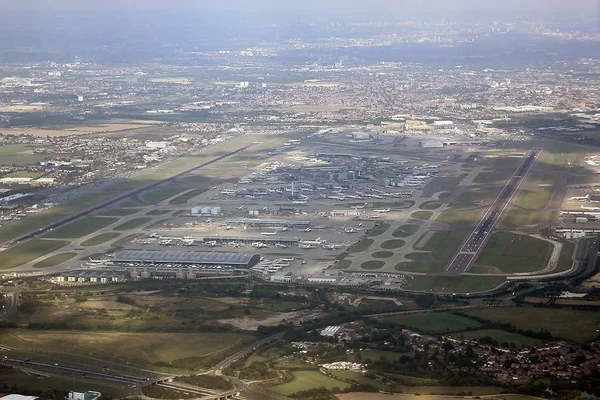
UK climate advisers tell government Heathrow cannot expand unless airlines pay for emissions
Aviation is already 9% of UK emissions and Heathrow produces about half of the sector's total, so the committee has tied any third runway to passenger levies that could reach £400 by 2050.
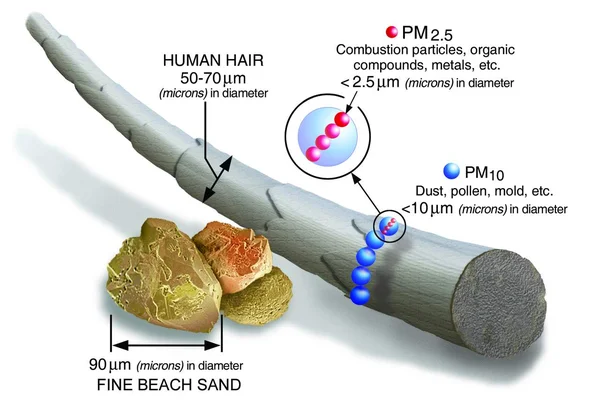
Study Finds Air Pollution Rose Up to 33 Percent After US Embassy Monitoring Shutdown
Columbia University researchers report in PNAS that satellite data show a 24 to 33 percent pollution increase across 46 cities after the State Department halted its embassy air quality program in March 2025.
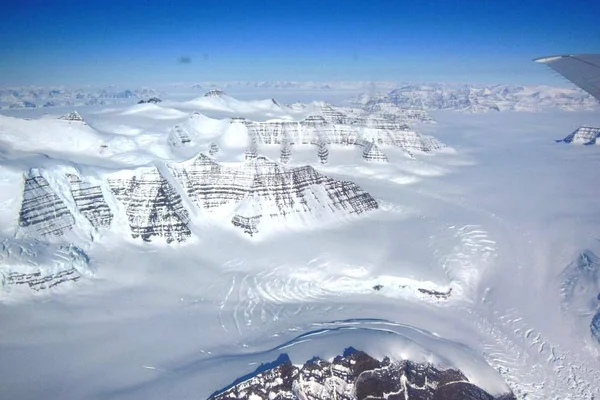
ETH Zurich and VUB Launch Global Glacier Extinction Explorer Mapping Every Glacier
A new interactive map built on Nature Climate Change research projects when each of the world's glaciers could vanish at 1.5C, 2.0C, 2.7C and 4.0C of global warming.
Comments (0)
Log in or sign up to leave a comment.
No comments yet. Be the first to share your thoughts.