The World Meteorological Organization warned on September 7 that extreme wildfire smoke and intensifying heat waves are eroding decades of progress in cleaning up the air, and that countries are finding it harder than ever to meet the World Health Organization's air quality guidelines. The warning came in the WMO's annual Air Quality and Climate Bulletin, released to coincide with the International Day of Clean Air for Blue Skies. The report documents a striking divergence in the global air pollution picture: industrial and traffic emissions are falling in many wealthy countries, while smoke from increasingly severe wildfires is pushing particulate pollution back up in precisely the regions that had made the most progress.
Key Facts
The WMO published its annual Air Quality and Climate Bulletin on September 7, and Reuters, whose coverage was carried by outlets including Kuwait Times, reported the same day that the number of extreme wildfire smoke events globally has roughly tripled since the 1990s. The Reuters report also noted that researchers estimate wildfires caused nearly 100,000 additional deaths per year between 2010 and 2018, a figure the WMO says is probably an underestimate because the standard models used to count pollution deaths are poorly suited to measuring the health effects of wildfire smoke.
The bulletin's most consequential finding concerns how deaths from wildfire smoke are counted. Reuters reported on September 7, in coverage also published by The Telegraph India, that conventional risk models based on total PM2.5 mass may underestimate wildfire-related deaths by as much as 93 percent, because the particulate matter in fire smoke is chemically more toxic than the average particle mix found in urban industrial pollution. That means the health burden of wildfires is being systematically undercounted in the statistics that governments use to justify air quality policy.
The geographic pattern in the report is clear. The WMO said that while industrial and transport-related PM2.5 concentrations have declined in Europe and North America over recent decades, exposure to wildfire-related PM2.5 has increased in exactly those regions, and Daily Sabah reported on September 7 that this shift is undermining the health gains that emission controls were supposed to deliver. airqualitynews.com reported on September 7 that PM2.5 concentrations in 2025 ran above long-term averages across northern Canada, parts of Russia, central and western Africa, and northwestern Spain because of fires, while India also recorded above-average levels driven substantially by biomass burning.
Heat is compounding the problem. Reuters, via Kuwait Times, reported on September 7 that heat waves intensify the formation of ground-level ozone, and that this ozone pollution may contribute to tens of thousands of premature deaths each year, a burden that will grow as climate change makes heat waves more frequent and more intense. The bulletin also touched on emerging pollutants, with airqualitynews.com reporting on September 7 estimates that microplastics now amount to roughly 51 million tonnes on land and about 22 million tonnes in the ocean, an emerging contamination pathway whose health consequences remain poorly understood. WMO spokesperson Lorenzo Labrador presented the findings in Geneva.
Analysis
What this really means is that the conventional story of air pollution, in which countries clean up their factories and vehicles and watch pollution fall, is no longer the whole story, because climate change is generating a new source of particulate pollution that is largely outside the control of national emissions policy. A country can regulate its power plants and its diesel fleet and still watch its air quality worsen in a bad fire season, because smoke crosses borders and because the fires themselves are driven by heat and drought that emissions policy alone cannot stop. The WMO bulletin is essentially an argument that air quality management must now be treated as climate adaptation, not just pollution control.
The bigger picture here is that the 93 percent underestimate finding, if it holds up to scrutiny, changes the cost-benefit math that underpins both wildfire management and climate policy. If wildfire smoke is roughly an order of magnitude more lethal per unit of mass than average PM2.5, then the social cost of each severe fire season is far higher than current estimates suggest, and investments in fire prevention, forest management and early warning systems look more attractive by comparison. It also implies that the countries with the worst air pollution problems, many of which are in the developing world and rely on biomass burning for cooking and heating, may be bearing a health burden that is significantly larger than the pollution statistics have been telling them.
The microplastics figures in the bulletin deserve more attention than they typically receive. A land burden of 51 million tonnes alongside 22 million tonnes in the ocean suggests that soil and freshwater systems, not just the marine environment, are major sinks for plastic pollution, and that the particles are present in the air that people breathe in agricultural and urban areas alike. The WMO's decision to include microplastics in an air quality report is itself a signal: the scientific community increasingly treats microplastics as an atmospheric pollutant with its own transport pathways, and future bulletins are likely to track them with the same rigor applied to PM2.5 and ozone.
Why It Matters
For public health authorities, the report is a warning that wildfire seasons will undo some of the gains achieved through conventional air pollution regulation, and that health systems in fire-prone regions need plans for repeated, severe smoke events rather than treating them as rare anomalies. For climate policy, the bulletin adds another quantified link between warming and human harm, strengthening the case for emissions cuts while also making clear that adaptation measures, including fire management and better warning systems, are urgent in their own right.
For the WHO air quality guidelines that the bulletin repeatedly references, the finding on wildfire toxicity complicates the target-setting exercise. If the toxicity of particles varies by source by nearly an order of magnitude, then a single mass-based guideline for PM2.5 is a blunt instrument, and regulators will eventually need source-specific guidance that treats wildfire smoke differently from traffic pollution. The WMO is effectively opening that conversation by publishing the evidence that the current approach undercounts the damage.
The report also sharpens an uncomfortable equity problem in global air quality policy. The regions that contributed most to historical emissions, mainly Europe and North America, have largely cleaned up their industrial and transport sources and are now mainly fighting pollution driven by fires that are often remote in origin. Meanwhile, much of the developing world still struggles with baseline pollution from energy, industry and biomass burning, and now faces the added burden of climate-amplified fires with fewer resources to adapt, as the above-average 2025 readings in parts of Africa and India documented by the bulletin illustrate. That split means the international community's clean-air agenda must address two very different problems at once, and the WMO's bulletin makes the case that neither can be solved without treating air quality and climate as a single policy problem.
Next Up
The most important follow-up will be the peer-reviewed research behind the 93 percent estimate, which will determine whether the undercounting finding becomes a settled basis for policy or remains a contested model result. Watch for the WMO's next bulletins to begin tracking microplastics more systematically, and for the WHO to respond to the source-toxicity question in its future guideline revisions. In the near term, the practical signal is the fire season itself: regions that experience severe smoke events this year, particularly in North America, Europe and parts of Africa, will be the first test of whether the health systems and warning mechanisms that the WMO is calling for are actually in place.
Related Articles
UK approves Jackdaw gas field and pairs consent with a £2bn Energy Wealth Fund
The North Sea Transition Authority has cleared production at Jackdaw after ministerial agreement, while ministers unveiled a £2 billion fund to reinvest oil and gas tax revenue in renewable and low carbon projects.
UNEP Emissions Gap Report 2026 says 1.5C overshoot is unavoidable and 18% cuts by 2030 are the only way back
UNEP's latest assessment finds that breaching the Paris temperature goal can no longer be avoided, and that steep near term cuts plus large scale carbon removal offer the only route back.
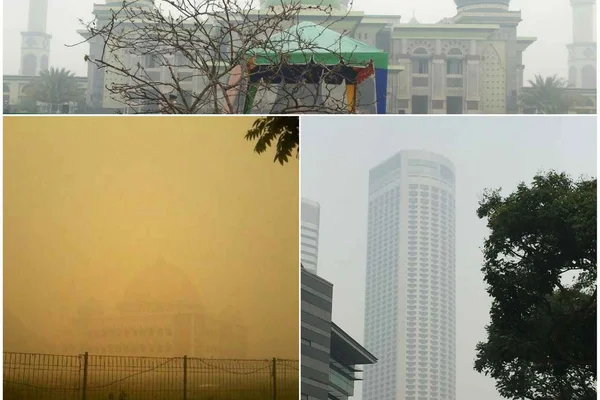
Indonesia haze crisis: 1.9 million hectares burned as Jakarta protests demand disaster status
Satellite data shows 1,916,588 hectares burned across Indonesia this year while the Health Ministry counts 283,270 respiratory infections and protesters in five cities demand national disaster status.
Comments (0)
Log in or sign up to leave a comment.
No comments yet. Be the first to share your thoughts.