Three major science stories landed in the same week: NASA released the James Webb Space Telescope's clearest portrait to date of the Lion Nebula, the Nancy Grace Roman Space Telescope program confirmed its August 30 launch from Cape Canaveral, and a Nature paper published August 15 described the first "glass-box" dynamical-deep-learning hybrid that beats conventional seasonal ENSO forecasts.
The Lion Nebula in Near-Infrared
The August 16 NASA Webb release combines NIRCam and MIRI exposures of the Lion Nebula (NGC 6334) to reveal a chain of young stellar objects still embedded in their natal gas columns. Webb resolves at least seven protostars whose outflow cavities carve the dust lanes, and measures water-ice column densities higher than researchers expected. "We're seeing the moment when the Lion Nebula transitions from a quiet molecular cloud to an active high-mass star-forming region," said the program lead in the NASA briefing.
Roman: August 30 Launch Confirmation
NASA confirmed August 13 that the Nancy Grace Roman Space Telescope will launch no earlier than August 30 aboard a Falcon 9 from Kennedy Space Center, with the field-of-view alignment exercise now scheduled within eight days of launch. Roman's 0.28 square-degree wide-field infrared instrument will survey a billion galaxies over its five-year primary mission, generating the deepest wide-area infrared map ever produced. The launch itself is on hold pending one final review of the spacecraft's instrument-calibration heat-pipe, which NASA said would not slip the date.
Glass-Box ENSO
In an August 15 Nature paper, Wang and Li introduce a "glass-box" hybrid that embeds a deep-learning model inside a simplified intermediate-coupling ENSO dynamical core, allowing the system to retain the interpretability of a physics model while still benefitting from gradient-based learning. The authors report 30 percent improvement in correlation skill for Niño 3.4 forecasts at 9-month lead times over the dynamical baseline, and matching or beating the leading deep-only forecasts. The advance is significant because operational El Niño/La Niña forecasts have lagged seasonal skill for years.
Why the Convergence Matters
Three pillars — high-resolution observatory data, next-generation survey infrastructure, and machine-learning weather-climate skill — are aligning at the same moment in 2026. Each on its own would have been a research milestone. Together, they allow new kinds of cross-domain questions: how star-formation feedback shapes galactic-scale outflows, how wide-field IR surveys can constrain dark-energy systematics, and how far seasonal forecasts can be pushed beyond conventional 6-month horizons.
Related Articles

Animals may have evolved 200 million years earlier than fossils suggest, Oxford led study says
A University of Oxford led team argues in Science Advances that animals originated 800 to 700 million years ago by testing microfossils from Mongolia and recalibrating molecular clocks.
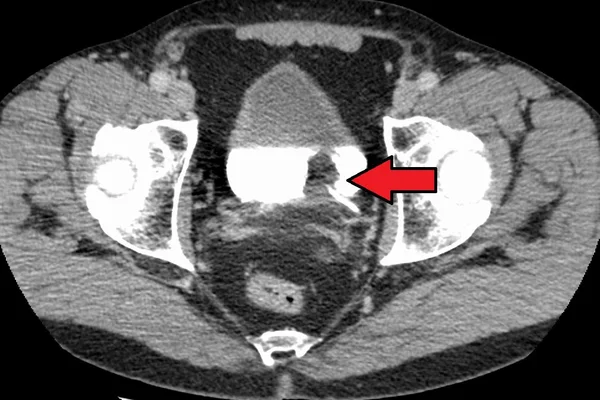
Stanford urine RNA test detects 95 percent of localized bladder cancers and predicts BCG response
A new urine cell-free RNA liquid biopsy called uRARE-seq identified 95 percent of localized bladder cancers in a 683-sample study and predicted which patients would benefit from BCG immunotherapy.
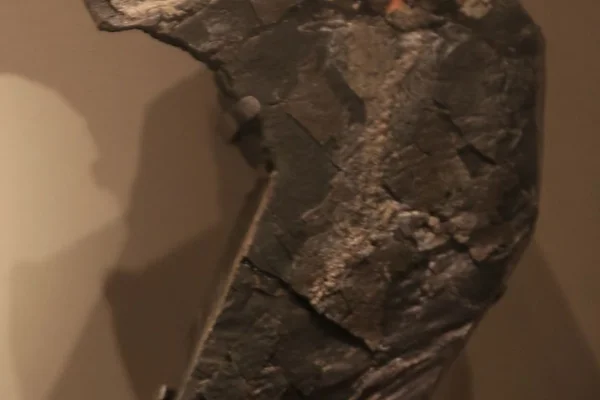
Fossil Called World's Oldest Reptile Is Reclassified as Aquatic Amphibian
Synchrotron X-ray scans of the 345 million year old Westlothiana lizziae fossil reveal internal gills and a fish-like mouth, forcing a reclassification as an aquatic stem tetrapod, not the earliest reptile.
Comments (0)
Log in or sign up to leave a comment.
No comments yet. Be the first to share your thoughts.