On 26 September 2022 NASA's Double Asteroid Redirection Test spacecraft slammed into Dimorphos, a small moonlet orbiting the larger asteroid Didymos, and shortened its orbital period by about 33 minutes. The result, give or take a minute, was far larger than predicted, and marked the first time human activity measurably altered a celestial body's motion. The experiment proved that a kinetic impactor can nudge an asteroid. It did not answer the harder question: exactly what happened to the target when the spacecraft struck it, and what that implies for repeating the trick on a body that might one day threaten Earth.
Answering that question is the job of Hera, the European Space Agency's planetary defence mission. After more than two years in transit, the spacecraft has reached the Didymos system, which at arrival lay 196.8 million km from Earth. Hera does not carry an impactor. It carries instruments, three in particular that matter for this story: the Asteroid Framing Camera, for which the German Aerospace Center (DLR) is scientific lead, the HyperScout H multispectral imager, and the Thermal Infrared Imager, or TIRI, supplied and operated by the Japanese space agency JAXA.
The target system is small and strange. Didymos measures about 780 m across and rotates once every 2.2 hours, fast enough to be close to breaking apart, which gives it a spinning-top shape and a pronounced equatorial ridge. Dimorphos, about 151 m in diameter, orbits at barely more than a kilometre from its parent. The pair form a binary system in which the smaller body's orbit can be timed with great precision, which is why DART's effect on that orbit could be measured at all.
On 17 November 2026 ESA published a new set of views of Didymos taken from just 28.5 km away, in visible light, in 25 multispectral bands and in thermal infrared. The thermal map, made with JAXA's TIRI, is the first of its kind for the system. The images are a preview rather than the main event: ESA said detailed images of both asteroids will be unveiled on 25 November. Even so, they hint at what the full instrument suite can add.
Key Facts
ESA reported on November 17, 2026 that the monochrome view of Didymos was acquired by the Asteroid Framing Camera, which serves both navigation and scientific observation, at a spatial resolution of approximately 2.7 m per pixel from 28.5 km. The image shows a boulder-rich surface, clearer regions, and traces of what may be landslides moving toward the central ridge. "This view reveals the variety of surface features across the spinning-top-shaped Didymos," Patrick Michel, Hera Principal Investigator and Director of Research at CNRS / Observatoire de la Cote d'Azur, said in the release.
The HyperScout H instrument imaged the main body in 25 different spectral ranges on 6 November 2026 from the same 28.5 km distance. Spektrum der Wissenschaft reported on November 18, 2026 that the wavelengths run from 661 nm in orange through 790 nm in red to 952 nm in the near infrared, while the human eye perceives radiation only up to about 800 nm. Because different minerals reflect sunlight differently, these reflected-light differences can be compared with laboratory measurements of meteorites and minerals to infer composition.
TIRI extends the survey into longer wavelengths, mapping surface temperatures across both bodies. ESA reported that the thermal data can reveal whether the surface is solid, porous, broken rock or loose material down to dust. The 151 m Dimorphos is almost entirely in shadow in the visible images, appearing only as a small speck in sunlight, but it is fully visible in the TIRI image.
DLR reported on November 17, 2026 that the first of the new images had been taken from approximately 60 km and a second from 56 km, the latter revealing large boulders, smoother areas and a surprisingly sharp equatorial ridge, on a side of Didymos that DART's camera could not observe before impact. Researchers want to establish how these structures formed and whether they are linked to the DART impact, since ejected material from Dimorphos may have crossed the roughly one kilometre gap to Didymos.
The impact numbers are well documented. DART, a 580 kg spacecraft, struck Dimorphos at about 6.1 km/s, cutting the moonlet's orbital period by around 33 minutes, give or take a minute. DLR describes the impactor as weighing roughly 500 kg. ScienceDaily reported on November 16, 2026 that Dimorphos became the first object in the Solar System to have its orbit measurably altered by human activity.
Analysis
The first images are less a discovery than a calibration of expectations. Hera's camera is delivering about 2.7 m per pixel from 28.5 km, fine enough to resolve individual boulders and ridge structure on a body 780 m across. HyperScout H adds a compositional channel, and TIRI adds a temperature channel that works in shadow and at night. Three instruments, three different physical properties, one target.
What this really means is that the DART experiment can now be read as a physical process rather than a single number. The 33 minute orbital change is the headline result, but the mechanics behind it depend on how much material was ejected, how porous the target was, and how the surface responded. A thermal map constrains the last of these directly, because temperature behaviour depends on whether the surface is solid rock or loose rubble. Multispectral data constrains composition. High-resolution imaging constrains structure, including the equatorial ridge and the grooves and boulders that DART's camera saw only briefly before it was destroyed.
The bigger picture here is that planetary defence is moving from a demonstration to an engineering discipline. A deflection technique that is to be repeated needs a model that predicts how much momentum a given impactor transfers to a given asteroid. That requires exactly the kind of ground-truth data Hera is collecting: the shape, the spin, the surface texture, the thermal properties, and the debris field. The ridge hypothesis, that material migrates toward the equator on a body rotating every 2.2 hours, is one example of a process that matters both for understanding Didymos and for understanding how its surface will respond to any future disturbance.
There is also a caution worth stating plainly. The visible-light images released on 17 November show Didymos clearly but leave Dimorphos almost entirely in shadow, and much of the most interesting science concerns the smaller body. The thermal view compensates, but it is a different measurement with its own limits. Hera's investigators are not yet in a position to say how much of the debris that crossed the roughly one kilometre gap between the two bodies actually landed on Didymos. Michael Kueppers, ESA mission scientist, said the team looks forward to systematically mapping all the changes they identify.
Why It Matters
Asteroid deflection is one of the few areas of space science where a test result could someday become an operational procedure. DART showed that hitting an asteroid hard enough can change its orbit measurably. Hera is designed to show why that happened and whether the effect can be predicted in advance for a different object. The difference between knowing that a technique works and knowing how to apply it is the difference between a demonstration and a capability.
The mission is also a study in international division of labour. ESA built and operates Hera. DLR leads the science for the framing camera. JAXA supplied and operates TIRI. CNRS and the Observatoire de la Cote d'Azur supply the principal investigator. NASA's DART provided the impact and the before images. The resulting dataset will be shared across those institutions and compared against laboratory measurements of meteorites and minerals, which is how spectral signatures become statements about composition.
Finally, the Didymos system is a natural laboratory for a process that is common in the Solar System: a fast-spinning rubble body redistributing its own material. If Didymos rotates every 2.2 hours, close to the point of breaking apart, its ridge may be the visible result of material sliding toward the equator, and its moonlet may be the result of material leaving altogether. That mechanism has value beyond planetary defence, because it is the same class of process that shapes many small bodies.
Next Up
ESA said detailed images of both asteroids will be unveiled on 25 November 2026. Those are expected to move the story from a preview to a survey, and they will be the material against which the DART aftermath is measured. Hera will keep closing in on the binary system while its instruments build up the maps that the mission's science phase requires.
The near-term questions are specific. How much of the surface of Didymos has been modified by material arriving from Dimorphos? What does the thermal signature say about the porosity of the moonlet? And does the ridge fit the migration model that Patrick Michel described, in which rapid rotation drives material toward the equator? The answers will arrive as data, image by image, starting with the release scheduled for 25 November.
Related Articles
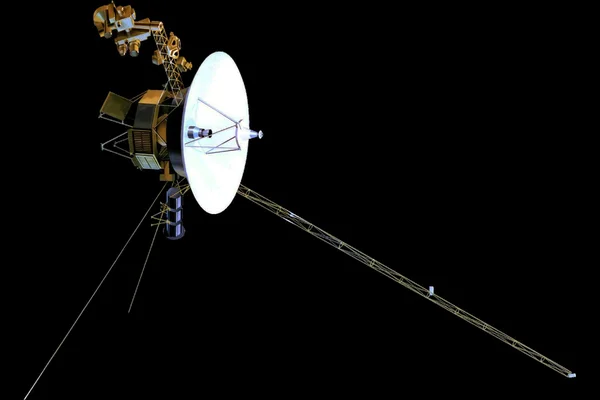
Voyager 1 Becomes the First Object Built by Humans to Reach One Light Day From Earth
Nearly five decades after leaving Florida, NASA's farthest probe crosses a distance that turns every radio exchange into a two-day wait.

Autistic Adults Show Far More Individual Brain Variation Than Group Averages Suggest, Study Finds
The Journal of Neuroscience paper compared 48 autistic and 90 neurotypical adults watching six short films and found similar group averages but wider person to person scatter among autistic participants.

SpaceX catches Starship upper stage at Texas tower for the first time after orbital return
A Starship upper stage came back from more than 22 hours in orbit and was seized by the launch tower arms at Starbase, a first for the program, though its booster was destroyed over the Gulf of Mexico.
Comments (0)
Log in or sign up to leave a comment.
No comments yet. Be the first to share your thoughts.