Global warming has shifted into a faster gear. After removing the effects of El Nino, volcanic eruptions, and solar cycles, researchers found that the planet has warmed at roughly 0.35C per decade over the past ten years, compared with just under 0.2C per decade from 1970 to 2015, ScienceDaily reported on August 1. The acceleration is real, and the climate-policy implications are immediate.
What the Numbers Show
The decadal warming rate from 1970 to 2015 was about 0.18-0.20C. The rate over the past ten years, after removing natural variability, is closer to 0.35C. That is a roughly 75% acceleration in the underlying warming trend, with no obvious change in human behavior to explain it. The most likely culprit is a combination of reduced aerosol cooling, slower improvements in carbon intensity, and feedback loops in the climate system that are not yet fully accounted for.
"We have crossed from linear warming into non-linear warming. The shape of the curve is changing," one lead researcher told ScienceDaily.
Why It Matters
The Paris Agreement's 1.5C threshold was set assuming a roughly linear warming rate. If the actual rate is faster, the threshold will be crossed sooner, and the worst-case scenarios from the IPCC will arrive earlier. Adaptation planning, infrastructure investment, and decarbonization policy all need to be re-evaluated against this faster trajectory.
Continue reading with a VIP subscription
Subscribe to TechQuire VIP to unlock the full story and exclusive member benefits.
- Full articles and exclusive analysis
- Daily tech briefings
- Frontier investment insights
- Ad-free reading experience
Already a member? Log in
Related Articles
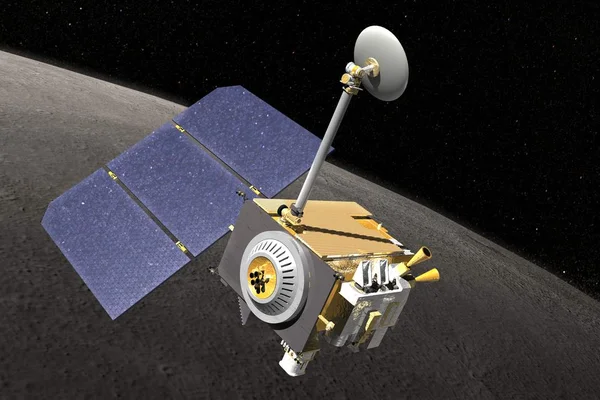
NASA Orbiter Spots McGetchin, the Largest Fresh Impact Crater Ever Found in the Solar System
A routine data-quality check by the Lunar Reconnaissance Orbiter Camera team has revealed a 222 meter crater named McGetchin, the largest fresh impact structure ever identified in the solar system.
CERN's ATLAS Recreates Cosmic Ray Showers With First Proton Oxygen Collisions
ATLAS physicists turned the Large Hadron Collider into a cosmic ray simulator, firing protons at oxygen to test how air showers begin, and found existing models fall short.
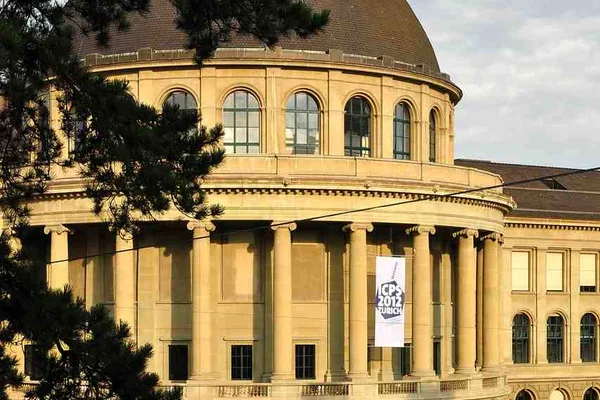
Cold muonium beam sets up first free fall gravity test on second generation antimatter
ETH Zurich and PSI researchers have extracted a cold, tightly focused muonium beam from superfluid helium, a first step toward measuring how second-generation antimatter falls under gravity.
Comments (0)
Log in or sign up to leave a comment.
No comments yet. Be the first to share your thoughts.