Chinese robotics company Unitree released a new artificial intelligence system called UnifoLM-X2-1.0 on September 7, and to demonstrate what it can do, the company published a video of its G1 humanoid sparring with a human opponent in what Unitree describes as real time. The company says the demonstration required no teleoperation and no pre scripted choreography, a claim that, if accurate, would place it at the leading edge of a field where many flashy robot videos rely on remote operators or carefully rehearsed routines. Unitree's autonomy claims are the company's own and have not been independently verified.
The demo is notable for the specific behavior it shows. Rather than performing a fixed sequence of strikes or evasions, the G1 is shown reacting to the timing and direction of an incoming punch, adjusting its movement on the fly. Unitree says the underlying model judges an opponent's actions in real time and plans responses dynamically. That is a very different engineering problem from walking, climbing, or grasping, because combat style interaction requires a machine to sense, predict, and move within fractions of a second while a human deliberately tries to outmaneuver it.
Key Facts
CryptoBriefing reported on September 7 that Unitree unveiled UnifoLM-X2-1.0 and billed it as powering the world's first fully autonomous humanoid robot driven by a real time world model, a description that frames the release as an industry first.
Humanoids Daily reported on September 7 that the G1 sparring demonstration required no human operator and no pre scripted choreography, and that the model judges the timing of punches and the direction of movement in real time during the exchange.
CryptoBriefing reported on September 7 that the world model is designed to predict physical interactions a few seconds ahead and plan movements on the fly, including what the company describes as high dynamic actions framed as combat level autonomy.
CryptoBriefing also reported on September 7 that Unitree open sourced an earlier framework called UnifoLM-WMA-0 in September 2025, indicating that the company has been developing this line of technology for at least a year.
CryptoBriefing reported on September 7 that Unitree's G1 humanoid sells for roughly 16,000 to 18,000 dollars, a price far below comparable machines from Western competitors, which gives the company a distribution advantage even as it pushes the boundaries of autonomy.
Analysis
What this really means is that Unitree is competing on a new axis. The company has already won attention for selling relatively inexpensive humanoid hardware, with the G1 priced at roughly 16,000 to 18,000 dollars, and now it is claiming a breakthrough in the software that decides how that hardware behaves. If the world model approach works as described, the value of a humanoid shifts away from the mechanics of joints and actuators and toward the intelligence that lets a robot read a situation and respond. That would favor companies that can combine cheap hardware with strong AI software, which is precisely the position Unitree is trying to occupy.
The bigger picture here is the race toward world models in robotics. A world model, in the sense Unitree uses the term, is a system that can predict how physical interactions will unfold a few seconds into the future, then choose movements that fit the situation rather than following a script. Researchers across the industry see such models as a route to robots that can operate in messy, unpredictable environments such as homes, warehouses, and construction sites. Unitree's demo is an attempt to show that the concept has moved beyond research papers and into a product it can sell, even if the demonstration video is not proof that the system works reliably in everyday conditions.
There are reasons to be cautious, and they are important ones. Company demonstration videos in robotics have a long history of overstating capability, and claims of full autonomy are routinely challenged when independent researchers test the same hardware. Unitree's framing, which includes phrases such as combat level autonomy, is designed for maximum attention, and the company has a commercial interest in being seen as first. The honest reading is that the G1 sparring video is an impressive technical signal from a company with real engineering talent, but it is not independent evidence that the system generalizes beyond the specific scenario shown on camera.
The competitive context sharpens the stakes. Unitree's aggressive pricing has already put pressure on Western humanoid developers, and a credible claim to real time world models would add software leadership to its cost advantage. The company, founded by Wang Xingxing and built around products such as the G1, has consistently used public demonstrations to generate attention, and this release follows that pattern. Rivals will now have to respond either by matching the claim with their own demonstrations or by publicly questioning whether Unitree's system is as autonomous as advertised.
Why It Matters
The significance of this release extends beyond a single sparring video. Humanoid robots have long been limited by their inability to handle the unexpected, which is why so many demonstrations are carefully staged. A system that can genuinely predict physical interactions a few seconds ahead and adapt its movements in real time would remove one of the biggest obstacles to deploying robots in the real world, where people, objects, and conditions are constantly changing. If Unitree's approach matures, it could accelerate the timeline for humanoids moving out of laboratories and into actual jobs.
The claim also matters because of who is making it. Unitree has shown that it can manufacture humanoids at prices far below Western competitors, and it has now positioned itself as a leader in the software that controls them. For Western robotics companies and their investors, the combination of low cost hardware and an ambitious AI roadmap is a direct challenge. It suggests that the center of gravity in humanoid robotics, both in manufacturing and now potentially in autonomy software, is shifting toward China.
The timing of the release is worth noting as well. Unitree open sourced its earlier UnifoLM-WMA-0 framework in September 2025, which means this announcement arrives almost exactly one year after the company began sharing its world model research with the broader community. That pattern, release a research framework, gather feedback, then unveil a more advanced system, mirrors the way many AI companies build momentum and attract outside developers. It also suggests that Unitree sees openness as a competitive weapon, a way to get its approach adopted by a wide audience before Western rivals can establish their own world models as the standard for humanoid control.
What should be watched closely is the gap between the demo and daily reality. Reacting to a sparring partner in a controlled setting is a demanding task, but it is still far simpler than navigating a cluttered home, a crowded warehouse, or a construction site where the robot must handle tools, people, and unpredictable obstacles for hours at a time. The world model architecture that powers the sparring video may be genuinely new, but turning that technology into reliable, saleable autonomy across many environments is a longer and harder project. Unitree has taken an eye catching step, and the coming year will show whether it can convert that step into robots that work reliably beyond the camera frame.
Next Up
The next step is verification. Independent researchers and competitors will look for signs that UnifoLM-X2-1.0 works outside a controlled demonstration, whether through technical papers, third party testing, or deployments in real settings. Unitree has open sourced a precursor framework before, and the question now is whether it will open enough of the new system for outsiders to evaluate the world model claims on the merits.
The broader question is what comes after the demo. Sparring with a human is a visually dramatic proof of concept, but the value of a world model will ultimately be measured by whether it lets robots perform useful, repetitive, and safe work in unstructured environments. Unitree's next moves, and the responses from Western competitors, will determine whether this September release becomes a footnote or the beginning of a genuine shift in how humanoid robots are taught to move through the world.
Related Articles
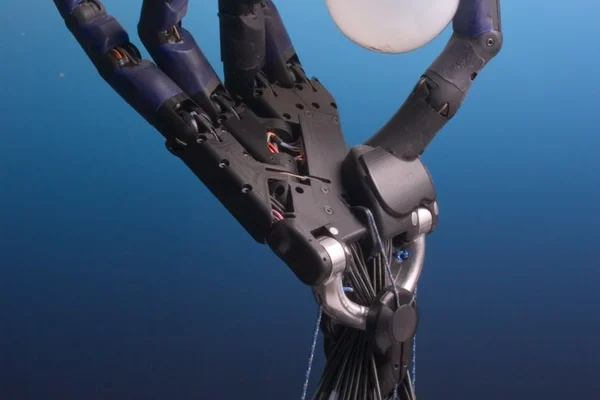
Zurich physical AI startup Enact exits stealth with $30 million pre-seed for touch sensing robots
Enact Intelligence, legally Eta Robotics AG, has raised a $30 million pre-seed to build force and touch sensing into robot actuators rather than adding it as an external accessory.
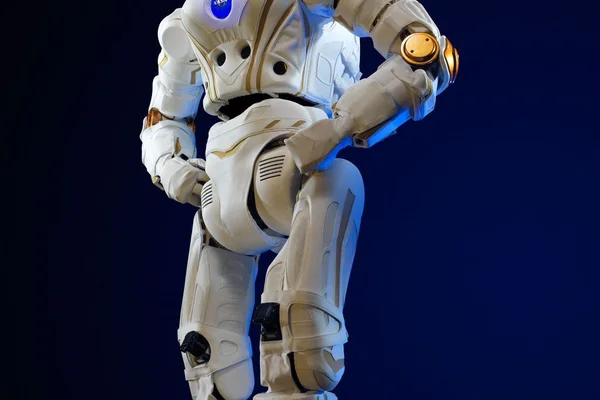
Generative Bionics to build 5,000 square metre Physical AI Data Factory in Italy for GENE.01
Backed by AMD Helios rack-scale compute, the Genoa humanoid maker plans three training sites, with the first 5,000 square metre hub in Italy targeted to be running by the fourth quarter of 2027.
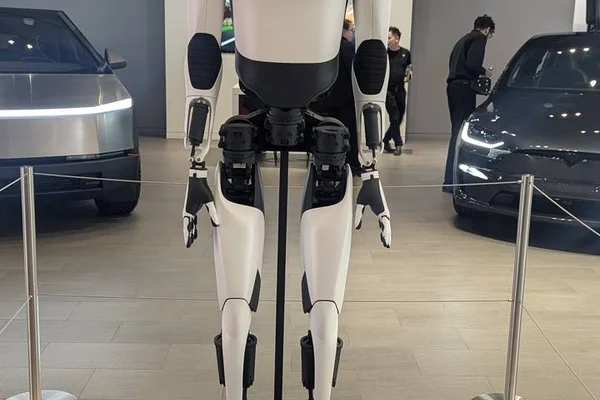
Tesla begins Optimus production in Fremont as Q3 net income falls 43 percent
Tesla says Optimus robots now roll off high-volume lines in Fremont, California, but it disclosed no unit counts as quarterly net income fell 43% to $787 million.
Comments (0)
Log in or sign up to leave a comment.
No comments yet. Be the first to share your thoughts.