With global warming on track to exceed 1.5 degrees Celsius within a few years, the United Nations Environment Programme has delivered a blunt verdict on the world's preparations: the money is not arriving fast enough, and the institutions meant to spend it are struggling to keep pace. UNEP launched its Adaptation Gap Report 2026, subtitled Ready? Not, from Nairobi on November 4, 2026, days before negotiators gather in Antalya, Turkiye, for COP31. The report lands as heatwaves, droughts, wildfires and floods intensify across the developing world, and as the distance between what adaptation costs and what governments actually provide keeps growing.
For years, the central question in climate diplomacy has been how quickly countries can cut emissions. Adaptation is the other half of the ledger: the dams, early warning systems, drought-resistant crops, restored ecosystems and reinforced infrastructure that help communities survive conditions already locked in. UNEP's report examines whether that half of the ledger is being funded at the scale the science demands, and its answer is unambiguous.
Governments have repeatedly acknowledged the gap. The 2021 Glasgow Climate Pact set a goal of doubling finance from 2019 levels to about $40 billion by 2025. At COP29 in Baku, countries pledged to deliver $300 billion a year in climate finance to developing countries. At COP30 in Brazil, the Global Mutirao decision called for efforts to at least triple adaptation finance by 2035. Each commitment raised expectations, and none has yet closed the distance between promises and disbursements.
COP31, running from November 9 to 20 in Antalya, will be the first full test of whether those pledges have changed behaviour on the ground. The report's timing is deliberate. It gives negotiators a numerical baseline before they sit down, and that baseline is uncomfortable.
Key Facts
UNEP announced on November 4, 2026 that international public adaptation finance flows from developed to developing countries reached between $28.2 billion and $31.7 billion in 2024. That represents an increase of just $1 billion over the previous year, a rounding error against the scale of the problem. The report estimates that developing countries need roughly $305 billion a year by 2035 to build resilience and reduce risk.
Even the most optimistic financing scenario falls short. UNEP said on November 4 that if the COP30 aspiration to triple international public finance flows by 2035 is achieved, the resulting $85 billion to $120 billion a year would cover only 20 to 29 percent of developing countries' needs after inflation adjustment. Tripling flows specifically to least developed countries and small island developing states would meet 49 to 83 percent of their needs, a reminder that targeting matters as much as volume.
Reuters reported on November 4 that negotiators in Antalya will examine why nations remain off track to meet the COP29 pledge made in Baku to deliver $300 billion a year in climate finance, a figure close to UNEP's $305 billion adaptation estimate. The agency quoted Inger Andersen, UNEP's executive director, warning that the world is not ready to adapt to current climatic conditions, never mind what overshoot of 1.5 C will bring.
UN News reported on November 4 that the report was released ahead of COP31 and that international public adaptation finance reached $28.2 billion to $31.7 billion in 2024, just a billion dollars more than the previous year. The report also finds that flows to least developed countries and small island developing states rose in real terms between 2019 and 2024 but have fallen from a 2022 peak, precisely when they should be climbing. The Glasgow Climate Pact goal of doubling finance from 2019 levels to about $40 billion by 2025 could still be met, with multilateral development banks likely to have increased financing significantly in 2025. Declining official development assistance could complicate that outcome.
IISD's SDG Knowledge Hub reported on November 4 that contributions channelled through multilateral development banks and direct South-South cooperation rose from $3.8 billion in 2019 to $9.6 billion in 2024. Private flows are also rising, though the report estimates they play a limited role in closing the gap for public-oriented adaptation actions, at roughly 15 to 20 percent. Finance for loss and damage remains insufficient and hard to access: the first funding round of the Fund for responding to Loss and Damage drew requests worth $2.8 billion against an initial envelope of $342 million.
Analysis
What this really means is that the adaptation finance debate has moved from ambition to arithmetic, and the arithmetic is brutal. A $1 billion annual increase against a $305 billion annual need is not a trajectory toward adequacy. It is a slow drift while risk accumulates. Even a tripling of flows, the headline aspiration from COP30, would leave 71 to 80 percent of needs unmet. The report's own framing, Ready? Not, is less a question than a verdict.
The shortfall is not only about volume. UNEP's report stresses that implementation is constrained by institutional barriers, meaning that even money already committed does not translate smoothly into protective infrastructure or functioning early warning systems. That finding matters for how governments design the next round of pledges. Writing larger cheques into communiques is easier than building the procurement systems, technical capacity and local institutions needed to spend them well. A tripling target that ignores absorptive capacity risks producing announcements rather than resilience.
The distribution of finance deserves as much scrutiny as the total. Flows to the poorest and most exposed countries peaked in 2022 and have since declined, according to the report, even as losses mount. That pattern suggests adaptation money is following familiar channels rather than need. The finding that tripling flows to least developed countries and small island developing states would cover 49 to 83 percent of their needs is a useful corrective. It shows that a more targeted approach could achieve far more per dollar than a broad increase spread evenly.
Private capital will not rescue the balance sheet. The report estimates that private flows can address only about 15 to 20 percent of the funding gap for public-oriented adaptation actions, which is unsurprising given that many adaptation goods, such as flood defences and public health surveillance, do not generate conventional returns. That places the burden squarely on public finance, multilateral development banks and South-South channels, all of which are growing but from a small base. The loss and damage numbers make the same point more starkly: $2.8 billion in requests against a $342 million envelope is a ratio that no amount of rhetorical commitment can disguise.
Why It Matters
The stakes are measured in lives and livelihoods. The report warns that losses and damages are mounting as warming heads toward and then past 1.5 degrees Celsius. Adaptation is what stands between a drought and a famine, between a flood and a destroyed city, between a heatwave and mass casualties. When finance lags, the consequences are not distributed evenly. They concentrate in countries with the least fiscal room to respond and the least historical responsibility for emissions.
COP31 in Antalya will therefore be judged on credibility rather than rhetoric. Reuters reported on November 4 that the talks will examine why nations remain off track on the $300 billion a year climate finance pledge made in Baku. If the same governments that signed that pledge arrive with adaptation flows barely changed, the gap between the UN's 1.5 degree architecture and its funding reality will become harder to paper over. The report gives negotiators a specific number to defend or explain: $28.2 billion to $31.7 billion in 2024.
Finance alone is not enough, a point UNEP makes explicitly. Strengthening institutions and accelerating implementation are prerequisites for protecting vulnerable communities, building resilience and addressing growing losses. That means adaptation has to be treated as an infrastructure and governance problem, not a charitable transfer. Countries need predictable multi-year funding, simpler access rules and local capacity to turn projects into protection.
Next Up
The immediate test comes in Antalya. COP31 opens on November 9 and runs to November 20, with adaptation finance and the state of the $300 billion pledge high on the agenda. UNEP's report will serve as the reference document for those arguments, and its central figures, $305 billion in annual need by 2035 against $28.2 billion to $31.7 billion delivered in 2024, are likely to be cited in every plenary.
Beyond the conference, the report sets out a clear benchmark for the next cycle of national adaptation plans and NDC updates, which underpin its $305 billion estimate. Whether flows to least developed countries and small island developing states recover from their post-2022 decline will be one signal to watch. Another will be whether multilateral development banks confirm the significant increase in 2025 financing that UNEP considers likely. On both counts, the next reporting cycle will show whether Ready? Not becomes a turning point or a label that still fits.
Related Articles
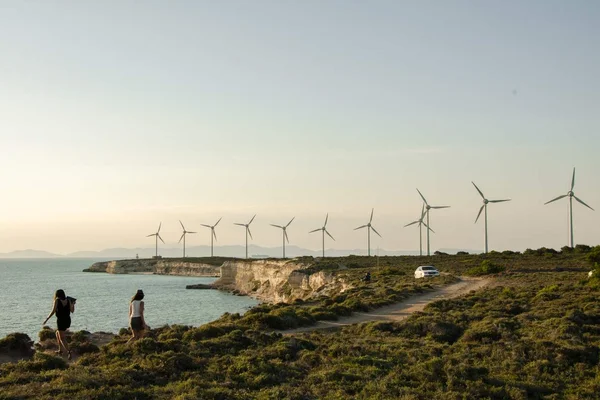
Türkiye awards 2,285 MW of wind and solar in annual YEKA auction
The auction, held over two days, cleared 1,500 MW of wind and 785 MW of solar at floor tariffs, drawing EUR 113.4 million in upfront fees and an estimated USD 1.9 billion in investment.

Cyclone Murasu Hits Andhra Pradesh With 120 kmph Gusts, a Week After Arnab Killed Seven
Two severe cyclones crossed the same Indian state within six days, sending 10,805 people into relief camps and leaving Andhra Pradesh to tally a bill that was already climbing before the second storm arrived.
Bolivia declares national emergency as super El Nino threatens drought and floods
President Rodrigo Paz signed Supreme Decree 5759 on 31 October 2026, activating exceptional budget and procurement rules for nine months as drought damages crops and livestock.
Comments (0)
Log in or sign up to leave a comment.
No comments yet. Be the first to share your thoughts.