Obesity has become one of the most commercially contested areas of medicine, and the past several years have been defined by two injectable drugs: semaglutide and tirzepatide. Both have produced unprecedented weight loss in trials, and both have turned their makers, Novo Nordisk and Eli Lilly, into companies reporting record revenue from metabolic disease. Yet a quieter problem trails every GLP-1 receptor agonist: what happens when patients stop taking it. Regain after withdrawal is common, and it has become a central design challenge for the next generation of obesity programmes.
Gan & Lee Pharmaceuticals, listed on the Shanghai Stock Exchange under ticker 603087, has been working on that problem with bofanglutide, also known as GZR18. The molecule is a glucagon-like peptide-1 receptor agonist, the same class as semaglutide, but it is dosed once every two weeks rather than once weekly. BioPharma APAC reported on November 2 that the company's European partnership with Menarini covers 39 countries, with EUR 62 million upfront and up to about USD 849 million in total deal value.
The programme rests on three trials. GRADUAL-1 was a 52-week Phase 3 study in about 630 Chinese adults with obesity or overweight who had not lost enough weight through diet and exercise. GRADUAL-2 is a 52-week comparison in about 471 adults, with or without type 2 diabetes, against semaglutide 2.4 mg. GRADUAL-3 is the 24-week maintenance study, registered as CTR20254659, with Professor Linong Ji of Peking University People's Hospital as lead investigator. Gan & Lee announced its start in a release dated November 27, 2025, when the original primary endpoints were both the absolute change and the percentage change in body weight at week 24.
On November 4, 2026, the company disclosed topline results from GRADUAL-3. The headline finding was that a monthly maintenance dose can hold a patient's weight essentially flat after an intensive course of treatment has ended.
Key Facts
PR Newswire reported on November 4 that GRADUAL-3 met its primary endpoint, with once-monthly bofanglutide producing a mean body-weight change from the maintenance baseline of +0.41 percent in the 24 mg arm and -0.12 percent in the 48 mg arm after 24 weeks, compared with +8.52 percent on placebo. Both comparisons carried a P value below 0.0001. Gan & Lee described the study as the first completed Phase IIIb sequential trial globally to evaluate maintenance of weight-loss efficacy with once-monthly dosing under a randomised controlled design.
The design deserves stating precisely. Participants who completed 52 weeks of bofanglutide dosed once every two weeks in GRADUAL-1, and who met eligibility criteria, were randomised according to their last administered dose, either 24 mg or 48 mg, to continue bofanglutide or switch to placebo once monthly for 24 weeks. Everyone in the maintenance phase had already lost substantial weight, and the trial asked whether a far less frequent schedule could defend that result.
PR Newswire reported on November 4 that once-monthly bofanglutide also maintained improvements in waist circumference, blood pressure and lipid levels. The release said the drug showed a favourable safety and tolerability profile across all dose groups, with no new safety signals, and that the most common adverse events were gastrointestinal, mostly mild to moderate and transient.
For context on effect size, BioPharma APAC reported on November 2 that bofanglutide's best disclosed weight change was -18.54 percent at week 52 with 48 mg every two weeks, against -1.11 percent on placebo. The same analysis counted 30 assets discovered by Asia-Pacific companies in registered human trials for obesity or weight management, 21 of them from mainland China, and listed bofanglutide as entry seven.
Novapharma News reported on November 4 that the release did not print the number of participants, the dropout rate, or actual values for waist circumference, blood pressure and lipids. It also noted that 8.52 percent is the rise from the maintenance baseline, not the share of weight lost during the first 52 weeks of GRADUAL-1, a distinction that matters when the figure is quoted beside headline results from other trials.
Analysis
The most interesting number in GRADUAL-3 is not the 8.52 percent placebo regain. It is the -0.12 percent in the 48 mg arm, because it implies that patients who had already lost weight on an intensive fortnightly schedule continued to drift very slightly downward for another six months on a monthly injection. A maintenance therapy that holds or marginally improves an achieved result is a different commercial object from one that merely slows relapse.
What this really means is that the obesity field is being pushed toward a chronic-care model with adjustable intensity, rather than a fixed course followed by discontinuation. The standard framing has been induction then withdrawal, with regain treated as an expected consequence. GRADUAL-3 tests a third path: step down the dose frequency, keep the biological effect, and preserve the investment a patient has already made in 52 weeks of treatment.
That framing needs care, because the evidence is topline. 2 Minute Medicine reported on November 5 that it rated the findings as Evidence Rating Level 2 (Good) but cautioned that the results are topline findings from a Phase 3b maintenance study, have not been peer reviewed, and lack participant numbers, confidence intervals and further statistical results. The brief, reviewed by Marc Succi, MD of Harvard Medical School, concluded that the switch was associated with maintenance of previously achieved weight loss while requiring assessment in the planned full publication.
The bigger picture here is that maintenance is becoming the competitive frontier, and GRADUAL-3 also shows how much of the field's evidence remains cross-trial. BioPharma APAC stressed that figures come from different trials with different doses, durations, populations, baseline BMI, estimands and placebo responses, that many Chinese trials enrol people with a lower average BMI than Western trials, and that no two points in its comparison chart come from a head-to-head trial. Placing bofanglutide's numbers beside semaglutide or tirzepatide results is an inference the data do not support.
Why It Matters
Adherence is the practical bottleneck in obesity medicine. A fortnightly injection is already an improvement over weekly dosing for patients who struggle with routine, and a monthly injection is a larger step again. If a monthly schedule holds weight without new safety signals, the logistics of long-term care change: fewer clinic visits, fewer pharmacy touchpoints, and a lower burden on patients who otherwise abandon treatment once the intensive phase ends. Gan & Lee's European arrangement with Menarini gives the molecule a route into 39 countries, and a maintenance approach could interest payers reluctant to fund indefinite intensive therapy, though no pricing or reimbursement decision has been disclosed.
The regional context strengthens that point. BioPharma APAC reported on November 2 that orforglipron, discovered by Chugai and licensed to Eli Lilly, was approved in the United States on April 1, 2026 with -11.2 percent at week 72, that Sciwind's ecnoglutide was cleared by China's NMPA in March 2026, and that Hanmi's efpeglenatide became Korea's first home-grown obesity drug in October 2026. Asia-Pacific originators are no longer marginal here, and a maintenance strategy differentiates without claiming a larger induction effect.
Next Up
Gan & Lee said detailed GRADUAL-3 results are planned for future scientific conferences and peer-reviewed journals. Until that publication appears, the only efficacy numbers available are the three week-24 means and the two P values, and the missing participant count, dropout rate and cardiometabolic values are what independent reviewers will ask for first.
The company has not disclosed a regulatory filing timeline for a maintenance label, and its US Phase 2 study, registered as NCT06737042, remains a separate strand of evidence. In that trial, according to BioPharma APAC, 48 mg produced -15.18 percent at week 36 against -16.93 percent for open-label tirzepatide 15 mg, a result that will shape how the molecule is positioned outside China.
Related Articles
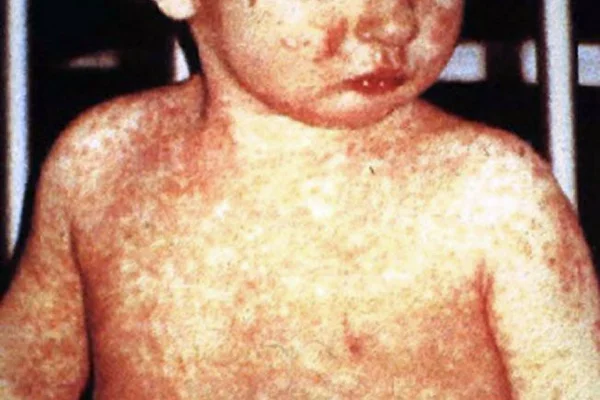
New York reports first measles death in more than 30 years as child dies in Lewis County
A child in rural Lewis County has died from a measles associated illness, New York's first such death in over three decades, as the national case count climbs to its highest level since 1991.

FDA grants Dr. Reddy's first tentative approval for a generic $40 lenacapavir HIV prevention shot
A generic version of the twice-yearly HIV prevention injection wins US tentative clearance, opening $40 a year supply across 120 low and middle income countries.
Fresenius Signs Record Biosimilars Development Deal With WuXi Biologics for Up to 37 Candidates
Fresenius has secured option rights to as many as 37 biosimilar candidates from WuXi Biologics, a fee for service arrangement that could lift its portfolio from 29 molecules to 66.
Comments (0)
Log in or sign up to leave a comment.
No comments yet. Be the first to share your thoughts.