Longyearbyen, the largest settlement on the Norwegian archipelago of Svalbard, lies roughly 1,300 kilometres from the North Pole and is home to about 2,600 people. Every drop of water the town consumes comes from a single source: Isdammen, a dammed lake about 2.5 kilometres (1.5 miles) long whose name translates as ice pond. There is no second reservoir and no river to fall back on. For decades the arrangement was adequate, if never ideal, because the water carried sediment that residents learned to live with.
That arrangement has now failed. In September 2025 the local council, Longyearbyen lokalstyre, extended a drinking water warning from a narrow group to the entire population, and the restriction has not been lifted since. The cause is a chain of events that begins with a warming climate and ends at the kitchen tap of a town in one of the fastest-warming places on Earth. Longyearbyen is warming at between five and seven times the world's average rate, and autumn temperatures there are rising by up to 4C a decade.
The mechanism is geological as well as meteorological. Svalbard's shale bedrock contains pyrite, the iron sulphide mineral often called fool's gold. When permafrost thaws, water and oxygen reach rock that had stayed locked away, and pyrite oxidises, generating acidity. That acid then leaches heavy metals out of the surrounding rock and into the waterways that feed Isdammen. Marjolaine Verret, a permafrost expert and associate professor in Arctic geology at the University Centre in Svalbard (UNIS), put the combination plainly: the thawing permafrost and the shale bedrock containing pyrite are what is causing contamination of the water supply.
What residents have been told to do about it is, for now, very little beyond collecting free purified water from a tank outside the supermarket. What the municipality plans to do about it will cost a great deal and take years. And what researchers fear is that Longyearbyen is not an exception but an early example.
Key Facts
The Guardian reported on October 19, 2026 that residents of Longyearbyen have been told they must no longer drink tap water because of heavy metal contamination that scientists link to thawing permafrost. The town draws its main supply from Isdammen, the 2.5 kilometre dammed lake, and higher temperatures have thawed ground that had previously stayed frozen, exposing bedrock that leaches metals into the pond.
The numbers behind the advisory are stark. The municipality first alerted its 2,600 residents after manganese in the water supply was found at 25 times the 50 micrograms per litre recommended by the Norwegian Institute of Public Health (FHI), in September 2025. Pollar reported on October 19, 2026 that some analyses recorded manganese of up to 1,000 micrograms per litre, twenty times the 50 microgram reference value set by Norwegian authorities. Prolonged exposure to high manganese levels can cause neurological problems, particularly in children and infants.
The problem did not stay with manganese. Analyses published by the local administration in April 2026 showed nickel at up to 30 micrograms per litre against a limit of 20, while sulphate readings approached 1,000 milligrams per litre. EconoTimes reported on October 19, 2026 that a clean water sample collected at a Longyearbyen school on September 9, 2026 showed sulphate at 568 mg/L against a council limit of 250 mg/L, manganese at 0.15 mg/L against a 0.05 mg/L limit, and nickel at 41 micrograms per liter against 20 micrograms per liter. The laboratory report, dated September 25, cautioned that the results describe only the samples tested.
Interim measures are running. A central tank of free purified water, filtered by the local brewery through reverse osmosis, lets residents refill containers at Svalbard Store, and that distribution is continuing. The timeline matters: the restriction began with a narrow warning in September 2024, when health authorities advised that infants under one year old should not be given the water. A year later, as manganese kept rising, the advice was extended to the whole population.
Nettavisen reported on October 19, 2026 that council leader Terje Aunevik said drinking water quality had never been good because of sediment, but that the contamination level had gone ballistic, which he described in Norwegian coverage as insane. He said the council is weighing a completely new water mains supply, a filtration system for Isdammen or a desalination plant as backup, and called any of those options extremely expensive and technically challenging because Svalbard water temperatures are often below zero.
Analysis
What this really means is that a well-governed Nordic municipality, inside a country with strong public health institutions, has been unable to restore safe tap water for two years and counting. The constraint is not neglect or ignorance. It is that the contamination is generated by a process operating across an entire catchment, driven by a climate signal that no local budget can reverse. A filtration plant can strip manganese, nickel and sulphate from water that reaches the plant, but it cannot stop pyrite oxidation in thawing bedrock uphill of the intake.
The advisory record deserves attention in its own right. The first warning, in September 2024, covered only infants under one year old, the group most vulnerable to manganese. A further year of rising readings passed before the advice covered everyone. That sequence illustrates how environmental health advisories lag the physical reality they describe: each threshold is crossed, sampled, confirmed and then acted on, while the underlying chemistry keeps moving.
The technical uncertainty is unresolved, and honestly acknowledged. SINTEF is studying Longyearbyen's water quality and supply, the condition of the dam and how thawing permafrost may affect water flows. The project began in 2025 with UNIS and the University of Bergen, funded by the council. Research manager Hanne Kvitsand said the team has not determined how thawing may change water channels or quality, and that the question needs thorough investigation. The bigger picture here is that the municipality is being asked to commit to a multi-decade, extremely expensive piece of infrastructure before the science that would guide that choice has been delivered.
There is a wider geographical point the Svalbard case makes hard to ignore. Verret and other scientists warned that the contamination could be a foretaste for other Arctic communities, because bedrock rich in pyrite and heavy metals plus thawing permafrost are present in other parts of the Arctic, including northern Canada and Alaska. Longyearbyen is unusual in depending on a single small reservoir, which makes it an extreme case, but the geology it sits on is not unusual at all.
Why It Matters
Water is the part of climate adaptation that cannot be deferred. A town can postpone a road repair or a building upgrade; it cannot postpone drinking water. Longyearbyen's 2,600 residents currently depend on a brewery's filtration plant and a refill tank at a supermarket, an arrangement that works because the town is small, organised and wealthy enough to run it. Communities across the Arctic with the same geology but fewer resources, no brewery with reverse osmosis equipment and no municipal tank would have far less room to manoeuvre.
The case also reframes what permafrost thaw costs. Public discussion usually centres on infrastructure buckling, on slumping roads and destabilised buildings. Longyearbyen shows a second pathway: thawing ground changes water chemistry. Once pyrite-bearing rock is exposed to water and oxygen, the acid it generates mobilises metals that travel into reservoirs, a slow and largely invisible process until it reaches a tap.
It also tests the credibility of drinking water limits as a protective tool. Manganese has since dropped, yet the ban remains because nickel and sulphate exceed recommended limits. That is the system working as designed, but it shows how one contaminated source can cascade through several regulated parameters in succession, each one resetting the clock on when residents can safely drink from their own taps.
Next Up
The next milestone is the SINTEF report, expected in the second quarter of 2027. Until then the council's position is a holding pattern: free emergency water, a continuing advisory and three options on the table, namely filtration of Isdammen water, a completely new water mains supply, or desalination as a backup. Each carries a price the mayor has called extremely expensive and engineering problems that Arctic temperatures make worse.
Beyond Longyearbyen, the question is which other Arctic settlements sit on pyrite-rich bedrock and draw from small surface reservoirs. Researchers have already named northern Canada and Alaska as regions where metal-rich rocks and thawing permafrost exist side by side. The Svalbard advisory, reported in public view on October 19, 2026, gives those communities a list of things to test for, and a warning about how long the answer can take.
Related Articles
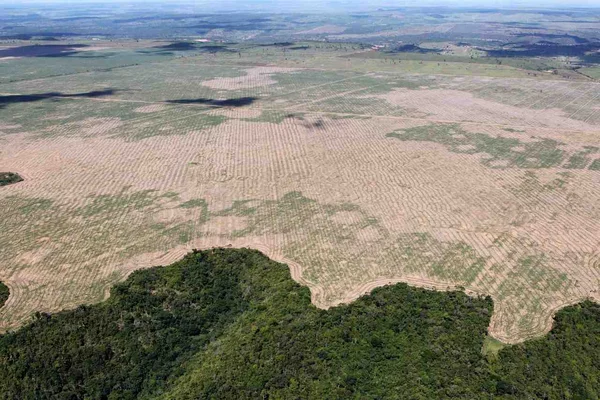
Brazil Amazon deforestation hits record low of 3,335 km2 days before pivotal runoff vote
Brazil's space agency INPE says Amazon clearance fell to 3,335 square kilometers in the year to July, the smallest tally since 1988, with a presidential runoff set to decide whether the policy survives.

IPCC suspends 65th plenary session in Addis Ababa without a deal on AR7 timeline or budget
A deadlock of nearly three years over the Seventh Assessment Report schedule deepened when talks in Ethiopia ran out of time, with a 30 country coalition warning the science may miss the 2028 stocktake.

2026 State of the Climate Report Finds 7 of 16 Vital Signs at Record Extremes
Seven of sixteen tracked planetary indicators hit record extremes in 2026, and scientists say the pace of warming has roughly doubled since 2010 to about 0.36C per decade.
Comments (0)
Log in or sign up to leave a comment.
No comments yet. Be the first to share your thoughts.