UFORCE, a defence technology company founded in Ukraine and headquartered in London, has spent the past two years turning battlefield feedback into a product line of uncrewed vehicles and the software that coordinates them. Its catalogue covers air, sea and land systems, including the NEMESIS drone, the MAGURA naval vessel, the LIUT ground robot and the PREDATOR turret family. It also sells the command-and-control layer that ties those machines together. Until this week, UFORCE was a well-regarded but modestly capitalised startup that had raised $50 million at a valuation of around $1 billion in March 2026.
That changed on 12 November 2026, when the company announced a $700 million Series A at a $6 billion valuation. The round was co-led by Valor Equity Partners and the UK National Wealth Fund, with participation from the U.S.-Ukraine Reconstruction Investment Fund and a group of Silicon Valley, European and Asian investors. The step up, roughly six times in eight months, makes UFORCE one of the most valuable defence technology startups in Europe and a test case for whether combat-tested hardware can attract venture-scale capital.
The timing reflects a broader shift in how allied governments and their suppliers think about procurement. Drones and robotic systems have moved from the edges of military operations to the centre of them in the war that followed Russia's full-scale invasion of Ukraine in February 2022. Both sides have adapted tactics continuously, compressing development timelines that once ran for years into months. Investors are betting that the companies which learned to iterate under those conditions will hold an advantage when NATO members rebuild inventories.
The financing also carries a political dimension. The UK National Wealth Fund committed GBP 113 million, about $150 million, its largest defence investment to date, and expects the UK expansion to create hundreds of skilled jobs. A sovereign wealth fund co-leading a Series A alongside a US venture firm is unusual, and it signals that governments now see defence technology as industrial policy rather than simply as a procurement line item.
Key Facts
UFORCE said on 12 November 2026 that it raised $700 million in a Series A at a $6 billion valuation, up from roughly $1 billion in March 2026, when it raised $50 million. Reuters reported on November 12 that Valor Equity Partners and Britain's National Wealth Fund co-led the round, with participation from the US-Ukraine Reconstruction Investment Fund. The company is headquartered in London and has hubs in Kyiv and Washington.
The product set spans four families. The MAGURA uncrewed surface vessel, the NEMESIS uncrewed aerial system, the LIUT uncrewed ground vehicle and the PREDATOR turret system are all named in the company's announcement as targets for higher output. UFORCE says its NEMESIS drones have completed more than 300,000 combat flights and that its MAGURA naval vessels contributed to destroying more than a dozen Russian warships in the Black Sea. CNBC reported on November 12 that it could not independently verify the company's claim that it had built ten times as many unmanned surface vessels as the competitors it benchmarks against.
Investors beyond the two leads include Menlo Ventures, Xantium and Hiro Capital, while existing backers Shield Capital, Ballistic Ventures, Lakestar and Squadra increased their stakes. Conor Coleman, head of investments at the U.S. International Development Finance Corporation, said the deal is the U.S.-Ukraine Reconstruction Investment Fund's largest investment in the emerging technology sector to date. The Kyiv Independent reported on November 13 that the fund's money will support Ukrainian hiring, research and development and new products.
General (Ret.) Christopher G. Cavoli, former NATO Supreme Allied Commander Europe and now a partner at Valor Equity Partners, joins the UFORCE board. He said Ukraine showed how fast battlefield innovation moves when engineers work beside the people who rely on their systems. Oliver Holbourn, chief executive of the UK National Wealth Fund, said the investment brings the production, engineering and application of combat-tested autonomous systems to the UK.
The macro backdrop is just as striking. Startups across NATO and allied countries raised $27.1 billion through September 2026, nearly double all of 2025, according to an October report from Dealroom and Resilience Media cited by CNBC. Reuters reported on November 12 that the valuation places UFORCE among a growing group of highly valued European technology startups, alongside France's Mistral at $24 billion in September 2026 and Britain's Nscale at $14.6 billion in March 2026.
Analysis
The more informative figure is the pace of the step up. A jump from about $1 billion in March to $6 billion in November, on a $700 million raise, implies investors accepted a valuation roughly six times higher within eight months. That is not a normal markup for a hardware business with manufacturing constraints, and it tells you the round was priced against scarcity rather than against current revenue. UFORCE's chief executive, Oleg Rogynskyy, told CNBC that bookings had more than doubled over the past year from a base of several hundred million dollars, while declining to give exact figures. He also said the company received offers at higher valuations and chose this one for the investor base.
The bigger picture here is that defence technology has become a category that venture capital and governments are co-financing, and that changes the incentive structure for everyone involved. Valor brings the Silicon Valley growth playbook and a former NATO commander on the board. The UK National Wealth Fund brings a balance sheet, a domestic industrial agenda and a mandate to create skilled jobs. The U.S.-Ukraine Reconstruction Investment Fund brings a policy channel into Ukrainian operations. None of those three wants the same thing from UFORCE, and the company will have to serve all of them at once.
The distributed manufacturing plan is the clearest example of that tension. Proceeds will scale production in Ukraine and in allied countries including the United States, Europe, Asia-Pacific and the Middle East. That hedges against attacks on Ukrainian industrial capacity and keeps front-line troops supplied while building political constituencies in customer countries. The partnership with US manufacturer ReconCraft to increase MAGURA production in the United States fits the same logic. Reuters reported on November 12 that the investment comes as Ukraine and Russia continue to adapt their battlefield technology and tactics.
Two caveats deserve equal billing. First, the company will not name its customers beyond saying it works with several NATO countries, which makes independent verification of its order book impossible. Second, Rogynskyy has said Ukrainian requirements come first and foremost, a commitment that allied buyers will read as both reassuring and a supply risk. The claimed production multiple over benchmarked competitors, ten times as many unmanned surface vessels, remains unverified. None of this invalidates the round, but it means the $6 billion number rests substantially on confidence in future contracts rather than on disclosed backlog.
Why It Matters
Europe's defence industrial base has spent two decades consolidating into a small number of primes with long development cycles. UFORCE is a direct challenge to that model, and its argument is concrete: engineers who get continuous frontline feedback out-innovate companies that design against requirements documents. If that argument holds, procurement budgets will shift toward smaller, faster suppliers.
The sovereign wealth fund angle matters beyond this deal. When a state investment vehicle co-leads a Series A and calls it its largest defence investment to date, it establishes a template that other governments can copy. The UK is effectively subsidising the location of production and engineering work on its own soil while accepting venture-style risk, and it expects hundreds of skilled jobs in return. If the model works, defence ministries and wealth funds will increasingly act as anchor investors.
There is also a Ukraine reconstruction dimension that is easy to miss. The U.S.-Ukraine Reconstruction Investment Fund's participation channels money into Ukrainian staffing, research and new product development, not just into factories abroad. That keeps engineering capacity inside the country while the war continues, and it builds a case that defence tech can be part of reconstruction rather than a separate emergency budget line.
Next Up
The immediate tests are execution items. UFORCE has to convert a doubled booking base into recognised revenue, stand up production in the US with ReconCraft, and deliver on the UK expansion that the National Wealth Fund is paying for, all while keeping Ukrainian deliveries on schedule. Watch whether the company names customers or discloses order figures, and whether Cavoli's board seat translates into NATO market access.
Rogynskyy has predicted that autonomous systems will replace much crewed equipment within a decade. That forecast is the real thesis behind the round. If it is roughly right, the investors who priced UFORCE at $6 billion in November 2026 bought an early position in a structural shift. If it is early by even a few years, the company will need another round, and the sovereign funds that co-led this one will be asked to defend the mark.
Related Articles

LangChain Raises 300 Million Dollars at a 3 Billion Dollar Valuation as CapitalG Leads Round
The agent tooling company's Series C, led by Alphabet growth fund CapitalG, more than doubles its October 2025 valuation and lifts total funding to 460 million dollars.

Britain's Fractile raises $720 million at a $7 billion valuation with no chip shipped yet
The London and Bristol based inference chip designer has now raised about $955 million in equity while its first commercial silicon and systems remain scheduled for 2027.
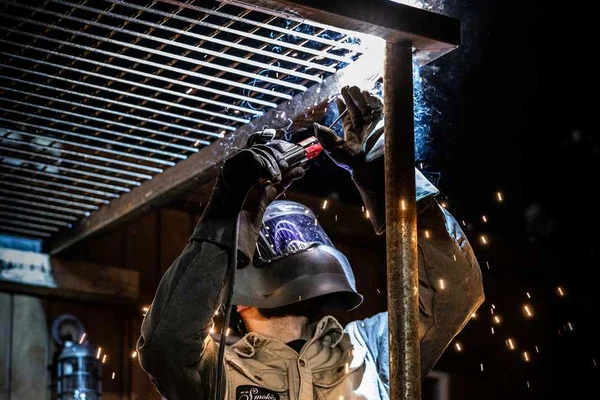
Path Robotics raises $300 million Series E at $2.45 billion valuation to scale physical AI
Georgian leads a growth round that values the Columbus welding automation startup near four times its prior mark, with shipbuilding and defense customers watching the next phase.
Comments (0)
Log in or sign up to leave a comment.
No comments yet. Be the first to share your thoughts.