Boston Dynamics spent years building a reputation through viral videos of robots running, jumping and recovering from pushes. Its next act is less about spectacle and more about factory floors. Hyundai Motor Group, which owns the robotics company, has committed to about 50,000 robot deployments across Hyundai Motor and Kia facilities, according to Boston Dynamics CFO Amanda McMaster. The figure, disclosed at Fortune's Most Powerful Women Summit, marks a significant expansion of the company's industrial ambitions and gives the humanoid Atlas program a large internal customer before it reaches broader commercial markets.
The commitment is roughly double the 25,000 Atlas units announced in May 2026. That earlier target was tied specifically to Atlas, the humanoid robot that Boston Dynamics has positioned as a general-purpose machine for manufacturing and logistics. The new figure is broader, covering robot deployments across Hyundai and Kia plants, and it arrives as the company tries to convert engineering leadership into a repeatable enterprise business. Fortune published its interview with McMaster on October 19, 2026, at 9:15 a.m. ET, based on remarks made the previous week.
Boston Dynamics is not starting from zero. Its quadruped robot Spot already sells into industrial inspection markets. Spot costs about $100,000 for the base platform and up to $300,000 depending on payloads, and it is used in semiconductor manufacturing, food and beverage production and public safety. Intel is one of its largest customers. Those deployments give the company commercial credibility, but Atlas is a far more complex and expensive product, and its success depends on manufacturing scale.
McMaster has been steering that transition. She served as CFO for six years and was interim CEO from February 2026 until Rohit Prasad took the helm on October 7, 2026. Prasad, a former Amazon senior vice president who led Alexa and artificial general intelligence, inherits a company that is reorganizing around enterprise sales. McMaster said Boston Dynamics must move from viral engineering demonstrations to a proactive sales operation because inbound demand at some point dries up. Her stated playbook is to control cost and then get to scale fast.
Key Facts
Fortune reported on October 19, 2026 that McMaster said Hyundai has committed to about 50,000 robot deployments across Hyundai Motor and Kia facilities, up from the 25,000 Atlas units announced in May 2026. She described the commitment as providing planning certainty and cost target certainty, two ingredients that matter when a company is trying to build a new class of industrial machine. The disclosure came during the Fortune Most Powerful Women Summit and was published in an interview focused on how Boston Dynamics is turning robots into a real business.
NILE1 reported on October 19, 2026 that the Hyundai commitment gives Boston Dynamics a guaranteed industrial customer base before Atlas enters broader commercial distribution. The report said the deployment volume provides the production certainty needed to drive down unit costs for machines that remain prohibitively expensive for most buyers. That framing matters because humanoid robots are still early in their cost curve. A captive customer as large as Hyundai and Kia can absorb early units, generate operational data and justify investment in component capacity.
The cost structure of Atlas is central to the strategy. McMaster said roughly 70% of the humanoid's bill of materials is actuators, the components that move joints and limbs. Hyundai Mobis, the group's parts supplier, will produce those actuators at cost. That arrangement is designed to remove supplier margin from the most expensive part of the robot and to align the interests of the robot maker and the automotive manufacturer. It also gives Hyundai Mobis a defined role in the robotics supply chain as Atlas moves from prototypes to production.
Boston Dynamics announced on September 21, 2026 that it opened its Robotics Metaplant Application Center inside Hyundai Motor Group's Metaplant America campus outside Savannah, Georgia. Atlas robots are in training on real-world tasks such as preparing the logistics and sequencing of automotive parts before placing them in the correct order for assembly. The company said applications will extend to component assembly by 2030 and later to repetitive or strenuous work such as lifting heavy loads. It also said Hyundai Motor Group plans to expand Atlas deployment beginning with 25,000 units at Hyundai Motor and Kia global plants over the next few years.
The same release said Hyundai Motor Group will establish a new U.S. production facility capable of producing 30,000 robots annually. Boston Dynamics said the first phase of the application center is operational and that operations will move next year into a building at the Georgia campus roughly ten times larger. Seoul Economic Daily reported on October 18, 2026 that Hyundai Motor and Kia plan robot-led autonomous plants by 2030 and full automation by 2032. The carmakers are developing a physical-AI virtual plant with Nvidia, a manufacturing AI agent called Polaris and robot teaching that automatically sets paths for more than 1,700 welding points.
Analysis
The 50,000 commitment is more than a sales pipeline. It is a manufacturing strategy that uses Hyundai and Kia plants as the first large-scale proving ground for Atlas and for Boston Dynamics' broader robot portfolio. What this really means is that Boston Dynamics is trying to solve the classic robotics problem, which is not whether a machine can perform a task in a demonstration but whether it can perform that task reliably, repeatedly and at a cost that makes sense across thousands of workstations.
The vertical integration with Hyundai Mobis is the most important economic lever in the plan. If actuators are roughly 70% of Atlas bill of materials, then producing them at cost inside the group can compress the largest cost line before external suppliers and margins are added. That does not guarantee a low-priced humanoid, but it gives Boston Dynamics a clearer path to scale than a standalone company buying components on the open market. It also creates a useful feedback loop: Hyundai Mobis learns how to build actuators at volume while Boston Dynamics learns how those parts perform in factories.
The risk is that internal demand can mask weak external demand. McMaster's warning that inbound demand at some point dries up is a candid admission that viral attention does not automatically become a durable order book. A 50,000-unit commitment from the parent company provides planning certainty, but it does not prove that other manufacturers will pay for Atlas or Spot at current prices. The enterprise sales reorganization is therefore as important as the factory automation plan, because Boston Dynamics needs customers beyond Hyundai and Kia to justify a 30,000-robot annual production facility.
The timeline also deserves scrutiny. Hyundai and Kia are targeting robot-led autonomous plants by 2030 and full automation by 2032, while Atlas component assembly is slated for 2030 and broader non-automotive use cases are set for exploration in 2027. Those dates are ambitious but not fantasy, because the work is being staged through the Georgia application center, the Singapore innovation center and the Ulsan electric vehicle plant. The bigger picture here is that automotive manufacturing is becoming the first real at-scale market for humanoid and mobile robots, not the last.
Why It Matters
For Hyundai and Kia, the robot commitment is part of a broader push toward factories that make more decisions on their own. Choi Young-tae, head of the E-FOREST Center in the carmakers' manufacturing solution division, said the goal is plants that operate autonomously, making their own decisions, learning and evolving. Robots are central to that vision because they can be trained in simulation, moved between tasks and linked to digital twins that replicate factories in virtual space.
For Boston Dynamics, the commitment changes the nature of the company. It is no longer only a research lab with famous videos; it is a supplier with a large internal customer, a component partner in Hyundai Mobis and a production plan that includes a U.S. factory capable of 30,000 robots a year. That combination could lower unit costs, shorten deployment cycles and give the company something that robotics firms rarely have: a predictable volume base for expensive hardware.
For the wider robotics market, the Hyundai commitment is a benchmark. If a major automaker can absorb tens of thousands of robots across its plants, other manufacturers will face pressure to evaluate similar programs. If the deployment stalls, the cautionary tale will be just as influential. The outcome will shape how quickly humanoid robots move from trade-show stages to routine factory work.
Next Up
The next visible milestones are close. Boston Dynamics plans to move operations next year into a building at the Georgia campus roughly ten times larger than the first phase of its application center. The company will explore Atlas use cases beyond automotive in 2027, including aerospace, semiconductors, logistics, food and beverage and life sciences. Hyundai and Kia will also use E-FOREST Tech Day 2026, held October 19 to 21, to showcase smart-factory technologies.
Longer term, the focus will be on the 2030 target for robot-led autonomous plants, the Singapore virtual-environment system, the new Ulsan electric vehicle plant and the 2032 full automation goal. Rohit Prasad's arrival as CEO on October 7, 2026 adds a new variable. The 50,000 commitment gives him a clear first assignment: turn Hyundai's planning certainty into repeatable deployments and prove that Boston Dynamics can be a real business, not just a spectacular engineering story.
Related Articles
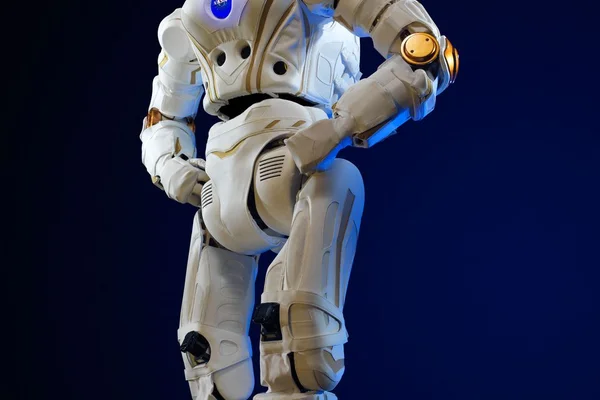
Leju and Zhaofeng Put 15 Humanoids to Work Loading Auto Parts at Hangzhou Plant
Leju Robotics and Zhaofeng say 15 Kuafu humanoids have handled more than 60,000 parts across 15 stations, though each loading cycle still takes about 2.7 times a worker's time.
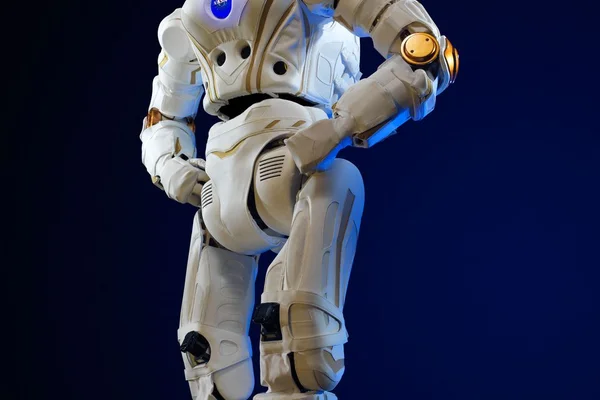
Faraday Future and FF EAI Robotics launch $2,490 FF Nova humanoid robot and $299 Nova Mini
The Los Angeles event pairs a $2,490 developer humanoid with a $299 education robot, days after FFR agreed to buy the Faraday Future robotics business in an all-stock deal valued near $200 million.
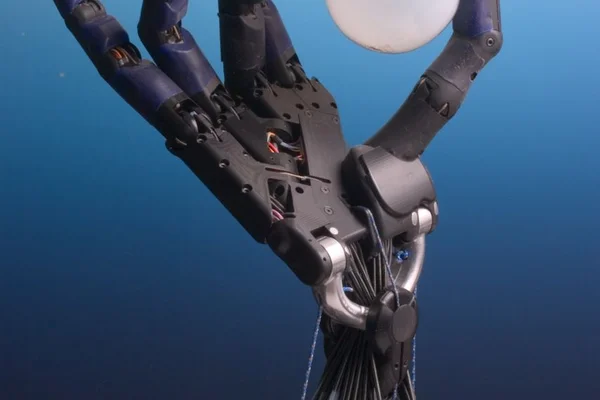
SEC Clears Agility Robotics SPAC Registration, Setting Up First US Listed Humanoid Robot Pure Play
The SEC declared the Agility Robotics merger registration effective on October 13, 2026, setting a November 2 shareholder vote on the Churchill Capital Corp XI combination and a planned Nasdaq listing under AGLT.
Comments (0)
Log in or sign up to leave a comment.
No comments yet. Be the first to share your thoughts.