For years the standard recipe for teaching a robot to pick something up has leaned on vision: cameras identify the object, a model plans a path, and the gripper closes on a target it has located but cannot feel. Eka Robotics, a startup founded by an MIT professor and a former Google DeepMind researcher, is betting that this approach runs out of road in the final millimeter, where contact rather than sight decides whether a grasp holds or a part slips onto the floor. The company's answer is what it calls a Vision-Force-Action model, a system that fuses visual perception with force feedback from a force-sensitive gripper so that touch itself becomes a source of information.
The approach attracted serious capital quickly. On October 20, 2026, Eka Robotics disclosed a 150 million dollar Series A round at a 1.45 billion dollar post-money valuation, led by Andreessen Horowitz and F-Prime. The round, and the valuation attached to it, places a company still running undisclosed pilots with industrial customers in the same conversation as far larger automation incumbents. It also signals that investors are willing to pay for a thesis rather than a shipped product line, provided the technical results behind that thesis are striking enough.
Eka's founders bring an unusual mix of academic depth and industry experience. Pulkit Agrawal is a professor at MIT who leads the Improbable AI Lab at MIT CSAIL and is described by his backers as a pioneer in computational sensorimotor learning. Tuomas Haarnoja is a co-creator of Soft Actor-Critic at Berkeley who later trained humanoid behaviors at Google DeepMind. The two first met as graduate students at UC Berkeley, and their collaboration now sits at the center of a company arguing that the physical economy needs a different kind of intelligence than the one that powers chatbots.
The argument rests on a simple observation about the physical world: it is variable. Parts move, materials deform, objects slip and connectors misalign. Much of manufacturing, electronics assembly, logistics and food production still depends on human hands for exactly this reason, as Eka's investors note. The company's claim is that a robot which can feel what it is doing, and correct in real time rather than fail and restart, can take on work that has resisted conventional automation.
Key Facts
TechCrunch reported on October 20, 2026, that Eka Robotics closed the 150 million dollar Series A at a 1.45 billion dollar post-money valuation, with Andreessen Horowitz (a16z) and F-Prime leading. The company's system pairs a force-sensitive gripper with a Vision-Force-Action model instead of the more common vision-language-action architecture, on the argument that vision locates an object but the final millimeter of grasping is governed by force. Agrawal told TechCrunch that 'Vision is not the primary way in which you close this last millimeter problem.'
The performance figures are the ones investors cite. Eka says the robot can pick up about 1,500 objects weighing up to 1 kg in an hour, against roughly 600 for a human, and that it succeeds more than 95 percent of the time. Andreessen Horowitz wrote on October 20, 2026, that Eka reports up to 1,500 picks per hour in laboratory induction and bin-picking tasks, two and a half times faster than humans, and has demonstrated manipulation of fragile objects, slippery industrial parts and contact-rich insertion. The announcement was authored by partner Yoko Li and managing partner Raghu Raghuram.
The economics of the end effector matter as much as the model. Eka's gripper costs less than 1,000 dollars and is rated for 5 million duty cycles, with a target of 20 million, which the company describes as the benchmark for standard industrial arms. That gap between 5 million and 20 million cycles is one of the clearest measures of how far the hardware has to travel before it can be treated as plant equipment rather than laboratory apparatus.
Training is where the company claims a structural advantage. Eka generates experience through physics simulation and reinforcement learning, and says it can produce thousands of hours of robot experience in minutes. Virtual robots practice millions of variations in object position, friction and contact before a policy ever reaches hardware. Unite.AI reported on October 20, 2026, that the historical obstacle to this method is the sim-to-real gap, because small errors in friction, compliance or actuator behavior can render a simulated policy useless in reality. Eka's response is to design model, sensing, controller and hardware together so that contact becomes information: a grasp that begins to slip is corrected, contact with a surface helps locate an object, and resistance during insertion changes motion instead of triggering an error.
The company is running undisclosed pilots with industrial customers in pick-and-place and wire manipulation. Its team draws from MIT, Berkeley, Harvard, CMU, BU, UPenn, DeepMind, Microsoft and Boston Dynamics, according to Unite.AI. Raghu Raghuram, the a16z general partner who co-led the round, said Eka is 'already exceeding superhuman performance for certain tasks.' Eka frames its mission as building 'intelligence for the physical world in its native language: force,' organized around three pillars: a single model that generalizes across objects, tasks and environments, robots that adapt to the unexpected, and safe, collaborative operation alongside humans.
Analysis
The obvious reading of a 1.45 billion dollar post-money valuation for a company at Series A is that investors are buying a story. The more careful reading is that they are buying a specific technical bet with a measurable payoff: whether force feedback plus simulation-trained policies can close the reliability gap that has kept manipulators out of unstructured work. If reliability above 95 percent holds across shifts, the addressable set of tasks widens dramatically. If it holds only in laboratory induction and bin-picking demonstrations, the valuation is a very expensive option on a future product.
TechCrunch reported on October 20, 2026, that Kris Hauser, a professor at the University of Illinois Urbana-Champaign, said the robot adapted to many objects without retraining and had a 'wow factor,' but cautioned that the real test is running on integrators' assembly lines 'without breaking for an entire year.' That is the correct standard, and it is far harsher than pick rate. A machine that picks 1,500 objects an hour for an afternoon is a demonstration; a machine that does it across a full production calendar with predictable maintenance is a product.
What this really means is that the competitive frontier in physical AI has moved from perception to contact, and the winners will be decided by duty cycles, service intervals and integration labor rather than by model architecture announcements. Eka's own hardware numbers tell the story: a gripper rated for 5 million cycles against a 20 million industrial benchmark is a factor of four, and no amount of simulation closes that gap. It requires materials, bearings, cabling, test fixtures and a supply chain that can deliver consistent parts at a sub-1,000 dollar price point.
Andreessen Horowitz wrote on October 20, 2026, that if the approach works at scale, 'robot experience can increasingly scale with compute rather than human labor.' That is the strongest version of the bull case, and it is also the one most exposed to the sim-to-real gap. Simulation is cheap; the open question is whether the physics inside it is faithful enough that policies transfer to new parts without a human in the loop retuning them for every variation in friction or compliance.
Why It Matters
Manufacturing, electronics assembly, logistics and food production remain stubbornly dependent on human hands, and the tasks that resist automation are exactly the ones where parts move, materials deform and connectors misalign. A robot that can handle fragile objects, slippery industrial parts and contact-rich insertion without bespoke retraining would change the math on reshoring and on the economics of high-mix, low-volume production, which is precisely where fixed automation has always struggled.
The funding also matters for the shape of the physical AI sector. A 150 million dollar Series A at a 1.45 billion dollar post-money valuation sets a price that competitors and their investors will be measured against, and it pulls talent toward force-first approaches at a moment when much of the field is organized around vision-language-action models. Eka's insistence that vision locates but force grasps is a direct challenge to that orthodoxy, and the round gives the company the runway to be proven right or wrong in public.
There is a safety dimension too. Eka lists safe, collaborative operation alongside humans as one of its three pillars, which is what force sensing is genuinely good at: detecting unexpected contact and yielding rather than continuing a motion. If the same sensing stack that improves grasp reliability also makes human-robot proximity safer, the compliance argument and the performance argument point in the same direction, and that combination is what industrial buyers tend to pay for.
Next Up
The next milestone is not another funding round but a production shift. Both Andreessen Horowitz and Unite.AI identify sustaining 1,500 picks per hour through full production shifts as the immediate test, and Hauser's year-long, no-break criterion is the one industrial integrators will actually apply. Watch for the undisclosed pilots in pick-and-place and wire manipulation to convert into named customers, and for the gripper's duty cycle rating to move from 5 million toward the 20 million industrial target.
Also watch the training pipeline. If Eka can genuinely produce thousands of hours of robot experience in minutes and transfer it to hardware reliably, the company's advantage compounds with compute rather than with headcount, which is the whole thesis behind the valuation. If the sim-to-real gap reasserts itself as pilots scale, the 95 percent success figure will start to look like a laboratory number, and the year that Hauser described will be a long one to wait through.
Related Articles
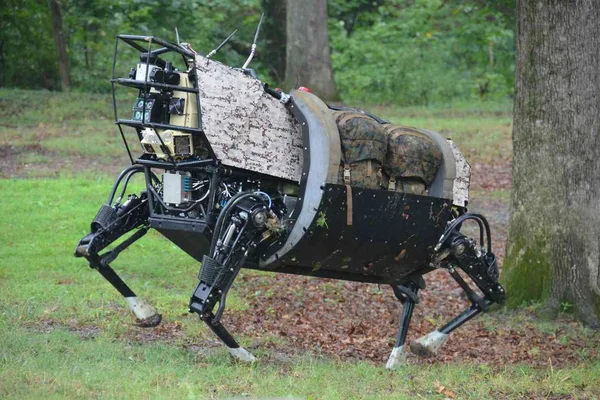
Hyundai commits to 50,000 robot deployments as Boston Dynamics scales Atlas
Boston Dynamics CFO Amanda McMaster said Hyundai has committed to roughly 50,000 robot deployments across Hyundai Motor and Kia plants, doubling an earlier Atlas target.
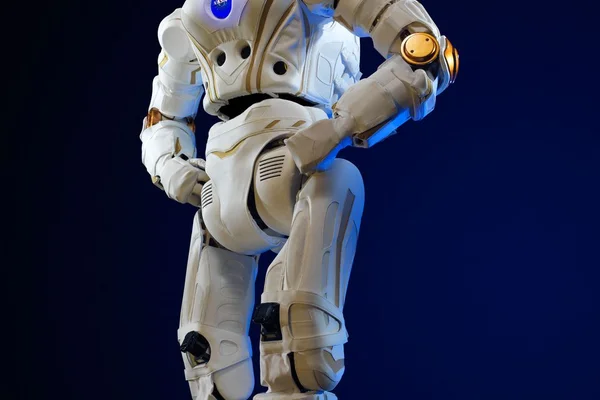
Leju and Zhaofeng Put 15 Humanoids to Work Loading Auto Parts at Hangzhou Plant
Leju Robotics and Zhaofeng say 15 Kuafu humanoids have handled more than 60,000 parts across 15 stations, though each loading cycle still takes about 2.7 times a worker's time.
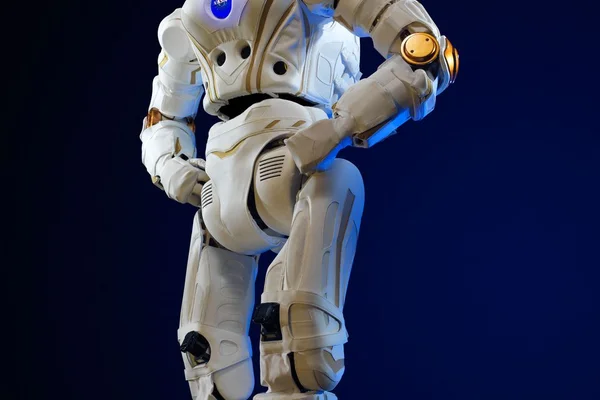
Faraday Future and FF EAI Robotics launch $2,490 FF Nova humanoid robot and $299 Nova Mini
The Los Angeles event pairs a $2,490 developer humanoid with a $299 education robot, days after FFR agreed to buy the Faraday Future robotics business in an all-stock deal valued near $200 million.
Comments (0)
Log in or sign up to leave a comment.
No comments yet. Be the first to share your thoughts.