Halfway through 2026, SpaceX's Starship V3 program has crossed three milestones that the V1 and V2 programs spent years chasing: three successful flight profiles with the same booster, a successful booster catch at the launch tower, and an on-pad orbital refueling demonstration between two Starship vehicles. The cadence is faster than any previous SpaceX program at the same stage.
What's Changed with V3
V3 is the first Starship configuration designed from the start around full and rapid reuse. The vehicle uses the upgraded Raptor 3 engines, a refurbished heat-shield tile set, and a new tower-catch sequence that has now succeeded on every attempt since April. The cadence target is one flight every three to four weeks; SpaceX has averaged one every six weeks through the first half of the year, with the gap explained mostly by range conflicts and weather.
「We have stopped thinking about V3 as a research program. It is an operational program,」 said a SpaceX engineer who spoke on background.
The Refueling Milestone
The orbital refueling demonstration earlier this month is the most consequential of the three. NASA has conditioned the timeline for its Artemis lunar return on a credible in-space refueling capability, and the demonstration — two Starship vehicles docking, transferring cryogenic propellant, and separating — is the first time the procedure has been performed at full scale by any operator. The data is being shared with NASA under the Human Landing System contract.
What's Next
The second half of 2026 includes a planned crew-scale refueling demonstration, a lunar landing profile test, and the first flight of an extended-payload bay configuration intended for Starlink V3 deployment. SpaceX has not yet committed to a date for the first crewed lunar mission, but the company has signaled internally that 2028 is the target window, with 2029 as the contingency.
For the rest of the industry, V3's progress raises the competitive bar. Blue Origin's New Glenn has now flown twice successfully, but its reusability cadence and refueling plans remain less defined. China's Long March 9 and India's proposed heavy-lift concepts are still in early development. For the moment, SpaceX has set the pace for the entire super-heavy-lift segment.
Related Articles
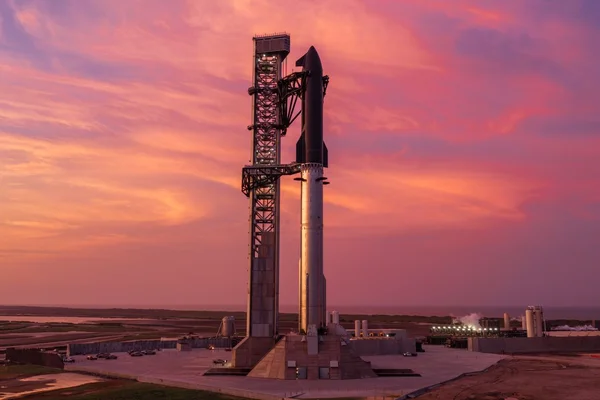
SpaceX Starship Flight 14 Eyes First Orbit With 20 Starlink V3 Satellites
Federal air traffic planners have reserved a two hour window on September 18, 2026 for a Starship mission that would fly about 20 Starlink V3 satellites and, per SpaceX's finance chief, bring in revenue.
Rocket Lab protests NASA's $700 million Mars orbiter award to Blue Origin
Rocket Lab filed a GAO protest on September 11, 2026, challenging NASA's $700 million Mars Telecommunications Network award to Blue Origin over eligibility and review concerns.
ESA Awards The Exploration Company 760 Million Euro Contract for Nyx Cargo Capsule to ISS
The European Space Agency has selected The Exploration Company to fly a reusable Nyx cargo capsule to the International Space Station under a contract worth up to 760 million euros.
Comments (0)
Log in or sign up to leave a comment.
No comments yet. Be the first to share your thoughts.