Before its July 16 abort, Starship Flight 13 was the most ambitious test flight SpaceX had scheduled in 2026. Beyond the headline payload - the first batch of V3 Starlink satellites - the mission was designed to validate a slate of full-reusability upgrades that the company has been quietly iterating on since Flight 11.
The V3 Starlink Payload
V3 Starlink roughly quadruples per-satellite throughput versus V2-mini and adds a more capable direct-to-cell payload. The satellite is also heavier and structurally larger, which is why Starship - rather than Falcon 9 - is required to launch it at scale.
"V3 Starlink on Falcon 9 would have meant dozens of launches to clear what Starship can do in two or three. The math finally works for Starship," noted a launch-industry analyst.
The Reusability Slate
Flight 13 was also meant to test several upgrades: a redesigned Raptor 3 thrust-vecing gimbal, a new heat-shield tile bond that SpaceX has been iterating on since Flight 9, and a tower-catch profile for the Super Heavy booster that targets a narrower catch envelope.
What the Abort Means for the Test Plan
Because the abort occurred at ignition, none of the reusability upgrades were exercised. They will likely be re-flown on Flight 14 once the anomaly review closes, paired with the original V3 Starlink payload plus additional test instrumentation.
For SpaceX, the test cadence is now the constraint - not the hardware. With three to four Starship flights originally planned for the second half of 2026, a four- to eight-week slip on Flight 13 may force the team to choose between additional tests and the first operational V3 deployment.
Related Articles
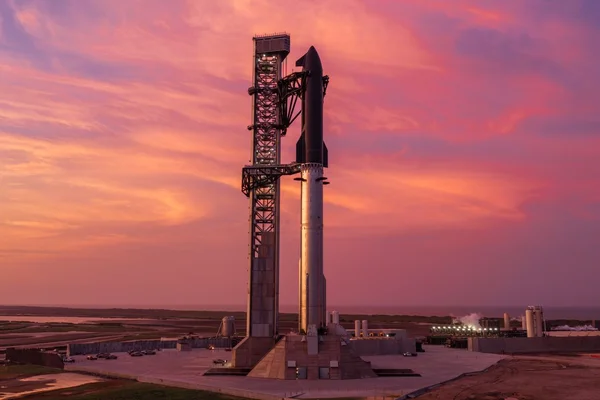
SpaceX Starship Flight 14 Eyes First Orbit With 20 Starlink V3 Satellites
Federal air traffic planners have reserved a two hour window on September 18, 2026 for a Starship mission that would fly about 20 Starlink V3 satellites and, per SpaceX's finance chief, bring in revenue.
Rocket Lab protests NASA's $700 million Mars orbiter award to Blue Origin
Rocket Lab filed a GAO protest on September 11, 2026, challenging NASA's $700 million Mars Telecommunications Network award to Blue Origin over eligibility and review concerns.

ESA Awards The Exploration Company 760 Million Euro Contract for Nyx Cargo Capsule to ISS
The European Space Agency has selected The Exploration Company to fly a reusable Nyx cargo capsule to the International Space Station under a contract worth up to 760 million euros.
Comments (0)
Log in or sign up to leave a comment.
No comments yet. Be the first to share your thoughts.