Global investment in private space companies climbed to a new high in the third quarter of 2026, with launch providers, manufacturers and orbital infrastructure builders capturing the largest share of a funding wave that reset expectations for the sector. The figures, compiled by the space-focused investment firm Seraphim, showed that venture capital and growth equity kept flowing toward companies building rockets, satellites and the factories that support them, even as other technology categories faced tighter scrutiny from investors.
The surge arrived against a mixed backdrop. Publicly listed space companies have struggled, and many remain unprofitable, yet private markets have continued to write larger checks. That gap between private enthusiasm and public market caution has become one of the defining features of the current space investment cycle, and it shapes how founders, financiers and policymakers think about the next stage of growth.
Investors have been drawn to businesses tied to government programs, defense needs and commercial constellations. Demand for launch capacity, sovereign satellite networks and orbital infrastructure has given financiers more confidence that revenue, not only long-range promises, will follow the capital. The result is a market where contracts and government backing matter as much as technical demonstrations.
The report, released on Wednesday, October 14, 2026, captured a quarter in which deal counts also reached a record. That combination of larger rounds and a wider set of transactions signaled a broader base of activity rather than a handful of mega deals alone, and it gave the industry its strongest evidence yet that the space economy is maturing into an infrastructure business.
Key Facts
Reuters reported on October 14, 2026 that space startups attracted a record $20.8 billion in funding during the third quarter, nearly triple the $7.4 billion invested in the second quarter and more than double the previous peak. The same Reuters account noted that even after excluding Blue Origin's $10 billion financing, investment still reached an all-time high of $10.8 billion, underscoring growing demand across the sector.
Business Day reported on October 14, 2026 that a record 216 deals were completed during the quarter, up from 140 in the second quarter. IndustryWired reported on October 14, 2026 that infrastructure-related businesses accounted for the bulk of the money: companies involved in launch and broader space access attracted $16.4 billion across 120 deals, while satellite communications, Earth observation and other space-service companies raised $4 billion.
The quarter's largest fundraising rounds, according to the Seraphim report, included $1.37 billion for Hadrian, $1 billion for Stoke Space and $500 million for K2 Space. Those three companies illustrate the range of activity, spanning advanced manufacturing, reusable launch development and satellite systems for commercial and government customers. Each round was large enough to rank among the biggest private financings in the sector this year.
Seraphim also provided a geographic breakdown. Reuters reported on October 14, 2026 that North America accounted for about 70 percent of global funding year to date, while China recorded a quarterly high of $3.3 billion across 49 deals. That split shows the industry's capital remains heavily concentrated in the United States and Canada, even as Chinese activity accelerates.
Lucas Bishop, vice president at Seraphim Space, said the money was following tangible demand. "Capital is following evidence of commercial and institutional demand, not just residual IPO enthusiasm," Bishop said, according to the report. He added that defense and sovereign demand are increasingly supporting investment in launch, manufacturing and orbital infrastructure as governments prioritize domestic space capabilities.
Analysis
The bigger picture here is that the record quarter was not a return to the speculative excess that marked earlier space investment cycles. The composition of the money tells a more disciplined story. Launch and space access alone absorbed $16.4 billion, and the largest single rounds went to companies building hardware and industrial capacity rather than to speculative applications. Investors appear to be funding the picks and shovels of the space economy, the rockets, the manufacturing lines and the orbital platforms that other businesses will depend on.
That judgment is reinforced by the fact that the total remained an all-time high even without Blue Origin's $10 billion financing. A single mega round can distort any quarterly comparison, but the $10.8 billion left after excluding it shows that demand was broad. The record 216 deals, up from 140, points to a wider funnel of companies raising capital, not just a few giants. When both the average deal size and the number of deals rise, the market is widening rather than merely concentrating, and that breadth reduces reliance on a single company's fortunes.
At the same time, the contrast between private and public markets deserves attention. Bishop noted that many publicly traded space companies remain loss-making, and that SpaceX's scale and visibility may have drawn investor attention away from smaller listed peers. Reuters reported on October 14, 2026 that the surge in private investment was in contrast with weaker performance among listed space companies. That divergence suggests private investors are betting on a longer timeline than public shareholders are willing to tolerate, and it raises questions about how long the two markets can move in opposite directions.
The geographic split also carries weight. North America's roughly 70 percent share of year-to-date funding shows how concentrated the industry remains, while China's quarterly high of $3.3 billion across 49 deals indicates that a parallel ecosystem is scaling. The competition is no longer only commercial. Sovereign capability, defense demand and supply chain security are now part of the investment thesis, and they are likely to shape which companies win the next wave of contracts.
Why It Matters
The record quarter matters because it shows where the space economy's center of gravity has moved. Capital is no longer chasing only launch as a standalone spectacle. It is financing the industrial base that supports frequent launches, satellite manufacturing, orbital infrastructure and the services that run on top of them. That shift could determine which companies survive the next downturn and which become strategic suppliers to governments and large commercial operators. The companies that can demonstrate manufacturing capacity and reliable delivery are likely to attract the next round of capital.
For governments, the numbers underline the urgency of domestic space programs. Defense and sovereign demand are increasingly supporting investment in launch, manufacturing and orbital infrastructure, according to Bishop. Countries that want assured access to space are effectively underwriting private capacity, which in turn attracts more private capital. The dynamic creates a feedback loop in which public procurement and private fundraising reinforce each other.
For investors, the quarter is a reminder that the sector's growth is uneven. Private funding hit a record while listed peers struggled. That mismatch can create opportunities for patient capital, but it also warns that public market validation may lag far behind private enthusiasm. Anyone reading the $20.8 billion headline as a broad endorsement of every space company would be misreading the details.
Next Up
Seraphim expects funding to moderate from the third quarter's exceptional level, but to remain above historical norms as more companies enter growth and scale-up phases. That forecast implies the record may not be repeated immediately, yet the baseline for space investment has shifted upward. The pipeline of commercial orders and government-backed programs will be the key variable in whether the moderation is gentle or sharp. If the pipeline holds, the sector could settle into a higher plateau rather than a boom and bust pattern.
The next signals to watch include whether China sustains its quarterly high of $3.3 billion, whether North America keeps its roughly 70 percent share, and whether listed space companies can narrow the performance gap with their private peers. Blue Origin's $10 billion financing and SpaceX's continued dominance will remain reference points for how concentrated the industry's capital remains, and for how much room smaller players have to grow.
Related Articles
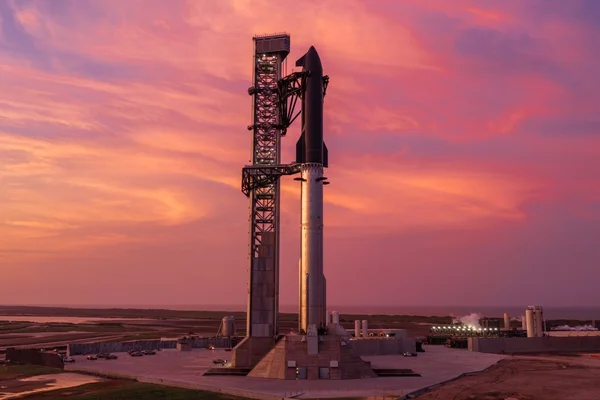
SpaceX launches 35th cargo mission to ISS with final solar arrays and 6,300 pounds of supplies
The Falcon 9 booster B1096 flew for the eighth time and Dragon C211 for the fourth, delivering science experiments and the last iROSA pair to the orbiting laboratory.
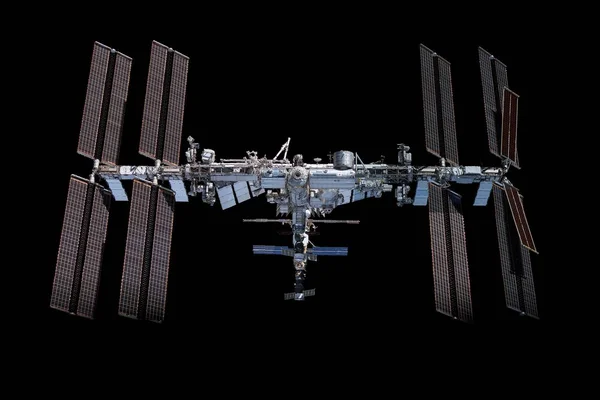
NASA opens final bidding for private space stations to replace the ISS
NASA's October 9 request for proposals asks companies to design, certify and operate private low Earth orbit destinations, with bids due December 8 and awards expected in spring 2027.

Webb Watches Water Clouds Thicken and Thin on Brown Dwarf WISE 0855
New JWST spectra of WISE 0855, the coldest known brown dwarf, show high water clouds thickening and thinning as it rotates, the first such weather seen beyond the solar system.
Comments (0)
Log in or sign up to leave a comment.
No comments yet. Be the first to share your thoughts.