SK Hynix is in exploratory talks with Intel about building memory chips in the United States for the first time, a move that would redraw the geography of a market long concentrated in South Korea and would hand the Trump administration a marquee win in its campaign to onshore semiconductor production. Three people familiar with the discussions said the two chipmakers have weighed more than one structure, and that no decisions have been made.
Under one scenario, SK Hynix would lease part of Intel's long planned chipmaking complex in Ohio, a site that has become a symbol of the difficulties facing Intel's domestic manufacturing ambitions. Under another, the companies could form a venture alongside major cloud providers that are eager to lock in supplies of memory chips, two of the people said. Details of how such a deal might be structured are being reported for the first time.
The talks land at a moment of acute strain in the memory market. Relentless investment in artificial intelligence and data centres has tightened supplies of the specialised chips that feed AI processors, and Washington has been pressing chipmakers from South Korea and Taiwan to move production to American soil. Commerce Secretary Howard Lutnick has threatened tariffs of up to 100% on South Korean and Taiwanese companies unless they commit to more U.S. production.
SK Hynix's lineup includes DRAM chips used in servers, personal computers and smartphones, plus NAND flash memory, and it is the leading supplier of high bandwidth memory, or HBM, used in AI processors. SK Hynix said it is reviewing various measures, including establishing additional production bases, to strengthen the competitiveness of its memory business, but that no matters have been determined at this stage. Intel declined to comment on what it called speculation, saying it was continuing with investments in Ohio to ready the site.
Key Facts
Reuters reported on September 16, 2026 that SK Hynix is in talks with Intel about a deal that would see the South Korean company manufacture memory chips on U.S. soil for the first time, citing three people familiar with the discussions. One source described the talks as exploratory and stressed that no decisions have been made, adding that SK Hynix might consider other structures beyond the two scenarios under discussion.
Intel's Ohio project carries the weight of a very large promise. The company announced in 2022 that it would invest up to $100 billion in the state, with production once slated to begin in 2025, but completion of the site's two plants has slipped to 2030 and 2031. Leasing part of that complex to a memory maker would put a tenant inside a facility that Intel itself has struggled to fill on schedule.
Markets reacted sharply. Intel shares surged 5.5% at the open on Wednesday, September 16, and finished the session up 4.03% at $101.05. The Motley Fool reported on September 16, 2026 that trading volume reached 117.5 million shares, nearly 7.4% above the three month average of 109.5 million shares. SK Hynix's stock finished 4.1% higher in Seoul the same day. For context, the S&P 500 closed at 7,552, down 0.45%, and the Nasdaq Composite finished at 25,978, down 0.01%, while semiconductor peers Advanced Micro Devices closed at $512.50 and Taiwan Semiconductor Manufacturing closed at $417.72.
SK Hynix's American footprint so far is a single packaging site. TechCrunch reported on September 16, 2026 that the company is building a $3.8 billion advanced packaging and research facility for AI chips in West Lafayette, Indiana, with mass production expected to begin in 2029. That plant would use DRAM wafers made in South Korea and package them into HBM chips, which means the actual fabrication of memory dies would remain offshore unless the Intel talks produce something more ambitious. It remains unclear what types of memory chips SK Hynix would produce in Ohio.
Several other numbers frame the discussions. SK Hynix completed a Nasdaq secondary listing in July 2026, raising $26.5 billion in what TechCrunch described as the biggest foreign initial public offering in U.S. history. The two companies have done business before: in 2020 Intel sold its NAND flash memory business to SK Hynix for $9 billion. And South Korea's trade ministry said any decision would be at the company's discretion, but that if it involved a national core technology it would be subject to a review under the Industrial Technology Protection Act.
Analysis
Quartz reported on September 16, 2026 that building in the United States entails significantly higher labour, construction and supply chain costs than operating in Asia, which is the central reason a lease rather than a greenfield factory makes sense for SK Hynix. Leasing space inside Intel's Ohio complex would let the Korean company test American fabrication without carrying the full burden of a multi billion dollar construction programme in an unfamiliar cost environment. Intel, meanwhile, would gain a paying tenant for capacity it has already committed to build.
The bigger picture here is that this is less a story about one factory than about who controls the supply of the memory that AI depends on. HBM is the bottleneck component in the AI accelerator supply chain, and SK Hynix leads that market. Moving even part of that production to the United States would give American cloud providers a domestic source of the scarcest input in the AI buildout, which is precisely why cloud firms are described as possible partners in a joint venture. It would also give the Trump administration a tangible answer to criticism that its tariff threats have produced promises rather than plants.
The obstacles are real and they are political as much as commercial. Seoul's trade ministry has signalled that HBM or DRAM production could fall under the Industrial Technology Protection Act if the technology is classified as a national core technology, and any transfer of sensitive technology abroad would trigger a review. For a country that has built a strategic export industry around memory, allowing its leading manufacturer to fabricate advanced memory in the United States is not a neutral decision, and opposition from Seoul could be a major hurdle, according to the people familiar with the talks. Intel has its own constraints: it is still working to ready the Ohio site, and it declined to comment beyond calling the report speculation.
The financial signals are worth reading carefully. Intel closed up 4.03% at $101.05, and Melius Research reiterated a Buy rating with a $165 price target, with analyst Ben Reitzes noting the stock could rise to $200 per share in two years on the strength of its foundry business and AI tailwinds. That is a large move built on talks that one source called exploratory, which tells you how badly the market wants a narrative that fills Intel's empty fab shells. SK Hynix, which is already supplying the HBM that AI chips need, has less to gain in the short term and more to lose strategically at home, which is why the company's public language stayed deliberately vague.
Why It Matters
For Intel, a deal would relieve pressure on a company that has been struggling and would validate its foundry strategy by attracting a high profile customer. The Motley Fool reported on September 16, 2026 that a deal with SK Hynix would help support Intel's growing domestic foundry investments and bolster its plan to lead the domestic semiconductor foundry business. Tenants and partners matter more than announcements when a company has committed up to $100 billion to Ohio and pushed completion of two plants out to 2030 and 2031.
For the United States, the talks are a test of whether tariff pressure can convert into actual memory fabrication. Lutnick has threatened tariffs of up to 100% on South Korean and Taiwanese companies unless they commit to more U.S. production, and the White House said in January that it could impose broader tariffs on semiconductor imports while offering relief to companies investing in domestic manufacturing. A lease inside an existing site would be a modest but real answer to that pressure.
For South Korea, the question is whether its most strategically sensitive industry can be partially relocated without eroding its own position. SK Group chairman Chey Tae-won said in July, quoted by Reuters, that he thinks the company needs to build a factory in the United States and that, if possible, it should build it, a remark that suggested the corporate parent was already leaning toward American production.
Next Up
The immediate next step is clarification from SK Hynix, which said later on Wednesday on its website that nothing had been finalised regarding cooperation with any specific companies mentioned in the report or U.S. memory production, after telling TechCrunch that no decisions had been made regarding the two scenarios. Intel said it is continuing with investments in Ohio to ready the site, so the fab complex will proceed regardless of whether a tenant arrives.
Beyond that, watch Seoul. South Korea's Ministry of Trade, Industry and Energy has indicated that any arrangement touching national core technology would face a review, and that review, not the commercial terms, may prove to be the decisive gate for whether SK Hynix ever fabricates memory on American soil.
Related Articles

Meta to Deploy Third Generation MTIA 450 Arke AI Chip in Data Centers by 2027
Meta Platforms is testing its third-generation MTIA 450 Arke AI chip, built with Broadcom and TSMC, for data center deployment in the first half of 2027.
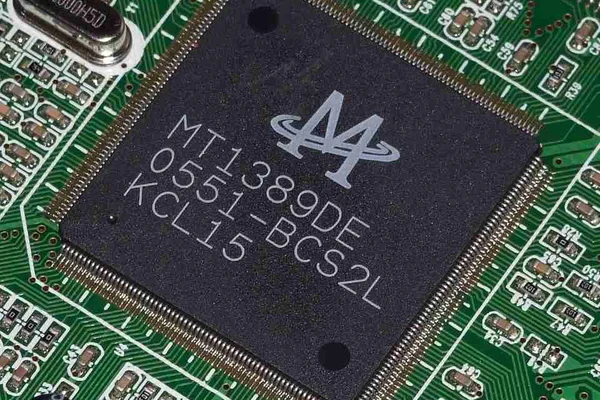
MediaTek Launches Dimensity 9600 Pro, First 2nm Phone Chip With 61% Power Cut
The Taiwanese chip designer says its new flagship mobile processor, built on TSMC's 2-nanometre node, cuts multi-core power by 61% while adding on-device AI models up to 30 billion parameters.
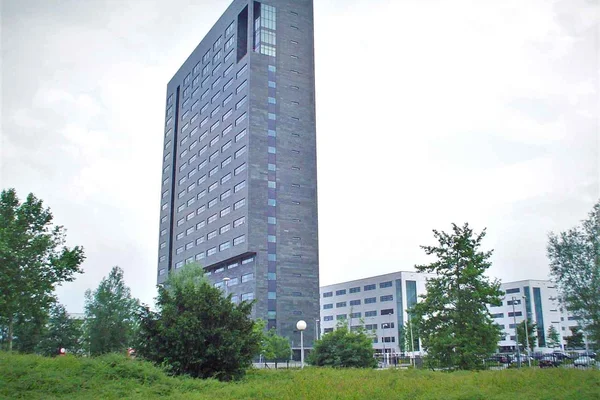
ASML examines ways to make more than 110 EUV tools a year by 2028 as AI demand strains capacity
JPMorgan analysts say ASML could produce more than 110 extreme ultraviolet lithography systems in 2028, up from about 65 expected in 2026, as AI chip demand keeps the 2027 order book nearly sold out.
Comments (0)
Log in or sign up to leave a comment.
No comments yet. Be the first to share your thoughts.