Around 75,000 years ago, a Neanderthal living in what is now Iraqi Kurdistan survived an injury that would have killed most people. A violent blow to the face split one of the lower front teeth in half and knocked the neighbouring teeth slightly out of line. The broken edge of the tooth, exposed through bone and gum, became coated in hardened dental plaque. That coating is the proof that the individual lived on, because someone in the group must have helped with eating, drinking and communicating while the wound healed.
The same individual did not die of that injury. At least a year later, something else ended that life, and the shape of the damage on a single bone has now given researchers their best clue yet to how. The partial skeleton, known as Shanidar A, was recovered from Shanidar Cave in northern Iraq in 2019 and 2022. Among the surviving bones is a left shoulder blade, or scapula, pierced by a nearly perfect circle 15 mm wide.
Shanidar Cave has been central to debates about Neanderthal behaviour since it was first excavated in 1953. At least five Neanderthal individuals have been found there, and the way some of them were placed in the ground is often read as evidence that these ancient humans buried at least some of their dead. Shanidar A was placed in a very specific spot in the cave, tucked in behind a huge rock, and over subsequent years or decades at least four other Neanderthal individuals were laid directly above.
The new work, led by the University of Cambridge and published in Scientific Reports on 15 October 2026, concludes that the circular hole is the earliest known case of a hominin likely killed by a sharpened wooden spear. The paper carries the DOI 10.1038/s41598-026-69193-z. It also argues that the same individual preserves evidence of the opposite side of human nature, because the earlier facial injury could only have healed with long term support from others.
Key Facts
The scapula is a broad, flat bone that in places becomes almost translucent when held up to light. Shanidar A's left scapula survived roughly 75,000 years under about seven and a half metres of rock and sediment, preserved almost intact apart from the 15 mm circular perforation. Cambridge archaeologists who led the excavation say the hole was made by a spear of sharpened wood, because a spear tip of flint or stone would have left a flat or angular opening rather than a round one. Bevelling around the hole is typical of an exit wound.
The University of Cambridge, in a release carried by EurekAlert, reported on October 15 that the spear penetrated the left chest cavity from the front and travelled through the body, including the lung and likely major arteries, before punching through the left scapula. The injury would have caused rapid death, and the researchers think the fatal strike may have been an intended heart shot. The location of the bone fragments indicates the spear entered from the left hand side while the individual was facing forward.
ABC Science reported on October 16 that the study examines the 75,000-year-old remains of a Neanderthal man in his 40s. Wear on the teeth suggested an individual who lived to about 45 years old, a long life by Neanderthal standards, although New Scientist noted on October 15 that the sex of Shanidar A could not be determined from the bones. The recovered material consists of a largely complete right hand, two left ribs, a right rib fragment, a left scapula and six teeth.
The teeth also preserve the earlier trauma. One bottom front tooth was split in half, and the force of the blow made the teeth next to the broken one rotate slightly. The half tooth that remained must have stuck out through the bone and the gums, meaning hardened plaque, known as calculus, formed all over the top and bottom of the tooth. New Scientist reported on October 15 that the jaw was severely smashed but healed, and that survival after such a massive earlier dental injury would only have been possible with long term care.
Wooden spears dating between 200,000 and 400,000 years old have been found in Europe. The earliest known rounded wooden spear is over 400,000 years old and was pulled from the UK shoreline at Clacton-on-Sea in 1911. Emma Pomeroy said the diameter of the shaft near the pointed end fits the hole, though she added that we can never be sure because the wood has not preserved.
Analysis
What this really means is that Shanidar A is less a single crime scene than a compressed record of two behaviours that researchers have long argued about separately. In one skeleton, roughly 75,000 years old, there is a healed wound that required others to keep the injured person alive, and a lethal wound that shows someone ended that life violently. Pomeroy, an archaeologist at the University of Cambridge and the study's first author, described the find as evidence of two contrasting facets of human nature, care and violence, juxtaposed in the same individual.
The bigger picture here is that the case for care does not depend on sentiment, and neither does the case for violence. The care argument rests on hard tissue: a tooth broken open to the bone and gum, then covered in calculus, which means the individual lived long enough for plaque to build over the exposed surface. Someone must have helped with drinking, communicating and eating. The violence argument rests on an equally physical detail, a circular hole with no healing around it, plus bone fragments nearby, which places the injury at or near the moment of death.
The weaker part of the story is the weapon itself. Gizmodo reported on October 15 that the circular hole is consistent with a sharpened wooden spear rather than a stone tipped weapon, and the Cambridge team's reasoning is that a flint point would have left a different profile. But Sofia Samper Carro, an independent archaeologist at the Australian National University, called the conclusions bold and a bit of a stretch, noting that without the weapon it is very difficult to establish cause of death, even if the circular damage is unusual. That caution is fair. The wood is gone, and no laboratory work can bring it back.
It is also unknown whether the fatal injury came from hunting or from violence between people. That distinction matters for how the result is framed. A hunting accident and a deliberate attack would both leave a hole in a shoulder blade, but they would tell very different stories about Neanderthal social life. The paper's own language is careful on this point, describing a likely fatal wound and a probable wooden spear rather than a certainty.
Why It Matters
Evidence of systematic violence is extremely rare in deep prehistory, which is why a single perforated scapula carries so much weight. Most of the hominin fossil record is fragmentary, and bones that survive are usually the ones that healed rather than the ones that killed. A wound that caused rapid death leaves little for researchers to read unless the damage happens to fall on a bone that is preserved, as it did here.
New Scientist reported on October 15 that at least five Neanderthal individuals have been found at Shanidar since it was first excavated in the 1950s, and that the way they were placed in the ground is often seen as evidence that these ancient humans buried some of their dead. Shanidar A was tucked in behind a huge rock, and at least four other Neanderthal individuals were placed directly above in the years or decades that followed. Whether or not those placements amount to deliberate burial, the pattern suggests repeated, structured behaviour at the same spot.
For the study of Neanderthals more broadly, the skeleton works against a single, simple portrait. Graeme Barker, a fellow of St John's College, Cambridge, who leads the Shanidar Cave excavations, said that all we can ever know about the end of this Neanderthal's life is that it was violent, and came at the end of a wooden spear. The combination of care and lethal injury in one individual is what makes it hard to dismiss.
Next Up
The Cambridge team, led in the field by Graeme Barker, continues to excavate Shanidar Cave and to study the transition period when modern humans began using the site. Further work on the Shanidar A remains will focus on the shoulder blade and the surrounding bone fragments, since the geometry of the damage is the strongest remaining physical evidence for the wooden spear hypothesis.
Independent scrutiny is likely to follow the same path as the initial coverage, with researchers asking what a hole can and cannot prove. Samper Carro's caution is the standard against which the next round of claims will be measured, because without the weapon the case for a wooden spear must rest on the shape of the wound, the absence of a stone tip's signature, and the fit between the hole and the known diameter of ancient wooden shafts.
Related Articles

NASA's Perseverance rover breaks Mars driving distance record set by Opportunity
Perseverance passed Opportunity's 28.06 mile mark on its 2,006th sol, with an autonomous navigation system handling more than 90 percent of the driving.
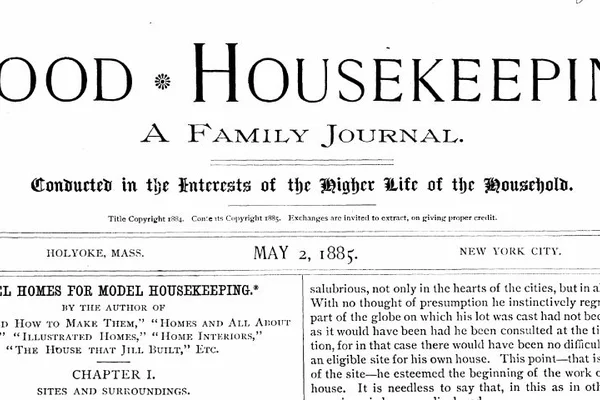
Century of Good Housekeeping Recipes Reveals UK Seafood Variety Narrowed to Big Five
Researchers at the University of Exeter analysed 1,192 seafood recipes from British Good Housekeeping and found that five species now dominate UK cooking, reflecting deep changes in supply and trade.

Bristol Myers Squibb Reports First Phase 3 Win for Alpha Emitting Radiopharmaceutical RYZ101
Bristol Myers Squibb said its RYZ101 radiopharmaceutical met the primary endpoint in the Phase 3 ACTION-1 trial for advanced GEP NETs after prior lutetium 177 therapy.
Comments (0)
Log in or sign up to leave a comment.
No comments yet. Be the first to share your thoughts.